

Iced Tea Without Too Much Sugar: A Flavor-First Guide
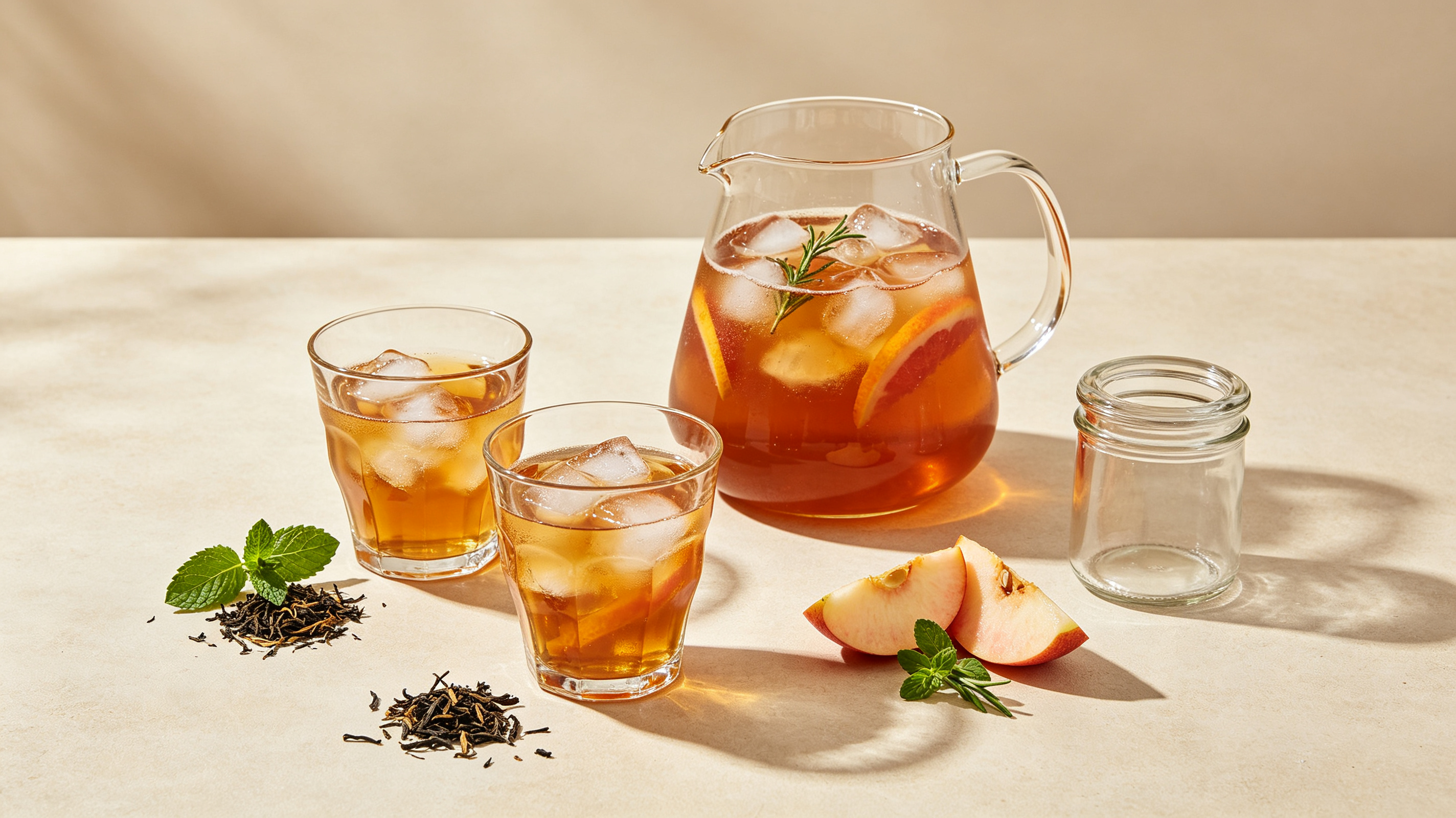
Iced tea without too much sugar depends on aroma, concentration, ice quality, acidity, and gradual adjustment—not deprivation.
Iced tea often needs less sugar when the base tea is aromatic, correctly brewed, and not diluted into weak bitterness. Fruit, citrus peel, mint, flowers, and cold brewing can create sweetness in aroma even when little or no sugar is added.
Choose a Tea With Natural Aroma
- Jasmine green tea for floral softness.
- Fruit-forward black tea for body.
- Mint for cooling freshness.
- Hibiscus or berry blends for tartness.
- Roasted oolong for depth.
- Peach, citrus, or flower tea for aroma.
Cold Brew for a Smoother Base
Cold water extracts slowly and often produces less bitterness. Use a generous but controlled amount of tea, refrigerate for several hours, strain, and taste before adding anything.
Hot Brew Over Ice
Use more tea rather than a much longer steep. Brew a concentrated but balanced base, remove the leaves, and pour over measured ice. This keeps flavor after dilution.
Use Fruit Strategically
Citrus slices, peach, berries, cucumber, and melon contribute aroma and mild sweetness. Avoid leaving cut fruit at room temperature for extended periods.
Sweeten Gradually
- Taste the chilled tea plain.
- Add fruit or herbs.
- Add a small amount of syrup or honey if needed.
- Stir fully and taste again.
- Record the amount that worked for the whole pitcher.
Balance Tartness
Tart fruit tea can seem to demand sugar. Dilution, ripe fruit, a less acidic blend, or pairing with a round black tea can create balance before adding more sweetener.
Find iced-tea options in the fruit tea collection, flower tea collection, and black tea collection.
Serve Cold, Not Watery
Use enough tea for the final volume, including melted ice. Weak tea often leads people to add sugar in search of flavor.
Ice Quality Changes the Final Drink
Ice made from strongly chlorinated or mineral-heavy water melts directly into the tea. A good hot brew can become dull after dilution if the ice tastes poor. Use the same clean water for brewing and freezing when possible.
Large cubes melt more slowly, while crushed ice creates rapid dilution. Match the tea concentrate to the serving style instead of adding extra sugar after the flavor disappears.
- Taste one melted ice cube.
- Measure the expected ice volume.
- Serve immediately after flash chilling.
Let Aroma Do Part of the Work
Sweetness is not only sugar. A fragrant, cold, balanced tea can feel generous because the nose receives fruit and flowers before the tongue measures sweetness.
How to Apply Iced Tea without Too Much Sugar
Weak, diluted, or over-bitter tea often leads to more sugar because the drink lacks another source of pleasure. Start with aromatic leaf, the right final concentration, good ice, and a clean serving temperature.
Fruit and herbs add fragrance but also change food-safety handling. Keep cut fruit cold, use a clean pitcher, and avoid leaving a summer batch at room temperature for long periods.
Use This Before You Decide
- Calculate the final volume after ice melts.
- Use the same clean water for tea and ice.
- Choose aromatic tea.
- Add fruit or herbs before syrup.
- Sweeten the whole pitcher in small measured steps.
What Strong Evidence Looks Like in Daily Tea
Treat iced tea without too much sugar as a final-volume recipe. Ice, fruit, herbs, and chilling can change both concentration and aroma, so record the amount of finished drink rather than only the hot water used at the beginning.
Use “Calculate the final volume after ice melts.” and “Use the same clean water for tea and ice.,” then taste after the drink reaches serving temperature. A concentrate that seems strong while warm may become balanced over ice, while a weak base may encourage unnecessary sweetener.
Cold preparation also introduces storage responsibilities. Use clean containers, keep cut fruit refrigerated, and discard a batch with unusual gas, slime, sourness, or a long period at warm temperature. Refreshment and food safety belong in the same method.
- Review: Calculate the final volume after ice melts.
- Review: Use the same clean water for tea and ice.
- Review: Choose aromatic tea.
- Review: Add fruit or herbs before syrup.
This verification step keeps iced tea without too much sugar tied to a real result rather than a rule copied from another kitchen, product page, or tea table.
Know When the Rule Needs to Bend
Iced Tea without Too Much Sugar varies with ice, fruit ripeness, refrigerator temperature, pitcher size, and the water used for both brewing and freezing. Record final volume so the next batch is adjusted from evidence rather than memory.
The question “What tea tastes good without sugar when iced?” may have several good answers. Choose the one that remains flavorful after chilling and can be stored and served safely in your actual summer routine.
- Keep: the parts of iced tea without too much sugar that produce a repeatable improvement.
- Recheck: results that appeared only once or under unusual conditions.
- Adapt: vessel size, water, timing, and serving to the actual situation.
- Stop: when safety, contamination, or damaged equipment becomes the concern.
What This Looks Like at Home
Make one pitcher of cold-brew jasmine tea and another hot-brewed fruit black tea poured over measured ice. Taste both plain, then add citrus or mint, and sweeten only after the final dilution is known.
Measure the finished cold drink, not only the hot concentrate
Ice, fruit, and refrigeration change dilution and aroma. Write the final pitcher volume and the amount of tea used so a successful batch can be repeated.
Keep ingredients cold and containers clean. Summer flavor should not come at the cost of careless storage.
Questions Readers Often Ask
What tea tastes good without sugar when iced?
Jasmine tea, fruit-forward black tea, mint, roasted oolong, and many fruit or flower infusions are useful starting points.
Is cold brew naturally sweeter?
It often tastes smoother and less bitter, which can reduce the perceived need for sugar.
Can honey be used in iced tea?
Yes, but dissolve it in warm liquid first and measure it like any other sweetener.
Turn Information Into a Better Routine
When iced tea without too much sugar leads to better control and fewer assumptions, the topic has served its purpose.
For a different angle, read Afternoon Tea vs High Tea: The Difference Without the Confusion.