

Raw vs Ripe Pu-erh Tea and How to Buy With Confidence
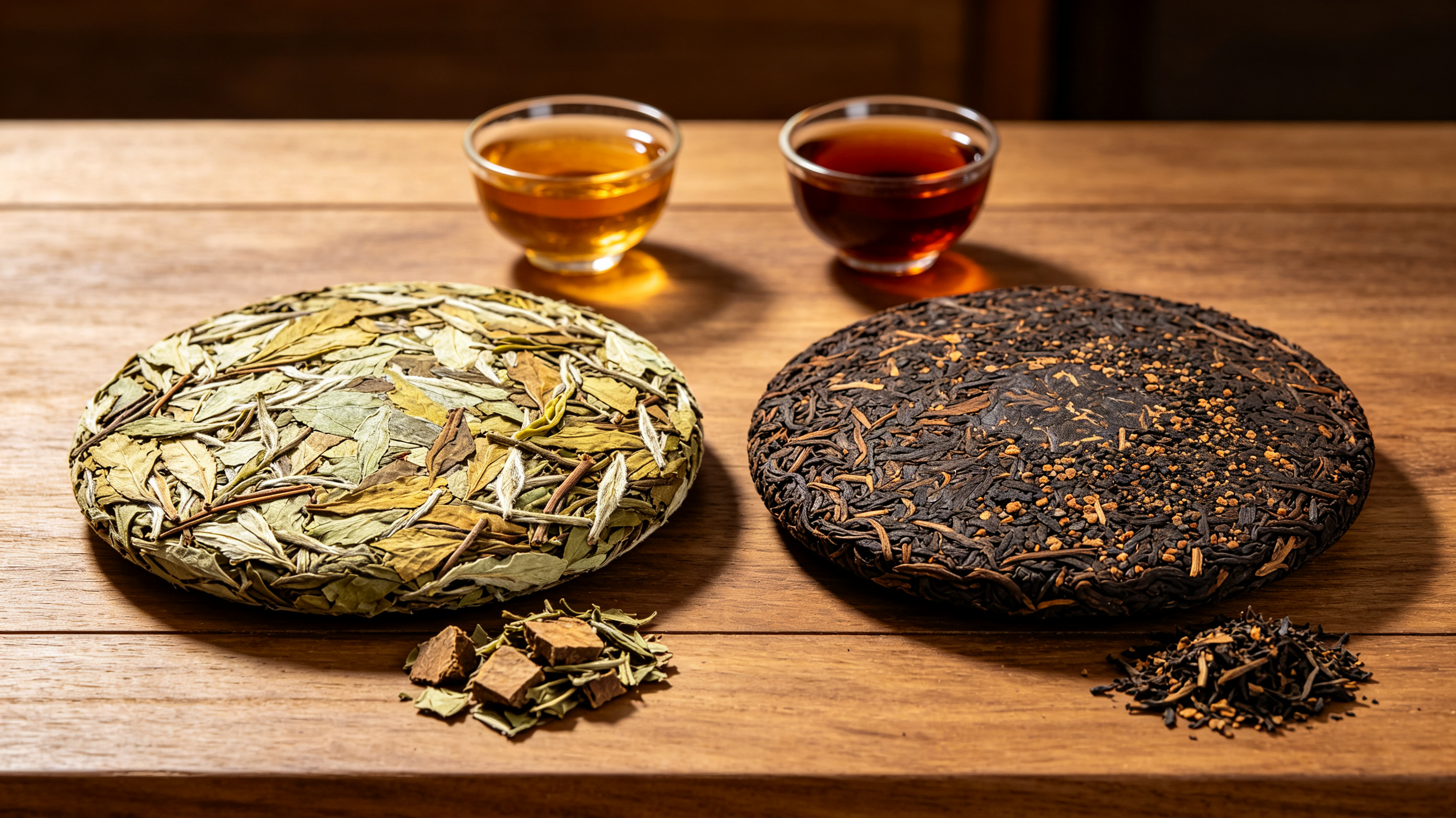
Pu-erh Tea Is Defined by Process and Storage
Pu-erh tea comes from Yunnan and is commonly discussed as raw (sheng) or ripe (shou) pu-erh. Both can be compressed into cakes, bricks, or other forms, or sold loose. Age can matter, but old does not automatically mean good. Clean processing and storage matter more than a dramatic date on a wrapper.
Raw Pu-erh
Raw pu-erh is produced without the accelerated pile-fermentation process used for ripe tea. Young raw tea can be bright, bitter, floral, fruity, or astringent, while well-stored examples may change over years. Storage conditions shape that development.
Ripe Pu-erh
Ripe pu-erh uses controlled microbial fermentation to accelerate darker, smoother characteristics. It is often described as earthy, woody, date-like, cocoa-like, or mellow. A clean ripe tea should not need to smell moldy or dirty to prove that it is aged.
Raw vs Ripe at a Glance
| Question | Raw pu-erh | Ripe pu-erh |
|---|---|---|
| Typical direction | Brighter, more astringent when young | Darker, smoother, earthy or woody |
| Development | Can change significantly with storage | Already fermented, still changes with time |
| Beginner fit | For tasters who enjoy structure | Often approachable for drinkers seeking depth |
| Main buying risk | Paying for age without storage confidence | Mistaking off odors for normal fermentation |
How to Buy Pu-erh Tea
- Ask whether it is raw or ripe.
- Look for origin, production year, and producer information when available.
- Prioritize clean storage over age alone.
- Buy a sample or small amount before committing to a cake.
- Avoid treating moldy, sour, chemical, or contaminated odors as desirable complexity.
Brewing and Storage
Pu-erh is often brewed with repeated short infusions in a gaiwan or small teapot. Compressed tea needs time for the leaves to loosen. At home, keep it away from strong odors, excessive moisture, heat, and contamination. Stable, clean conditions matter more than romantic ideas about aging.
Buying Pu-erh for a Tea Business
If you are sourcing for retail or hospitality, request samples and evaluate multiple brews, not only the dry-leaf smell. Ask whether the supplier can provide repeatable lots or clearly label changing vintage material. Documenting style, year, origin, and storage is part of selling pu-erh responsibly.
Teazenway lists pu-erh among its tea supply capabilities: read about Teazenway.
Do Not Buy the Story Before the Tea
Pu-erh has one of tea’s richest collecting cultures, which makes it easy to pay for age, rarity, packaging, or mythology. Taste first. A clean, enjoyable cup from a clearly described product is a better starting point than an expensive cake you are afraid to brew.
Browse Teazenway’s current tea catalog at the shop.