

Tea With Breakfast: Choosing a Cup That Fits the Food
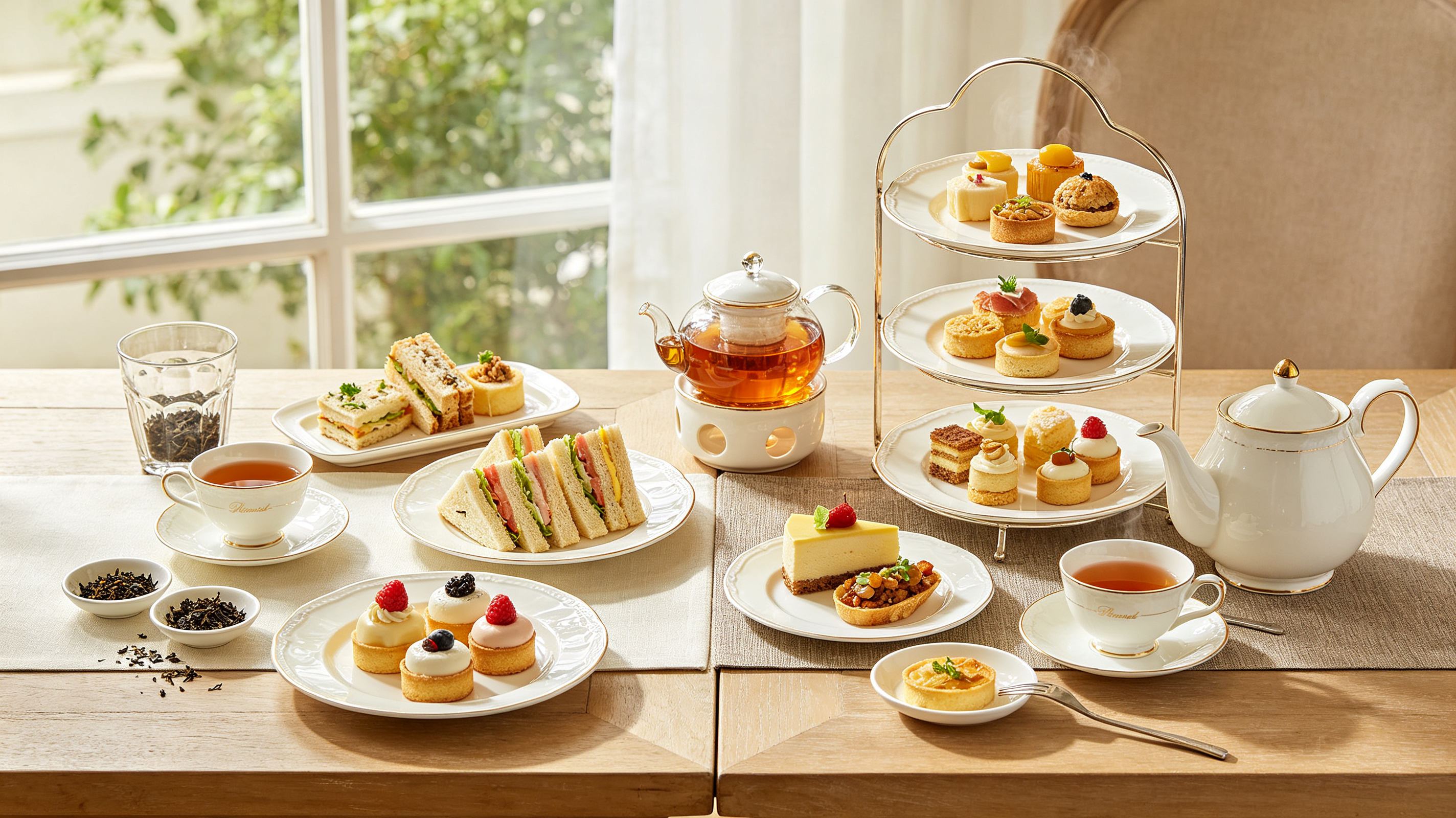
Tea with breakfast should fit both the food on the plate and the amount of attention available that morning.
Tea with Breakfast: What to Notice First
A weekend gaiwan and a weekday basket infuser solve different problems. The best breakfast tea is not only a flavor match; it must be ready when the food is ready and removable before an interruption causes oversteeping.
Milk and sweetener should be planned rather than automatic. A robust black tea can support milk, while a delicate green or white tea may lose its character. Taste the base with the food before adding more.
Tea with breakfast should support the food and the pace of the morning. A strong black tea works with rich savory dishes, but lighter breakfasts may suit green, white, oolong, fruit, or herbal tea.
Eggs and Savory Breakfast
Black tea, roasted oolong, and some pu’er have enough body for eggs, mushrooms, sausage, or savory toast. Brew cleanly so astringency does not become metallic beside salty food.
Oatmeal and Grains
Nutty green tea, roasted tea, black tea, and cinnamon-forward herbal blends can echo toasted grain. Fruit tea works when the oatmeal includes berries or apple.
Fresh Fruit and Yogurt
White tea, floral green tea, light oolong, mint, and tart fruit infusions feel cleaner with fruit and yogurt. Heavy milk tea may overwhelm a light breakfast.
Pastries
Butter and sweetness suit brisk black tea, medium roasted oolong, jasmine tea, or unsweetened fruit tea. The tea should refresh the palate rather than add more sugar.
Toast and Spreads
| Breakfast | Tea direction |
|---|---|
| Butter or nut spread | Black or roasted oolong |
| Jam | Black, jasmine, fruit tea |
| Avocado toast | Green tea or light oolong |
| Cheese toast | Black tea or roasted tea |
| Honey toast | White tea or floral oolong |
Caffeine and Morning Routine
True tea generally contains caffeine, but the amount varies. If you prefer a gentler start, use a smaller serving, shorter brew, or caffeine-free herbal infusion rather than assuming every black tea is automatically strongest.
Compare morning options in the black tea collection, green tea collection, and wellness tea collection.
Prepare the Night Before
Measure the tea, fill the kettle, and set out the infuser. A good breakfast pairing is more likely to become a habit when it does not add ten decisions to the morning.
Consider the First Ten Minutes of the Morning
A delicate tea may be enjoyable on a slow weekend but frustrating when breakfast and email happen at the same time. Choose a method that matches attention: a basket infuser for a quick mug, cold brew prepared overnight, or a pot when several people are eating together.
The best morning tea is repeatable. Keep one reliable option visible and save experimental temperatures or multiple infusions for days when they will not be interrupted.
- Weekday: simple mug and timer.
- Weekend: slower pot or gaiwan.
- Hot weather: overnight cold brew.
The Best Breakfast Tea Is the One That Fits the Plate
Start with food intensity, then choose tea body and aroma. There is no need to force a traditional breakfast blend beside every meal.
Build a Baseline Before Making Fine Adjustments
For tea with breakfast, keep the serving sizes small enough to compare several combinations without palate fatigue. Taste the tea, taste the food, then taste them together. The order reveals whether the pairing creates a new effect or merely hides one side.
Begin with “Match tea body to food intensity.” and “Use a timer..” If the match fails, change tea strength or serving temperature before replacing either product. A promising flavor relationship can disappear when one portion is several times more intense than the other.
Write one sentence about what changed: the tea became fruitier, the food felt sweeter, bitterness increased, fat was cleansed, or both flavors became dull. That sentence is more useful for the next pairing than a score without explanation.
| Check | Evidence to keep |
|---|---|
| Match tea body to food intensity. | Observe the result and record the next adjustment. |
| Use a timer. | Observe the result and record the next adjustment. |
| Prepare tools the night before. | Observe the result and record the next adjustment. |
This verification step keeps tea with breakfast tied to a real result rather than a rule copied from another kitchen, product page, or tea table.
Allow for Tea, Water, and Personal Variation
Tea with Breakfast changes with portion size, serving temperature, guest preference, food, and the pace of the event. A combination that fails in one format may work when the tea is lighter, the food portion is smaller, or the order changes.
Treat “Match tea body to food intensity.” as the starting condition, not a performance requirement. Comfort and clarity matter more than reproducing a formal service or expert tasting vocabulary.
- Keep: the parts of tea with breakfast that produce a repeatable improvement.
- Recheck: results that appeared only once or under unusual conditions.
- Adapt: vessel size, water, timing, and serving to the actual situation.
- Stop: when safety, contamination, or damaged equipment becomes the concern.
Run a controlled three-bite pairing test
Taste the tea alone, the food alone, and then the combination. Notice whether aroma becomes clearer, body disappears, bitterness rises, or the finish becomes cleaner.
Change tea strength before abandoning a promising match. Many failed pairings are simply unbalanced servings.
A Real-World Test
Prepare overnight cold brew for a hot weekday, a timed black-tea mug for toast, and a small oolong pot for a slow weekend breakfast. The role changes, so the ideal method changes.
Continue with Tea and Cheese Pairing: How to Match Body, Salt, and Aroma.
Questions Readers Often Ask
What tea is best with eggs?
Black tea, roasted oolong, or some pu’er can handle savory food.
What tea works with fruit and yogurt?
White tea, floral green tea, light oolong, mint, or tart fruit infusion can feel clean.
Does breakfast tea have to be black tea?
No. The meal, caffeine preference, weather, and routine can support many styles.
Before the Next Cup
- Match tea body to food intensity.
- Use a timer.
- Prepare tools the night before.
- Keep one caffeine-free choice.
- Choose a method appropriate to available attention.
Use the Idea Without Overcomplicating Tea
Used carefully, tea with breakfast becomes practical knowledge rather than another label to memorize.