

Tea and Cheese Pairing: How to Match Body, Salt, and Aroma
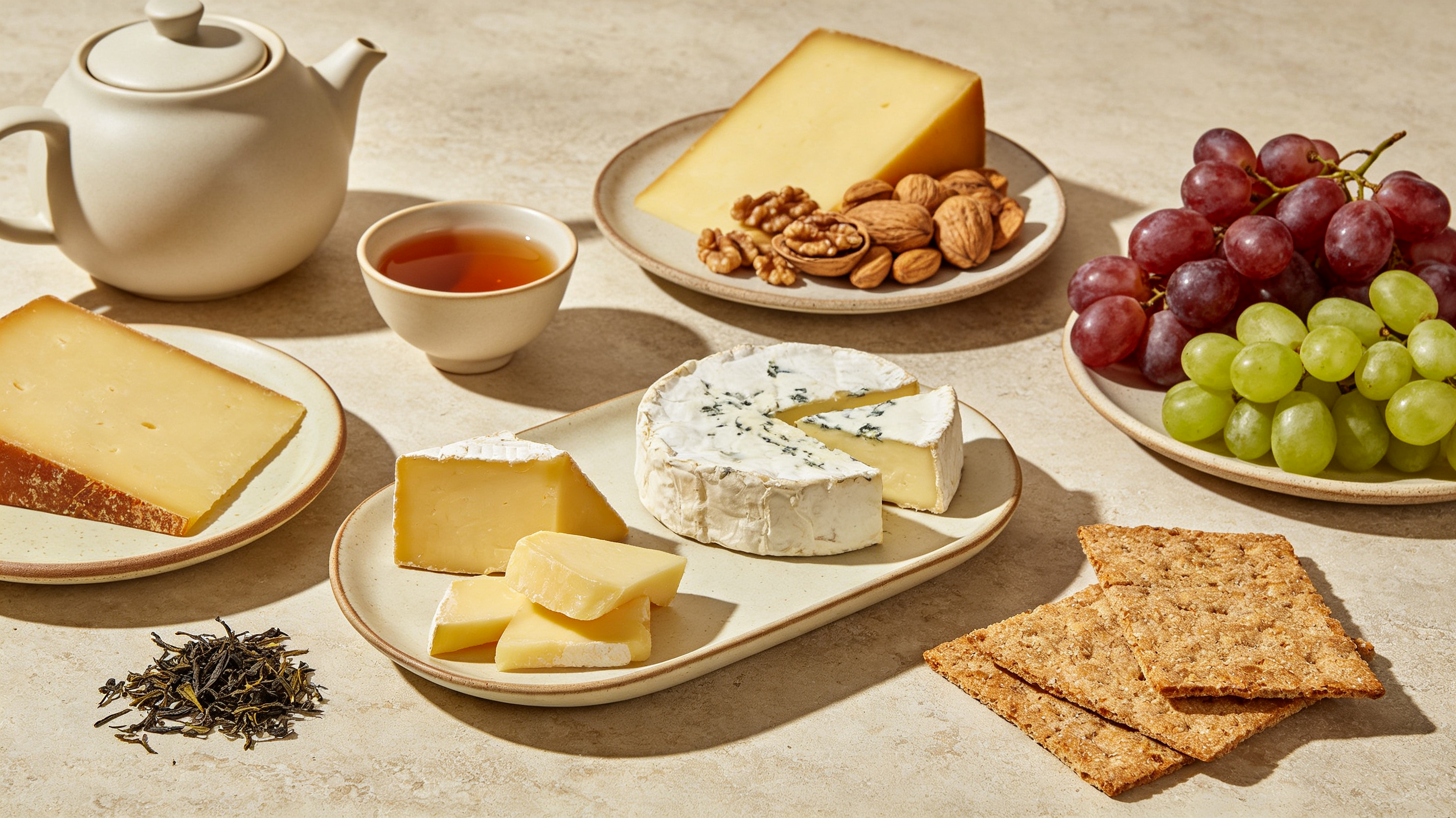
Tea and cheese pairing becomes easier when creaminess, dryness, salt, body, and serving temperature are considered first.
Tea can pair with cheese because tannin, roast, fruit, floral aroma, and temperature interact with fat and salt. The aim is balance: a delicate tea should not disappear behind a powerful blue cheese, while a strong tea should not flatten a mild fresh cheese.
Fresh and Soft Cheese
Fresh goat cheese, ricotta-style cheese, and mild soft cheese can suit green tea, white tea, jasmine tea, or light floral oolong. Acidity and freshness keep the pairing clear.
Creamy Rind Cheese
Creamy soft-ripened cheese can work with medium oolong, fruity black tea, or a tea with enough briskness to refresh the palate.
Aged Hard Cheese
Nutty aged cheese pairs naturally with roasted oolong, malty black tea, and ripe pu’er. Shared toasted and savory notes create an easy connection.
Blue Cheese
Blue cheese needs an assertive partner. Try a sweet-fruited black tea, deep roasted oolong, or ripe pu’er. A delicate tea is likely to disappear.
Smoked Cheese
Use restraint. Smoked tea with smoked cheese can become one-dimensional. A fruity or mineral tea may provide a better contrast.
Serving Method
- Bring cheese close to room temperature.
- Brew tea slightly lighter than a standalone tasting.
- Use small cheese portions.
- Taste cheese, then tea.
- Reset with water or plain bread.
Quick Matching Table
| Cheese style | Tea direction |
|---|---|
| Fresh and tangy | Green, white, jasmine |
| Creamy and mild | Floral oolong, fruity black |
| Aged and nutty | Roasted oolong, black, ripe pu’er |
| Blue and salty | Full black, deep oolong, pu’er |
| Smoked | Fruit-forward or mineral tea |
Find pairing candidates in the oolong, black tea, and pu’er collections.
Texture Can Matter More Than Flavor Words
A creamy cheese coats the mouth and benefits from tea with briskness or heat. A dry aged cheese may need a rounder tea so the combination does not become overly drying. Match physical sensation before chasing elaborate aroma similarities.
Serve tea warm rather than scalding. Very hot liquid can melt fat abruptly and mute detail. A slightly cooled cup often makes salt, sweetness, and roast easier to compare.
- Creamy cheese: choose cleansing structure.
- Dry cheese: avoid combining two drying finishes.
- Very salty cheese: use enough tea body to remain present.
Let Contrast Do Some Work
Pairing does not require identical flavors. A bright tea can lift rich cheese; a roasted tea can deepen nutty cheese. Keep both recognizable and adjust strength before changing the entire match.
Tea and Cheese Pairing: A Practical Framework
Creamy cheese coats the mouth and benefits from heat or briskness. Dry aged cheese can become unpleasant beside an equally drying tea. Salty blue cheese requires enough tea body and aroma to remain visible.
Tea temperature changes the interaction. Scalding liquid melts fat rapidly and can hide detail; a warm cup often makes salt, sweetness, roast, and fruit easier to compare.
How the Decision Plays Out
Try an aged nutty cheese with roasted oolong, malty black tea, and ripe pu’er. One may echo nuts, another clean the palate, and another deepen savory character.
How to Verify the Advice in Your Own Kitchen
For tea and cheese pairing, keep the serving sizes small enough to compare several combinations without palate fatigue. Taste the tea, taste the food, then taste them together. The order reveals whether the pairing creates a new effect or merely hides one side.
Begin with “Bring cheese near room temperature.” and “Serve tea warm rather than scalding..” If the match fails, change tea strength or serving temperature before replacing either product. A promising flavor relationship can disappear when one portion is several times more intense than the other.
Write one sentence about what changed: the tea became fruitier, the food felt sweeter, bitterness increased, fat was cleansed, or both flavors became dull. That sentence is more useful for the next pairing than a score without explanation.
- Review: Bring cheese near room temperature.
- Review: Serve tea warm rather than scalding.
- Review: Use small portions.
- Review: Match texture before aroma.
This verification step keeps tea and cheese pairing tied to a real result rather than a rule copied from another kitchen, product page, or tea table.
What This Guide Cannot Decide for You
Tea and Cheese Pairing changes with portion size, serving temperature, guest preference, food, and the pace of the event. A combination that fails in one format may work when the tea is lighter, the food portion is smaller, or the order changes.
Treat “Bring cheese near room temperature.” as the starting condition, not a performance requirement. Comfort and clarity matter more than reproducing a formal service or expert tasting vocabulary.
- Keep: the parts of tea and cheese pairing that produce a repeatable improvement.
- Recheck: results that appeared only once or under unusual conditions.
- Adapt: vessel size, water, timing, and serving to the actual situation.
- Stop: when safety, contamination, or damaged equipment becomes the concern.
A Focused Checklist
- Bring cheese near room temperature.
- Serve tea warm rather than scalding.
- Use small portions.
- Match texture before aroma.
- Provide plain bread and water.
Run a controlled three-bite pairing test
Taste the tea alone, the food alone, and then the combination. Notice whether aroma becomes clearer, body disappears, bitterness rises, or the finish becomes cleaner.
Change tea strength before abandoning a promising match. Many failed pairings are simply unbalanced servings.
Make the Next Cup More Informative
The real value of tea and cheese pairing is a cup or decision that can be repeated, explained, and adjusted without guesswork.
For a different angle, read Ceramic vs Porcelain Teapot: Which One Suits Your Tea?.
One More Check Before You Finish
Before treating tea and cheese pairing as settled, repeat the method with the same tea and change only one condition that matters to the article. Use “Bring cheese near room temperature.” as the baseline and “Use small portions.” as the deliberate change. Write down whether aroma, taste, texture, convenience, or cleanup improved.
This final repeat protects against conclusions caused by a rushed session, unfamiliar water, an unusual cup, or a product that does not represent the wider category. When the result remains useful twice, keep the method. When it does not, preserve both records and narrow the claim rather than forcing a universal rule.