

Tea and Chocolate Pairing: A Practical Flavor Guide
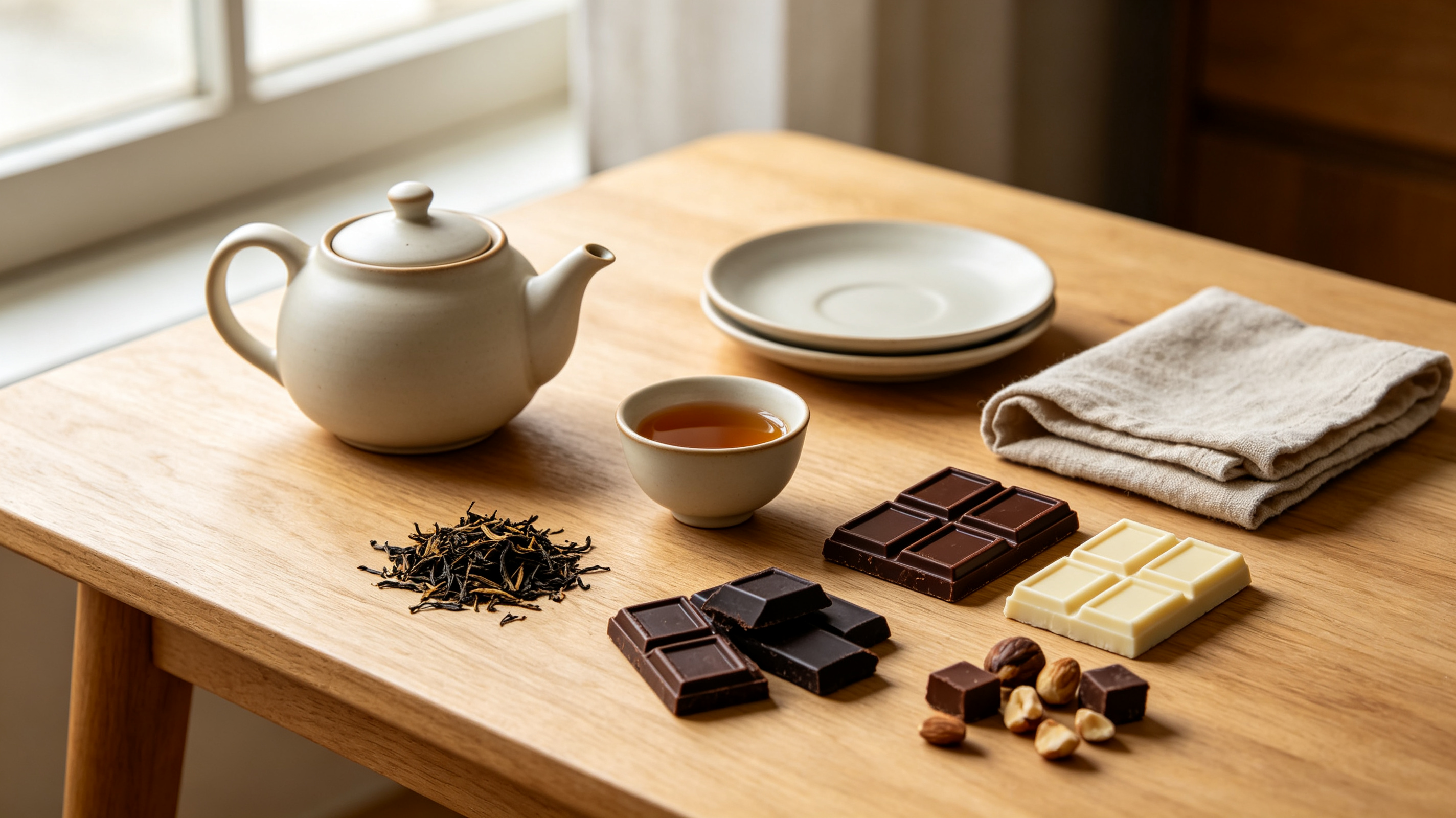
Tea and chocolate pairing works when intensity, sweetness, roast, texture, and aftertaste remain balanced.
Tea and chocolate pair well when one does not erase the other. The best match can echo shared flavors—roast, nuts, fruit, caramel—or create contrast through freshness and bitterness.
Use small chocolate portions and unsweetened tea. Sweet tea makes the combination difficult to judge.
Dark Chocolate
Dark chocolate can suit roasted oolong, ripe pu’er, malty black tea, and teas with cocoa or woody notes. Very bitter chocolate may overwhelm delicate green or white tea.
Milk Chocolate
Milk chocolate is softer and sweeter. Try it with black tea, medium-roasted oolong, jasmine tea, or lightly spiced blends. A brisk tea can clean the palate after the creamy texture.
White Chocolate
White chocolate is sweet and rich without cocoa solids. Floral green tea, light oolong, tart fruit infusion, or mint can provide contrast.
A related practical guide is Tea Tray Guide: What It Does and Whether You Need One.
Fruit and Nut Chocolate
Chocolate with orange, berry, cherry, almond, or hazelnut offers an easy bridge. Match the added ingredient with a tea that shares or balances it.
A Pairing Method
- Taste the tea alone.
- Let a small piece of chocolate soften in the mouth.
- Take another sip of tea.
- Notice whether aroma becomes clearer or disappears.
- Finish with water before the next pairing.
Common Problems
- Chocolate is too sweet for the tea.
- Tea is brewed so strong that it tastes metallic.
- Both items are heavily flavored.
- Portions are too large.
- Tea is served scalding hot and melts the chocolate immediately.
Choose black and oolong options from the black tea collection and oolong tea collection.
Cocoa Percentage Is Only a Starting Point
Two chocolates with the same cocoa percentage can differ in sugar, roast, acidity, milk, and added flavors. Taste the chocolate before choosing the tea. A fruity dark chocolate may suit floral oolong, while an earthy bar may prefer ripe pu’er or roasted tea.
Keep water nearby because cocoa fat and sugar can remain on the palate. The tea should refresh or extend the chocolate, not merely disappear behind it.
- Note cocoa intensity.
- Check for fruit, nut, spice, or smoke.
- Use a smaller chocolate portion than you expect.
Build a Pairing Around One Clear Idea
A good pairing does not need to be surprising. Start with roast and cocoa, fruit and fruit, or creamy chocolate with a brisk tea. When both sides remain recognizable, the pairing works.
Tea and Chocolate Pairing: From Definition to Practice
A delicate white tea can disappear behind dark chocolate even if both are described as floral. Begin with body, sweetness, bitterness, and roast intensity. Then use fruit, nuts, caramel, or flowers to refine the match.
Cocoa fat remains on the palate. A brisk tea can cleanse it, while a round roasted tea can extend richness. Serve water between pairings so the third chocolate does not taste like the first two combined.
Use This Before You Decide
- Taste tea and chocolate separately first.
- Use small chocolate portions.
- Serve tea warm, not scalding.
- Reset with water.
- Keep added flavors simple in the first test.
Record Enough Detail to Avoid Starting Over
For tea and chocolate pairing, keep the serving sizes small enough to compare several combinations without palate fatigue. Taste the tea, taste the food, then taste them together. The order reveals whether the pairing creates a new effect or merely hides one side.
Begin with “Taste tea and chocolate separately first.” and “Use small chocolate portions..” If the match fails, change tea strength or serving temperature before replacing either product. A promising flavor relationship can disappear when one portion is several times more intense than the other.
Write one sentence about what changed: the tea became fruitier, the food felt sweeter, bitterness increased, fat was cleansed, or both flavors became dull. That sentence is more useful for the next pairing than a score without explanation.
- Taste tea and chocolate separately first. Record what changed before moving to the next variable.
- Use small chocolate portions. Record what changed before moving to the next variable.
- Serve tea warm, not scalding. Record what changed before moving to the next variable.
- Reset with water. Record what changed before moving to the next variable.
This verification step keeps tea and chocolate pairing tied to a real result rather than a rule copied from another kitchen, product page, or tea table.
Use Judgment After the Checklist Ends
Tea and Chocolate Pairing changes with portion size, serving temperature, guest preference, food, and the pace of the event. A combination that fails in one format may work when the tea is lighter, the food portion is smaller, or the order changes.
Treat “Taste tea and chocolate separately first.” as the starting condition, not a performance requirement. Comfort and clarity matter more than reproducing a formal service or expert tasting vocabulary.
- Keep: the parts of tea and chocolate pairing that produce a repeatable improvement.
- Recheck: results that appeared only once or under unusual conditions.
- Adapt: vessel size, water, timing, and serving to the actual situation.
- Stop: when safety, contamination, or damaged equipment becomes the concern.
A Simple Experiment
Pair one medium dark chocolate with roasted oolong, fruity black tea, and ripe pu’er. The same chocolate will reveal whether you prefer contrast, shared roast, or deep earthy continuity.
Run a controlled three-bite pairing test
Taste the tea alone, the food alone, and then the combination. Notice whether aroma becomes clearer, body disappears, bitterness rises, or the finish becomes cleaner.
Change tea strength before abandoning a promising match. Many failed pairings are simply unbalanced servings.
Common Questions
Which tea goes with dark chocolate?
Roasted oolong, black tea, and ripe pu’er are useful starting points, adjusted to cocoa intensity.
What pairs with white chocolate?
Floral green tea, light oolong, mint, or tart fruit tea can balance its sweetness.
Should the tea be sweetened?
Usually no; unsweetened tea makes the interaction easier to judge.
Turn Information Into a Better Routine
When tea and chocolate pairing leads to better control and fewer assumptions, the topic has served its purpose.