

How to Host a Tea Tasting at Home Without Making It Formal
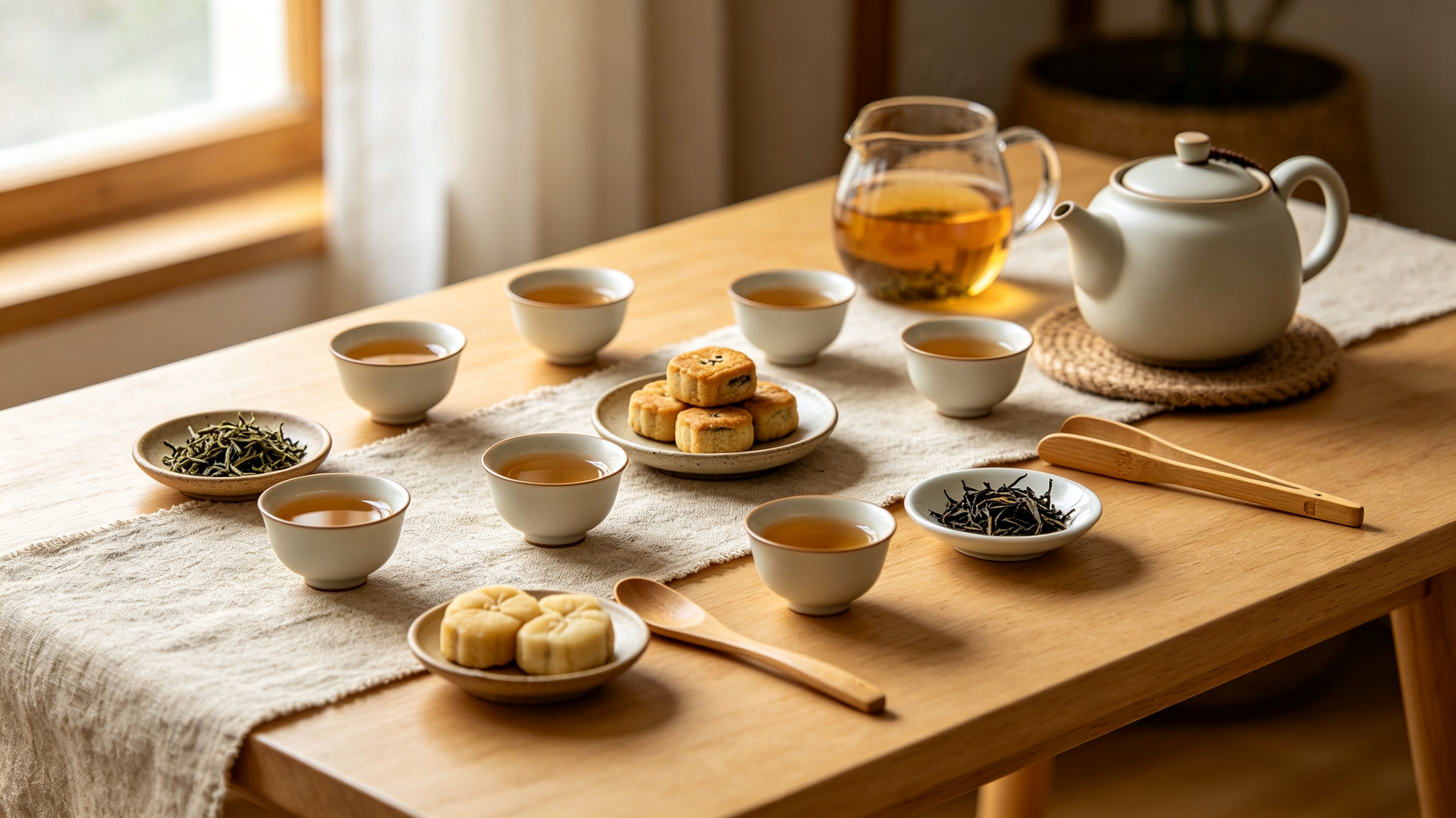
Learning how to host a tea tasting means managing attention, order, water, portions, and conversation more than displaying expensive equipment.
Rehearse the service path before guests arrive
Know where hot water, wet leaves, empty cups, food, and waste will go. A calm service depends on flow more than on expensive matching pieces.
Offer enough explanation to make the tea approachable, then return attention to the people at the table.
A home tea tasting works best when guests feel comfortable asking simple questions. You do not need ceremonial expertise or ten expensive teas. Choose a clear theme, prepare the water and vessels, and keep the pace slow enough to notice each cup.
Choose One Theme
- Green, oolong, and black tea from one broad spectrum.
- Light roast vs deeper roast.
- Plain tea vs scented or flavored tea.
- Three teas suitable for iced preparation.
- Caffeine-free flowers, fruit, and herbs.
- One tea brewed in two different ways.
Limit the Number of Teas
Three teas are enough for most groups. Four can work with small portions. Beyond that, aroma fatigue and conversation make careful comparison difficult.
Prepare Before Guests Arrive
- Measure tea portions.
- Set out cups and rinse vessels.
- Prepare a kettle and extra water.
- Label teas with simple names.
- Provide a waste bowl and towels.
- Keep strong perfume and scented candles away from the table.
Serve From Light to Intense
Begin with delicate tea, then move toward roasted, smoky, earthy, or strongly flavored styles. This keeps the first tea from being overwhelmed by the previous cup.
Offer Neutral Food
Plain crackers, bread, lightly salted nuts, and simple fruit can refresh the palate. Save chocolate, cheese, and rich desserts for a tasting designed around pairing.
Give Guests Useful Prompts
- What changes as the cup cools?
- Which aroma is clearest?
- Does the tea feel light, creamy, brisk, or drying?
- Would you drink it with food, alone, or iced?
- Which tea would you make again?
Use cups and pitchers from the tea ware collection and choose sample categories from the loose leaf tea collection.
Do Not Correct Personal Taste
One guest may enjoy smoke and another may dislike it. Tasting is more interesting when people explain differences rather than search for the approved answer.
Give the Gathering a Clear Beginning and End
Tell guests how many teas will be served and roughly how long the tasting will last. This removes uncertainty and helps people pace food, water, and conversation. A forty-five-minute comparison can then continue informally with the favorite tea.
Have a simple finishing signal: reveal the labels, vote on a tea to brew again, or share one surprising observation. The event feels complete without becoming formal.
- Welcome cup or water.
- Three focused tastings.
- Label reveal and favorite re-brew.
End With a Tea People Can Keep Drinking
After the comparison, brew a full pot of the group favorite. The tasting becomes memorable when it turns naturally into conversation.
Where Personal Preference Enters the Decision
Rehearse how to host a tea tasting from the guest’s point of view. They need a comfortable cup, a clear choice, an understandable description, and a place to set things down. The host needs a path for hot water, finished leaves, spills, food, and refills.
Use “Choose one theme.” and “Limit active tasting to three teas.” to remove the most likely sources of delay. Prepare measured tea before guests arrive and keep an extra pitcher of water available for dilution or another infusion.
The service should become less visible as conversation begins. A good host does not keep guests waiting while explaining every object. Share one useful sentence about the tea, answer questions when invited, and let hospitality remain the main event.
| Check | Evidence to keep |
|---|---|
| Choose one theme. | Observe the result and record the next adjustment. |
| Limit active tasting to three teas. | Observe the result and record the next adjustment. |
| Prepare measured portions. | Observe the result and record the next adjustment. |
This verification step keeps how to host a tea tasting tied to a real result rather than a rule copied from another kitchen, product page, or tea table.
Keep Context Beside the Recommendation
How to Host a Tea Tasting changes with portion size, serving temperature, guest preference, food, and the pace of the event. A combination that fails in one format may work when the tea is lighter, the food portion is smaller, or the order changes.
Treat “Choose one theme.” as the starting condition, not a performance requirement. Comfort and clarity matter more than reproducing a formal service or expert tasting vocabulary.
- Keep: the parts of how to host a tea tasting that produce a repeatable improvement.
- Recheck: results that appeared only once or under unusual conditions.
- Adapt: vessel size, water, timing, and serving to the actual situation.
- Stop: when safety, contamination, or damaged equipment becomes the concern.
A Practical Review List
- Choose one theme.
- Limit active tasting to three teas.
- Prepare measured portions.
- Serve neutral food and water.
- End with the group favorite.
Continue with Jian Ware Tea Cups: Glaze, Use, and Buying Considerations.
Working With How to Host a Tea Tasting in Real Life
Guests can remember three distinct teas better than eight rushed pours. A clear theme and a known end time reduce fatigue. After the comparison, brew a full pot of the favorite and let the gathering become social.
Avoid turning every observation into a correction. One guest may notice citrus while another notices flowers. Ask what evidence they experienced—aroma, taste, texture, or finish—rather than deciding who is right.
A Practical Scenario
A forty-five-minute tasting can include a welcome cup of water, three teas from light to intense, a label reveal, and one favorite re-brew. This provides structure without making the event formal.
Keep the Method Practical
Keep how to host a tea tasting connected to observable evidence, normal household conditions, and the way tea is actually used.
Use the Next Brew as Confirmation
Before treating how to host a tea tasting as settled, repeat the method with the same tea and change only one condition that matters to the article. Use “Choose one theme.” as the baseline and “Prepare measured portions.” as the deliberate change. Write down whether aroma, taste, texture, convenience, or cleanup improved.
This final repeat protects against conclusions caused by a rushed session, unfamiliar water, an unusual cup, or a product that does not represent the wider category. When the result remains useful twice, keep the method. When it does not, preserve both records and narrow the claim rather than forcing a universal rule.