

Jian Ware Tea Cups: Glaze, Use, and Buying Considerations
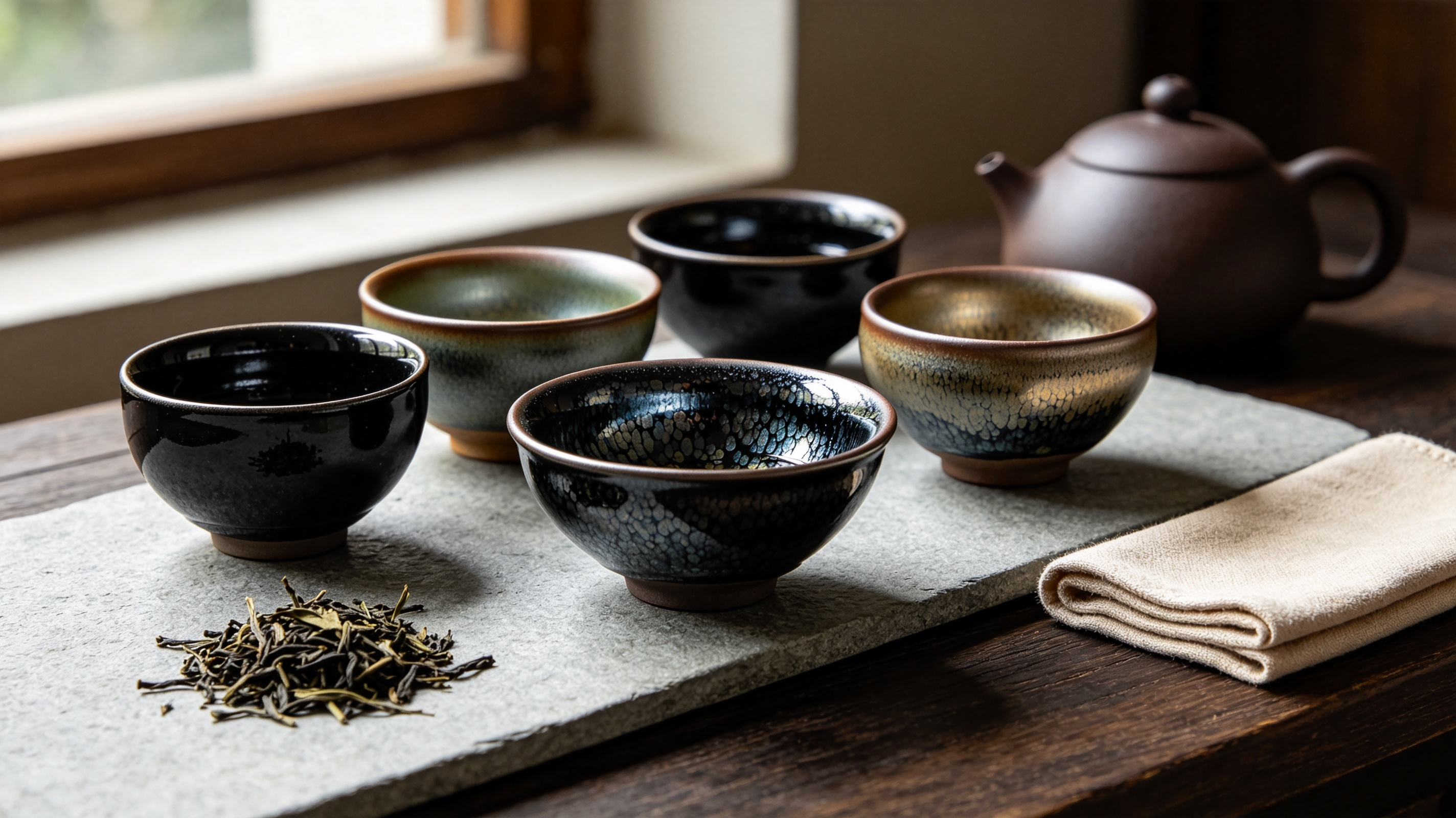
Jian ware tea cups deserve the same practical evaluation as any teaware: safety, rim, heat, stability, capacity, and honest representation.
Jian ware tea cups are known for dark iron-rich glazes and kiln effects that can resemble hare’s fur, oil spots, or other naturally formed patterns. Modern pieces range from everyday cups to carefully made collector works.
A cup should still be judged as a drinking vessel: comfortable rim, stable foot, suitable size, safe glaze, and a surface that can be cleaned.
Why the Glaze Looks Different
Jian-style effects develop through glaze composition, iron content, firing atmosphere, temperature, and cooling. Pattern variation is part of the process, though modern decoration and production methods vary widely.
How Dark Glaze Changes the Tea Experience
A dark interior creates a dramatic background and can highlight foam or pale edges, but it does not show liquor color as clearly as white porcelain. Use it for atmosphere and texture rather than analytical color comparison.
Cup Shape and Handling
- Check whether the rim feels smooth.
- Hold the cup with hot water before deciding comfort.
- Look for a stable foot.
- Choose a capacity that suits your brewing vessel.
- Inspect the glaze for damage or sharp areas.
What Tea Suits Jian Ware?
There is no mandatory pairing. Roasted oolong, black tea, pu’er, and whisked tea can feel visually at home in a dark cup, while green or white tea creates strong contrast. Personal handling and temperature matter more than a rigid rule.
Buying Questions
- Who made the cup and where?
- Is it handmade, studio-made, or factory-produced?
- Is the glaze food-safe?
- Are pattern names descriptive or verified production claims?
- Is the exact cup shown or only a representative image?
- What is the return policy for glaze variation?
Teazenway’s tea ware collection includes tea cups and other serving pieces for different styles.
Care
Rinse soon after use and clean gently. Avoid abrasive tools that can scratch glossy surfaces. Dry the foot ring and inspect handmade pieces for retained moisture.
Variation Should Be Shown, Not Hidden
Kiln effects can differ from cup to cup. A seller should clarify whether the photograph shows the exact piece, a typical example, or a range of possible patterns. Variation is easier to appreciate when expectations are set honestly.
For higher-priced work, ask for photographs of the rim, foot, interior, and maker’s mark. These practical views are more useful than dramatic lighting that hides the shape.
- Exact-piece listing or representative listing?
- Natural kiln variation or applied decoration?
- Maker information and dimensions included?
Craft Should Be Explained Clearly
A beautiful glaze can make tea feel special, but price and authenticity should be supported by maker information, process detail, and honest photographs. Buy the cup you will use, not only the story around it.
What This Looks Like at Home
Fill the cup with hot water and hold it for the length of a normal sip. A beautiful wall profile may still be uncomfortable if the rim becomes too hot or the foot feels unstable.
Jian Ware Tea Cups: The Decision That Matters
Kiln variation means the piece you receive may differ from a representative photograph. Higher-priced listings should show the exact cup or explain the acceptable range of glaze, color, foot, and pattern.
Dark glaze makes liquor color difficult to judge but can create striking contrast and a tactile drinking experience. Keep a white cup nearby when analytical color comparison matters.
Turn the Guidance Into a Repeatable Method
Approach Jian ware tea cups with two layers: the historical practice and the modern product or event carrying the name. Give each layer a date, place, material, or social setting so the explanation does not become a romantic story detached from evidence.
The practical checks “Confirm exact-piece or representative listing.” and “Inspect rim, foot, interior, and maker mark.” help separate useful context from decorative claims. Variation is normal, but a seller or host should still explain what is traditional, what is contemporary, and what is simply their own interpretation.
Cultural knowledge should make participation more comfortable, not create a test of belonging. Use accurate language, acknowledge regional variation, and avoid presenting one surviving practice as the only authentic expression of a long history.
- Review: Confirm exact-piece or representative listing.
- Review: Inspect rim, foot, interior, and maker mark.
- Review: Check food-safe use information.
- Review: Match capacity to the brewing vessel.
This verification step keeps Jian ware tea cups tied to a real result rather than a rule copied from another kitchen, product page, or tea table.
Questions Readers Often Ask
What creates Jian-style glaze patterns?
Iron-rich glaze, firing atmosphere, temperature, and cooling contribute to crystalline effects.
Can Jian ware be used for any tea?
Yes, though dark glaze hides liquor color and different cup shapes change handling.
Are all oil-spot cups handmade?
No. Production methods and levels of handwork vary; ask for maker and process information.
The Limits of a One-Size-Fits-All Answer
Jian Ware Tea Cups provides a model, not a complete explanation of every tea. Cultivar, weather, processing skill, storage, water, and brewing can reinforce or contradict the expectation created by one term.
When the evidence is mixed, keep the label narrow. Use “Confirm exact-piece or representative listing.” and “Inspect rim, foot, interior, and maker mark.” to gather more context instead of expanding the claim until it explains everything.
- Keep: the parts of Jian ware tea cups that produce a repeatable improvement.
- Recheck: results that appeared only once or under unusual conditions.
- Adapt: vessel size, water, timing, and serving to the actual situation.
- Stop: when safety, contamination, or damaged equipment becomes the concern.
Separate historical context from modern marketing
Cultural terms can change meaning as they travel. Give the historical use clearly, then explain modern variation without claiming that one contemporary practice is automatically illegitimate.
Specific dates, places, materials, and practices are more informative than romantic claims of timeless tradition.
Five Checks That Prevent Guessing
- Confirm exact-piece or representative listing.
- Inspect rim, foot, interior, and maker mark.
- Check food-safe use information.
- Match capacity to the brewing vessel.
- Buy a cup you will handle comfortably.
Let the Cup Confirm the Rule
The best approach to Jian ware tea cups is the one that remains clear after the marketing language is removed.
For a different angle, read How to Organize a Tea Shelf Without Losing Freshness.
For practical follow-up: tea cup guide.