

Ceramic vs Porcelain Teapot: Which One Suits Your Tea?
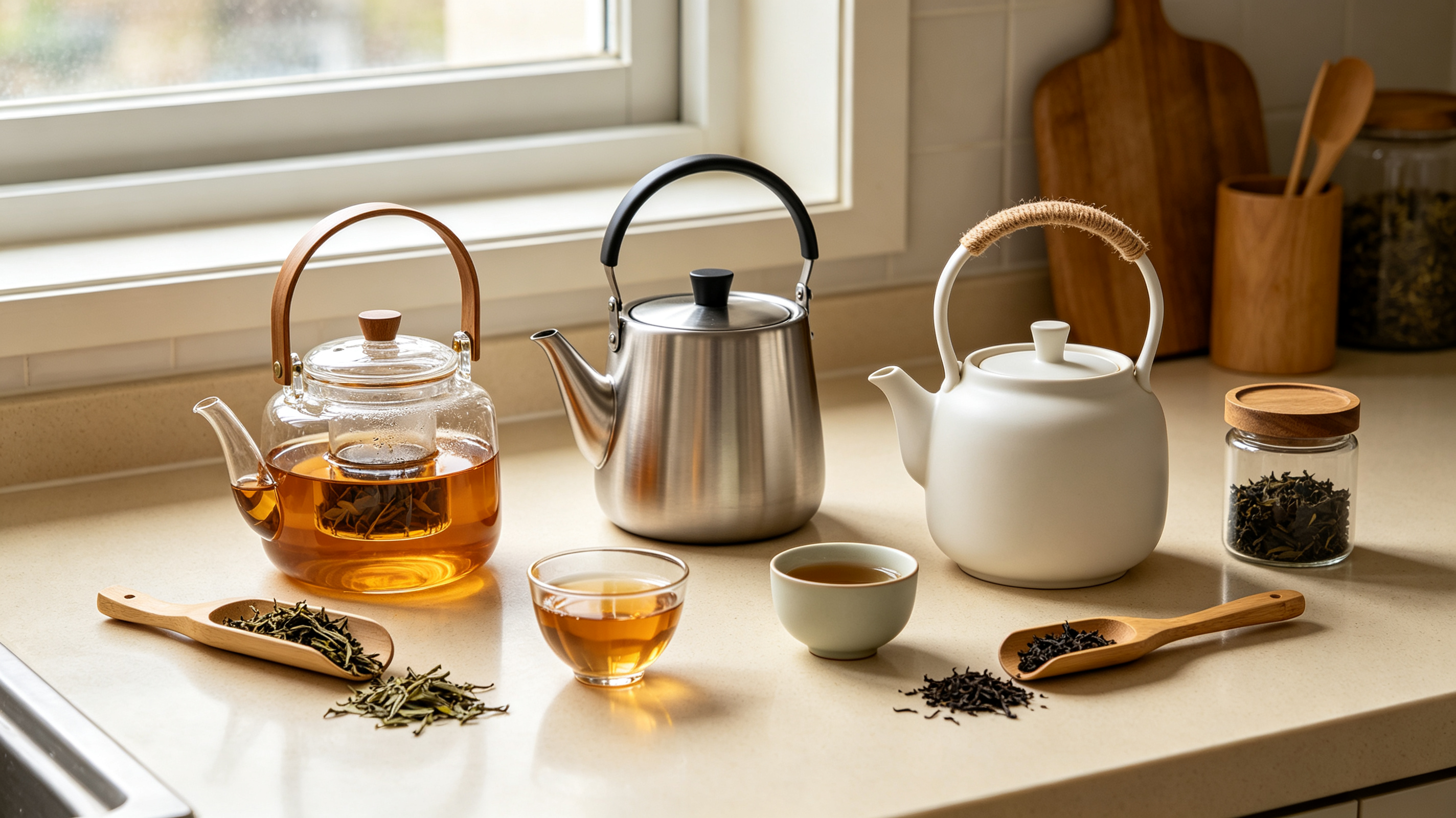
Ceramic vs porcelain teapot decisions should include glaze, thickness, shape, pour quality, weight, and the tea you brew most often.
Choose by situation, not by a universal winner
A comparison becomes useful when it names the job: workday speed, focused tasting, serving guests, milk tea, travel, or repeated infusions. The same person may choose differently in two settings.
Compare total effort and cleanup as well as flavor. A method or product that remains unused cannot provide practical value.
Porcelain is a type of ceramic, but shoppers often use ceramic to mean thicker stoneware or earthenware. In practice, the comparison is usually between a refined, less porous porcelain pot and a heavier ceramic pot with different heat behavior.
Glaze, wall thickness, shape, and craftsmanship may affect daily use more than the category name.
Porcelain Teapots
- Usually glazed and neutral in flavor.
- Often lighter and thinner.
- Useful for comparing different teas.
- Easy to inspect and clean.
- Can feel hot quickly.
Heavier Ceramic Teapots
- Often retain heat longer.
- Can feel stable and comfortable.
- Suit black tea, roasted oolong, and herbal infusions.
- May be heavier when full.
- Glaze quality and interior finish matter.
Heat Retention
A thick pot maintains temperature but can overcook delicate green tea if the water is already too hot. Thin porcelain responds quickly and gives more control, though the tea may cool faster.
A related practical guide is How to Organize a Tea Shelf Without Losing Freshness.
Glazed vs Unglazed
Glazed interiors are easier to use across many teas because they absorb less aroma. Unglazed clay can interact with tea and retain scent; it is better treated as a separate choice, not as generic ceramic.
Cleaning and Odor
Choose a lid opening wide enough for cleaning. Inspect the spout filter and corners. A neutral glazed pot should not retain detergent or strong tea odors after careful rinsing.
Decision Table
| Your priority | Likely better starting point |
|---|---|
| Tasting many tea types | Glazed porcelain |
| Heat retention | Thicker ceramic |
| Lightweight handling | Porcelain |
| Large herbal or fruit tea service | Sturdy glazed ceramic |
| Seeing liquor color | Consider glass instead |
Compare teapots in the tea ware collection and use the tea cup guide to build a balanced serving set.
Pour Quality Can Override Material Preference
A teapot should start and stop cleanly, keep the lid secure, and empty without leaving a large pool behind. A beautifully made material is frustrating when the spout dribbles or the lid falls during service.
Before buying, look for a pouring demonstration or customer comments about flow. When possible, test the pot with water. Material affects heat, but geometry determines much of the daily experience.
- Check whether the lid has a vent.
- Look for a clean spout cut-off.
- Confirm the handle balances a full pot.
Choose the Pot You Can Control
The best material is the one that works with your water temperature, serving size, and cleaning habits. A beautiful pot that pours poorly or stays unused is not an upgrade.
How to Verify the Advice in Your Own Kitchen
A useful decision about ceramic vs porcelain teapot begins with a named situation. Decide whether the priority is speed, flavor development, portability, serving several people, repeated infusions, cost, or easy cleanup. A universal winner rarely exists because the priorities conflict.
Run the comparison with the same tea and water whenever possible. Apply “Check glazed interior quality.” and “Compare wall thickness and shape.,” then write which option made the desired result easier. Include the time spent setting up and cleaning, not only the first sip.
The result can legitimately change by occasion. A method chosen for a quiet weekend may be inappropriate at work, and a portable option may sacrifice some control. A fair comparison allows one person to keep both choices for different jobs.
- Check glazed interior quality. Record what changed before moving to the next variable.
- Compare wall thickness and shape. Record what changed before moving to the next variable.
- Test balance when full. Record what changed before moving to the next variable.
- Inspect lid vent and spout. Record what changed before moving to the next variable.
This verification step keeps ceramic vs porcelain teapot tied to a real result rather than a rule copied from another kitchen, product page, or tea table.
What This Guide Cannot Decide for You
No guide can declare one product or method universally best for ceramic vs porcelain teapot. Budget, shipping, hand size, storage space, cleanup, serving size, and taste can legitimately change the decision. A transparent tradeoff is better than a false winner.
Use the question “Is porcelain a type of ceramic?” to define the choice more narrowly. If the answer depends on a specific tea or household routine, test a small quantity or borrowed tool before making a larger commitment.
- Keep: the parts of ceramic vs porcelain teapot that produce a repeatable improvement.
- Recheck: results that appeared only once or under unusual conditions.
- Adapt: vessel size, water, timing, and serving to the actual situation.
- Stop: when safety, contamination, or damaged equipment becomes the concern.
A Practical Review List
- Check glazed interior quality.
- Compare wall thickness and shape.
- Test balance when full.
- Inspect lid vent and spout.
- Choose a capacity that matches servings.
Ceramic vs Porcelain Teapot: A Practical Framework
Two porcelain pots can behave differently when one is thin and wide and the other thick and tall. Likewise, a glazed stoneware pot may be neutral and easy to clean. Material labels are a starting point, not the full thermal design.
Pour performance often decides whether the pot is used. The lid should remain secure, the handle should balance the full weight, and the spout should stop without a long dribble.
A Simple Experiment
Brew the same black tea in a thin porcelain pot and a thick ceramic pot. The heavier pot may hold heat longer and deepen extraction, while porcelain may give quicker control. Adjust time before declaring one material better.
Keep the Method Practical
Keep ceramic vs porcelain teapot connected to observable evidence, normal household conditions, and the way tea is actually used.