

Tea Kettle Materials: Glass, Stainless Steel, or Ceramic?
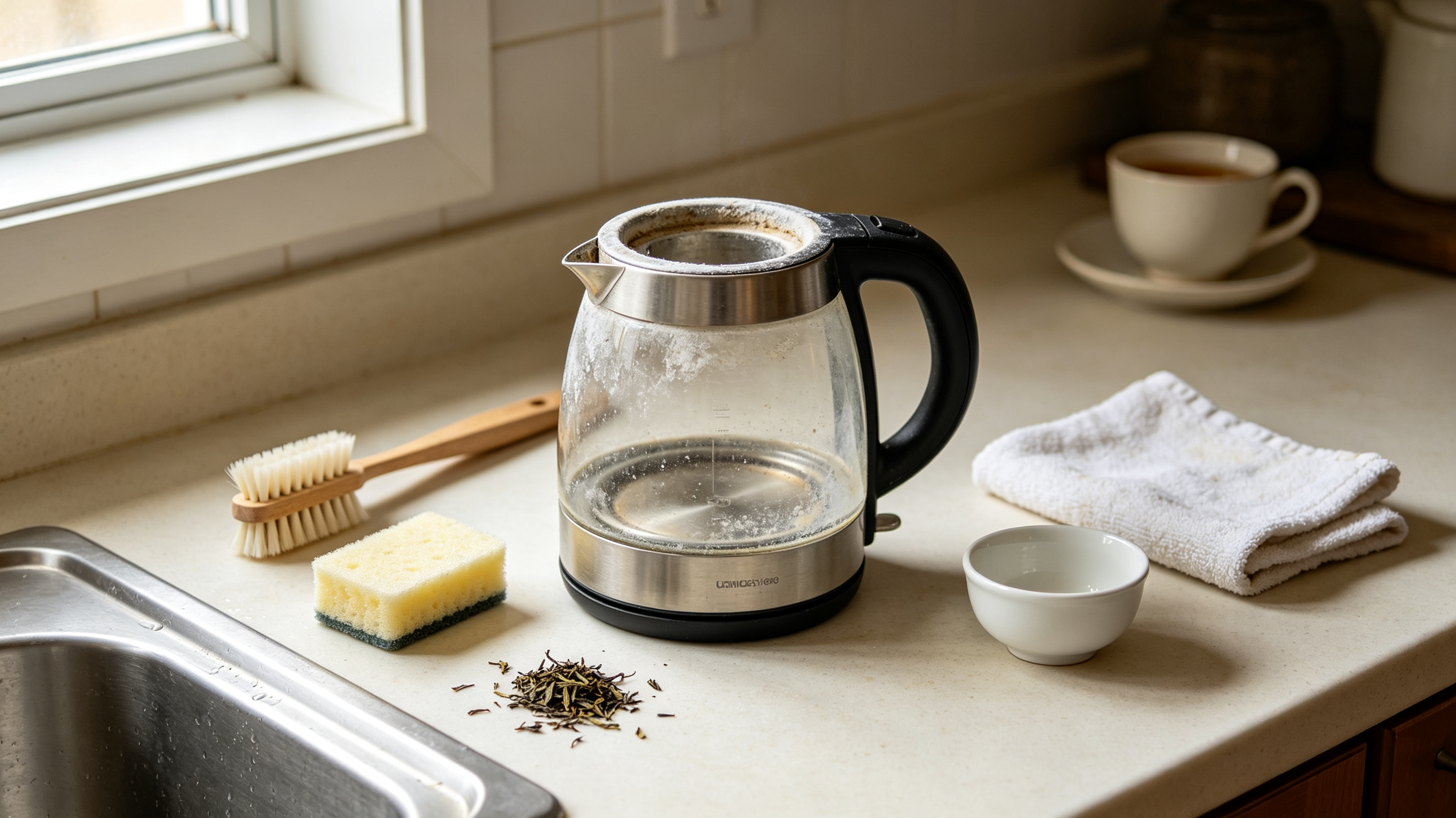
Tea kettle materials are only one part of the decision; water contact, controls, handling, and maintenance complete the picture.
A kettle heats water; it does not need to match one tea category. The best material is the one that heats reliably, is easy to clean, and does not add odor or make daily handling difficult.
Glass, stainless steel, and ceramic kettles each offer a different balance of visibility, durability, weight, and maintenance.
Glass Kettles
- Let you see water level and scale.
- Look clean and modern.
- Can be heavier than expected.
- Require careful handling.
- Show stains and mineral buildup quickly.
Stainless Steel Kettles
- Durable and widely available.
- Often lightweight relative to capacity.
- Hide internal scale unless inspected.
- Quality of interior and seals matters.
- Exterior can become hot.
Ceramic Kettles
- Visually warm and decorative.
- Can be heavy.
- May retain heat well.
- Need careful inspection for chips and cracks.
- Less common in temperature-control designs.
Does Material Change Water Taste?
A clean, food-safe kettle should not contribute obvious flavor. New appliances can carry manufacturing odors that need proper initial cleaning. Persistent metallic, plastic, or stale smells should be investigated.
Temperature Control vs Material
Accurate temperature settings may matter more than the body material for green and white tea. A simple kettle can still work when you use resting or vessel-transfer methods.
See the water guide for water-quality effects and the tea ware collection for brewing vessels that receive the heated water.
Scale and Maintenance
Hard water leaves mineral deposits in every kettle material. Glass makes scale visible; steel may hide it; ceramic can develop deposits around the base. Regular descaling protects performance.
Inspect Every Part That Touches Water or Steam
A kettle may have a glass or steel body but still include plastic around the lid, level window, filter, or spout. Material descriptions often refer only to the main body. Review the interior photographs and specifications if avoiding a particular material matters to you.
Also consider replacement parts. A durable body is less useful when a lid seal, filter, or base cannot be replaced after normal wear.
- Inspect the interior seam.
- Check lid and spout components.
- Review warranty and parts availability.
Choose for Daily Handling
Consider capacity, weight when full, lid access, pour control, cord placement, and cleaning. Material matters, but a well-designed kettle becomes useful because it fits your routine.
Tea Kettle Materials: What to Notice First
A kettle advertised as glass or steel can still use plastic in the lid, level window, filter, or seal. If material contact matters to you, inspect interior photographs and specifications rather than relying on the product name.
Temperature control, minimum fill, pour speed, noise, and weight may influence daily satisfaction more than material. A durable kettle becomes inconvenient if it is difficult to lift or clean.
Use This Before You Decide
- Review every water-contact component.
- Check weight at full capacity.
- Inspect lid access for cleaning.
- Compare temperature settings and hold function.
- Confirm warranty and replaceable parts.
Build a Baseline Before Making Fine Adjustments
A useful decision about tea kettle materials begins with a named situation. Decide whether the priority is speed, flavor development, portability, serving several people, repeated infusions, cost, or easy cleanup. A universal winner rarely exists because the priorities conflict.
Run the comparison with the same tea and water whenever possible. Apply “Review every water-contact component.” and “Check weight at full capacity.,” then write which option made the desired result easier. Include the time spent setting up and cleaning, not only the first sip.
The result can legitimately change by occasion. A method chosen for a quiet weekend may be inappropriate at work, and a portable option may sacrifice some control. A fair comparison allows one person to keep both choices for different jobs.
- Review: Review every water-contact component.
- Review: Check weight at full capacity.
- Review: Inspect lid access for cleaning.
- Review: Compare temperature settings and hold function.
This verification step keeps tea kettle materials tied to a real result rather than a rule copied from another kitchen, product page, or tea table.
Allow for Tea, Water, and Personal Variation
No guide can declare one product or method universally best for tea kettle materials. Budget, shipping, hand size, storage space, cleanup, serving size, and taste can legitimately change the decision. A transparent tradeoff is better than a false winner.
Use the question “Does stainless steel make water taste metallic?” to define the choice more narrowly. If the answer depends on a specific tea or household routine, test a small quantity or borrowed tool before making a larger commitment.
- Keep: the parts of tea kettle materials that produce a repeatable improvement.
- Recheck: results that appeared only once or under unusual conditions.
- Adapt: vessel size, water, timing, and serving to the actual situation.
- Stop: when safety, contamination, or damaged equipment becomes the concern.
How the Decision Plays Out
A clear glass kettle makes scale visible, which encourages timely cleaning. A stainless kettle may be lighter and tougher, but deposits can remain hidden until the interior is inspected.
Choose by situation, not by a universal winner
A comparison becomes useful when it names the job: workday speed, focused tasting, serving guests, milk tea, travel, or repeated infusions. The same person may choose differently in two settings.
Compare total effort and cleanup as well as flavor. A method or product that remains unused cannot provide practical value.
Quick Answers
Does stainless steel make water taste metallic?
A clean food-safe kettle should not add obvious flavor; persistent odor or taste needs investigation.
Is glass safer than steel?
Both can be suitable when well designed and food-safe. Handling, seals, and cleaning matter.
Can ceramic electric kettles crack?
They can be heavier and more vulnerable to impact; inspect care instructions and chips.
Turn Information Into a Better Routine
When tea kettle materials leads to better control and fewer assumptions, the topic has served its purpose.
For a different angle, read How Fresh Should Loose Leaf Tea Be?.
A Small Step That Improves Reliability
Before treating tea kettle materials as settled, repeat the method with the same tea and change only one condition that matters to the article. Use “Review every water-contact component.” as the baseline and “Inspect lid access for cleaning.” as the deliberate change. Write down whether aroma, taste, texture, convenience, or cleanup improved.
This final repeat protects against conclusions caused by a rushed session, unfamiliar water, an unusual cup, or a product that does not represent the wider category. When the result remains useful twice, keep the method. When it does not, preserve both records and narrow the claim rather than forcing a universal rule.