

How Fresh Should Loose Leaf Tea Be?
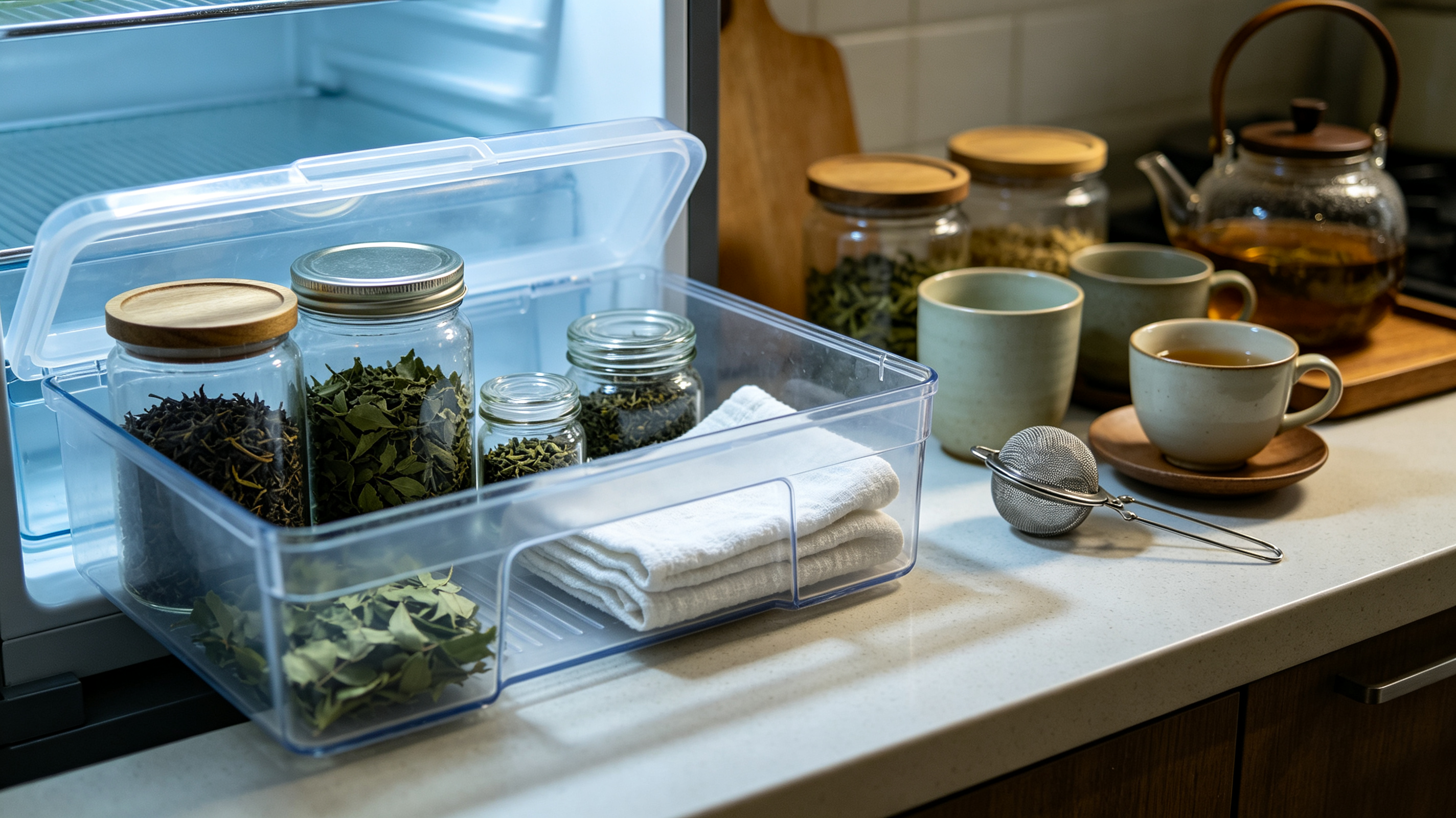
How fresh should loose leaf tea be has a different answer for vivid green tea, rested roast, aged tea, and aromatic herbal ingredients.
Freshness matters in tea, but fresh does not always mean newly harvested. Green tea often rewards vivid recent character. Roasted oolong may benefit from rest. Pu’er can transform with age. Scented and herbal teas may lose aroma before they become unsafe.
The better question is whether the tea is still within the drinking window intended for its style.
Fresh Green Tea
Green tea is sensitive to air, heat, moisture, and light. A fresh tea should smell lively rather than dusty or flat. Storage after opening can matter as much as the harvest date.
White Tea
Some white tea is enjoyed fresh for light sweetness and fragrance; other styles are stored for longer development. The product should make its intended use clear.
Oolong and Roasted Tea
Light floral oolong often benefits from good aroma preservation. Recently roasted tea may need time for the roast to settle. Freshness and resting are not opposites when the process is intentional.
A related practical guide is How to Read a Tea Label Before You Buy.
Black Tea
Black tea usually holds its character longer than delicate green tea, but aroma still fades. Fruity and floral top notes may disappear before body does.
Pu’er and Aged Tea
Age can be desirable only when the tea is suitable and storage is clean. Old is not automatically aged well. Musty, sour, moldy, or contaminated odors are warning signs.
Flower, Fruit, and Herbal Tea
Dried flowers and herbs often lose fragrance gradually. Fruit pieces can absorb moisture if packaging is poor. Buy quantities that you can finish while the blend still smells distinct.
Signs Tea Has Lost Its Best Character
- Dry leaves have almost no aroma.
- Fragrance disappears immediately after brewing.
- Tea tastes dusty, cardboard-like, or stale.
- Color is dull compared with earlier brews.
- Flavored tea retains perfume but has no base or body.
- Moisture, clumping, or unusual odor appears.
Protect opened tea with the methods in the loose leaf tea storage guide and buy realistic quantities from the tea collection.
Opening the Package Starts a New Timeline
A sealed tea may remain stable for months, but the clock changes once the package is opened repeatedly. Air, room humidity, kitchen heat, and the number of openings affect the pace of aroma loss.
Divide a large purchase into smaller airtight portions if you will use it slowly. Keep one working pouch and leave the rest sealed. This approach is often more effective than buying special containers after the tea has already been exposed.
- Write the opening date.
- Use clean, dry scoops.
- Reseal immediately after measuring.
Freshness Is a Sensory Condition
Dates are helpful, but smell, taste, packaging, and style complete the picture. A well-stored tea can outlast a poorly stored newer one. Use the date to ask questions, then let the leaf answer.
A Simple Experiment
Open a green tea and note its aroma on day one, then again after a month of normal use. If the package is left loosely folded, the change may be obvious. A well-sealed smaller portion provides a useful comparison.
How Fresh Should Loose Leaf Tea Be: What to Notice First
Freshness can mean vivid recent character, stable roast, clean storage, or appropriate maturation. A spring green tea and an aged pu’er need different standards. The seller should explain whether the tea is designed for immediate fragrance, a resting period, or long-term transformation.
After opening, handling becomes part of freshness. A new tea repeatedly exposed to humid air can deteriorate faster than an older tea stored in sealed portions.
Build a Baseline Before Making Fine Adjustments
Use how fresh should loose leaf tea be to make one prediction before brewing. Predict how quickly the leaves will open, how the aroma may develop, whether the tea might tolerate heat, or whether repeated infusions are likely. A technical term becomes useful only when it leads to something observable.
Check that prediction through the scenario described above and the first two review points: “Identify the intended drinking window.” and “Check harvest, roast, or packing context..” If the cup contradicts the expectation, consider cultivar, roast, leaf size, storage, and brewing before rejecting the entire explanation.
Avoid turning one processing feature, season, grade, or origin claim into a complete quality score. Tea reaches the cup through several linked stages. The most reliable interpretation keeps the term narrow and lets aroma, taste, texture, and finish provide the final evidence.
- Identify the intended drinking window. Record what changed before moving to the next variable.
- Check harvest, roast, or packing context. Record what changed before moving to the next variable.
- Write the opening date. Record what changed before moving to the next variable.
- Protect delicate tea from heat and air. Record what changed before moving to the next variable.
This verification step keeps how fresh should loose leaf tea be tied to a real result rather than a rule copied from another kitchen, product page, or tea table.
Common Questions
Is newly harvested tea always better?
No. Some tea benefits from resting or aging, while delicate green tea often rewards freshness.
How can I tell whether tea is stale?
Aroma may be flat, flavor weak, and the finish dusty or cardboard-like.
Can stale tea be unsafe?
Staleness is usually quality loss; moisture, mold, pests, or contamination are safety concerns.
Allow for Tea, Water, and Personal Variation
How Fresh Should Loose Leaf Tea Be provides a model, not a complete explanation of every tea. Cultivar, weather, processing skill, storage, water, and brewing can reinforce or contradict the expectation created by one term.
When the evidence is mixed, keep the label narrow. Use “Identify the intended drinking window.” and “Check harvest, roast, or packing context.” to gather more context instead of expanding the claim until it explains everything.
- Keep: the parts of how fresh should loose leaf tea be that produce a repeatable improvement.
- Recheck: results that appeared only once or under unusual conditions.
- Adapt: vessel size, water, timing, and serving to the actual situation.
- Stop: when safety, contamination, or damaged equipment becomes the concern.
Turn the definition into a prediction you can test
A technical term matters when it helps predict leaf behavior, flavor, storage, or brewing. Use the definition to form a hypothesis, then check it in the cup.
Avoid treating one feature as a complete quality score. Tea is the combined result of raw material, processing, storage, water, and preparation.
Five Checks That Prevent Guessing
- Identify the intended drinking window.
- Check harvest, roast, or packing context.
- Write the opening date.
- Protect delicate tea from heat and air.
- Use smell and taste, not date alone.
Let the Cup Confirm the Rule
The best approach to how fresh should loose leaf tea be is the one that remains clear after the marketing language is removed.