

Tea Sampler Guide: How to Build a Useful Tasting Set
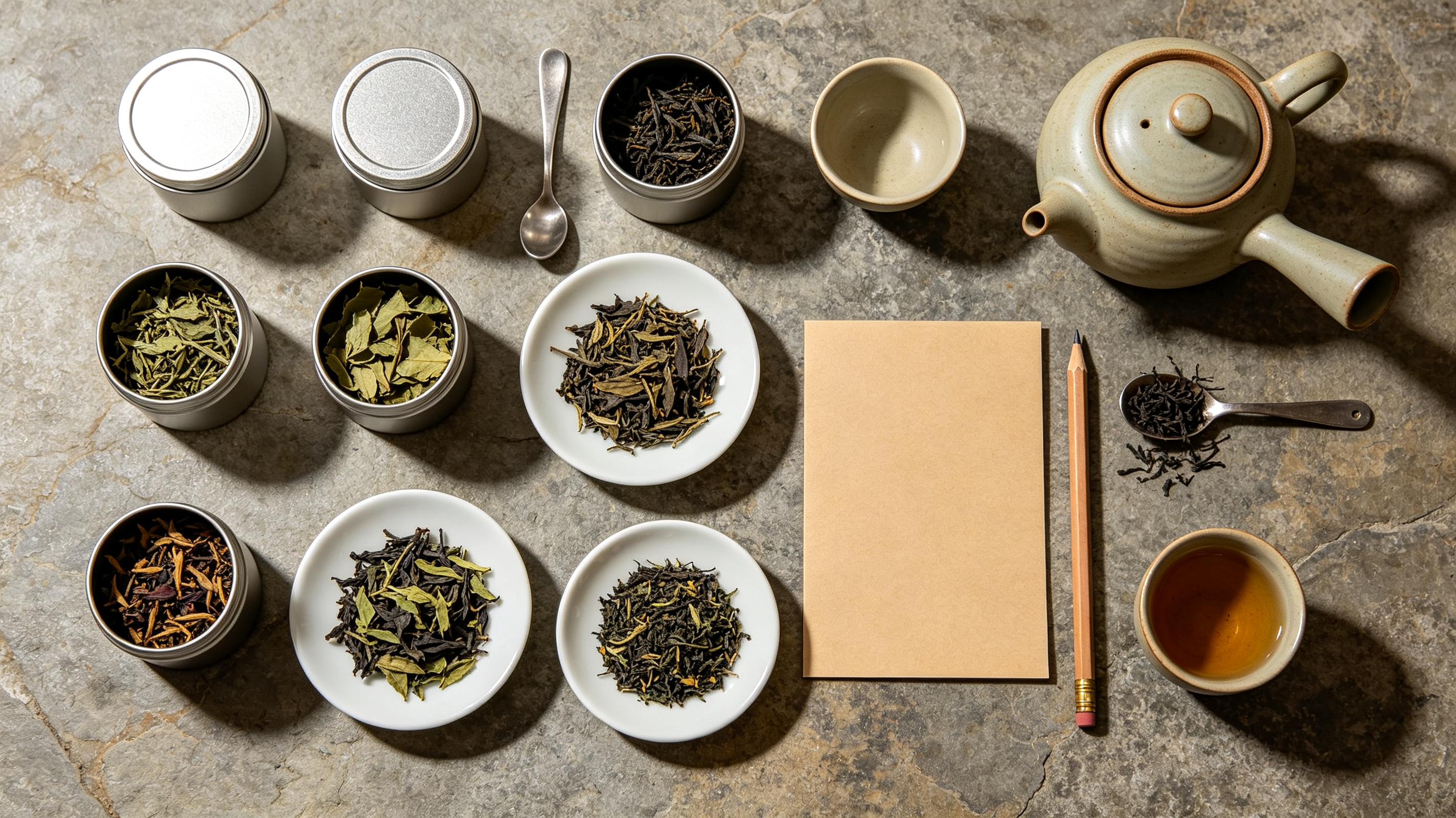
A tea sampler guide should help you answer a preference question, not simply encourage collecting many small bags.
Tea Sampler Guide: A Practical Framework
A sampler becomes educational when only one or two variables change. Comparing green, oolong, and black tea teaches broad categories. Comparing three roasted oolongs teaches roast and origin. Mixing twelve unrelated flavors may be entertaining but produces weak conclusions.
Each sample should allow a second attempt. A single-brew portion is poor value for learning because an incorrect temperature or long steep can consume the whole sample.
A tea sampler is most useful when the teas have a reason to be together. Random variety can be fun, but a focused set helps you discover preferences and compare styles under similar conditions.
The right sampler might explore oxidation, roast, origin, floral aroma, caffeine-free ingredients, or one tea category across several expressions.
Choose a Learning Question
- Do I prefer green, oolong, or black tea?
- How does light roast compare with deep roast?
- Do I enjoy floral aroma or fruit flavor?
- Which teas work best iced?
- Can I taste differences between whole and broken leaf?
- Which caffeine-free infusions fit my evening routine?
Useful Sampler Structures
| Sampler type | What it compares | Good for |
|---|---|---|
| Category sampler | Green, white, oolong, black, pu’er | Beginners |
| Oolong sampler | Light, roasted, floral, mineral | Multiple infusions |
| Aroma sampler | Jasmine, fruit, spice, natural leaf aroma | Fragrance preferences |
| Herbal sampler | Mint, flowers, fruit, roasted leaves | Caffeine-free exploration |
| Brewing sampler | Same category, different leaf sizes | Technique practice |
How Much Tea Should Each Sample Include?
A useful sample should provide more than one attempt. Ten to twenty grams is often enough for several Western-style cups, while dense tea or gongfu brewing may stretch differently. Very small one-brew samples leave no room to correct a mistake.
Control the Tasting
Use the same water and vessel when comparing similar teas. Measure the leaves, label the cups, and taste at more than one temperature.
Avoid Flavor Fatigue
Taste two or three teas in one session. Strong smoke, perfume, spice, or ripe pu’er can affect the next cup, so order samples from delicate to intense.
Choose a broad starting range from the loose leaf tea collection and keep notes with the measurement methods already published on the site.
Blind Tasting Can Reveal Preference
When labels carry famous regions, grades, or prices, expectations can influence the cup. Ask someone to mark samples with simple letters and reveal them after tasting. A casual blind comparison can show whether you prefer the expensive tea, the darker roast, or the less famous option.
Do not make the exercise competitive. The purpose is to notice preference without product prestige. Repeat a favorite on another day before buying a larger amount.
- Use similar-looking cups.
- Keep brewing conditions written separately.
- Reveal identities only after notes are complete.
A Sampler Should Lead to a Decision
At the end, identify what you would buy again, what needs a different brewing method, and what does not suit you. The goal is not to like every tea; it is to become a more confident chooser.
How to Verify the Advice in Your Own Kitchen
Before spending more on tea sampler guide, save the product page and identify which claims can be checked after delivery. Leaf appearance, package weight, ingredient list, seal quality, aroma, and brewing behavior are verifiable. Words such as rare, premium, reserve, or ancient need supporting detail.
Start with “Write the question the sampler should answer.” and “Include enough tea for several brews..” A small first order creates room to learn the tea without turning one uncertain purchase into months of storage. Compare the delivered product with the photographs and description while the listing is still available.
Price should be evaluated per enjoyable serving, not only per gram. A dense tea that supports several infusions can behave differently from a bulky blend used once. Shipping, packaging, freshness, and the chance that the tea suits your routine all belong in the decision.
| Check | Evidence to keep |
|---|---|
| Write the question the sampler should answer. | Observe the result and record the next adjustment. |
| Include enough tea for several brews. | Observe the result and record the next adjustment. |
| Taste from light to intense. | Observe the result and record the next adjustment. |
This verification step keeps tea sampler guide tied to a real result rather than a rule copied from another kitchen, product page, or tea table.
What This Guide Cannot Decide for You
No guide can declare one product or method universally best for tea sampler guide. Budget, shipping, hand size, storage space, cleanup, serving size, and taste can legitimately change the decision. A transparent tradeoff is better than a false winner.
Use the question “How many teas belong in a sampler?” to define the choice more narrowly. If the answer depends on a specific tea or household routine, test a small quantity or borrowed tool before making a larger commitment.
- Keep: the parts of tea sampler guide that produce a repeatable improvement.
- Recheck: results that appeared only once or under unusual conditions.
- Adapt: vessel size, water, timing, and serving to the actual situation.
- Stop: when safety, contamination, or damaged equipment becomes the concern.
Reduce risk before increasing order size
Begin with a small quantity, confirm the seller’s description, and test the tea in your normal water and teaware. A large discount is poor value when the product does not fit your routine.
Save the listing and photograph the delivered leaf. This makes it easier to compare the promise, the product, and any future reorder.
A Practical Scenario
A useful beginner set might contain one fresh green tea, one floral oolong, one roasted oolong, one malty black tea, and one caffeine-free fruit or herbal infusion. The set maps preferences without pretending to represent every tea culture.
Continue with How to Buy Loose Leaf Tea Online Without Guessing.
Quick Answers
How many teas belong in a sampler?
Five to eight can make a useful set, but taste only two or three in one session.
How large should each sample be?
Enough for several attempts is better than a one-brew novelty portion.
Should a sampler include flavored tea?
It can, as long as the set clearly distinguishes plain, scented, and flavored products.
Before the Next Cup
- Write the question the sampler should answer.
- Include enough tea for several brews.
- Taste from light to intense.
- Keep water and vessels consistent.
- Record what you would buy again.
Use the Idea Without Overcomplicating Tea
Used carefully, tea sampler guide becomes practical knowledge rather than another label to memorize.
Useful next steps: water for tea guide.