

Fairness Pitcher Guide: Why Tea Drinkers Use a Sharing Pitcher
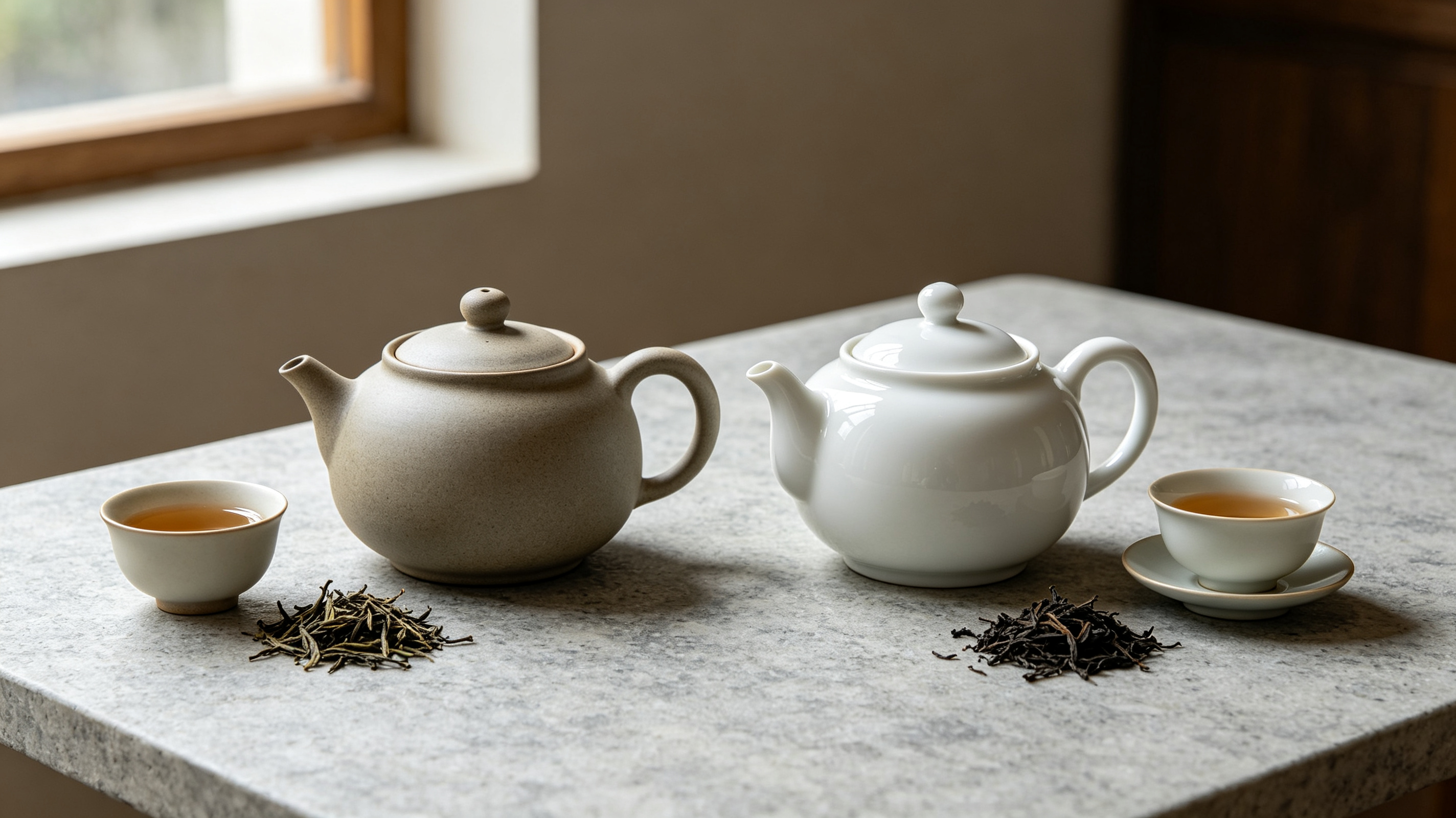
A fairness pitcher guide should explain even strength, complete drainage, capacity, and clean service rather than ceremony alone.
A fairness pitcher is a serving vessel that receives the entire infusion before tea is divided among cups. It is often called a sharing pitcher, tea pitcher, or gong dao bei.
Its practical purpose is consistency. Tea poured directly from a teapot into several cups can become progressively stronger. Mixing the infusion first gives each person a similar cup.
Why Direct Pouring Can Be Uneven
Tea continues to extract while you pour. The first cup may be lighter and the last cup stronger. A small teapot, slow pour, or many guests make the difference more noticeable.
How to Use a Fairness Pitcher
- Finish the infusion in the gaiwan or teapot.
- Pour all tea into the pitcher.
- Use a strainer if the leaf produces fine particles.
- Swirl gently only if needed.
- Serve cups from the mixed infusion.
Glass vs Ceramic Pitchers
Glass shows liquor color and makes volume easy to judge. Ceramic retains more warmth and can match a traditional set. Choose a spout that pours cleanly and a handle that remains comfortable.
What Size Do You Need?
The pitcher should hold the full volume of the brewing vessel with room to spare. A 100-milliliter gaiwan does not need a huge server; a large teapot needs a more generous pitcher.
When a Pitcher Is Optional
For one person drinking directly from a mug, a fairness pitcher adds little. It is most useful for multiple small infusions, serving several people, or stopping extraction by removing all liquor from the leaves.
Common Problems
- Pitcher capacity is smaller than the teapot.
- Spout drips across the table.
- Handle becomes hot.
- Tea is left in the brewing vessel.
- Pitcher is used as permanent storage instead of immediate service.
Build a simple serving setup through the tea ware collection and choose cup size with the tea cup guide.
A Pitcher Also Creates a Pause
Transferring the full infusion gives the tea a few seconds to mix and cool before service. This can make very hot tea easier to drink and gives the host time to check color and volume.
The pause should remain brief. A thin glass pitcher loses heat quickly, which is useful for delicate tea but less desirable when serving many cups slowly. Match material and capacity to the pace of the session.
- Preheat when heat retention matters.
- Do not leave finished tea standing for a long time.
- Choose a handle or grip that stays comfortable.
Fairness Is Really About Control
The name sounds ceremonial, but the benefit is straightforward: mix one infusion, stop extraction, and serve consistent cups. It is a small tool that solves a real brewing problem.
A Practical Scenario
Serve three cups directly from a small teapot and the last cup may be strongest. Pour the next infusion into a pitcher first, then divide it. The comparison makes the tool’s purpose immediately visible.
Continue with Gaiwan Guide: How to Choose and Use This Simple Tea Vessel.
Fairness Pitcher Guide: From Definition to Practice
The pitcher should hold the entire brewing vessel plus a margin for movement. A 100-milliliter gaiwan paired with an exactly 100-milliliter pitcher leaves little room and encourages spills.
Spout shape matters. A pitcher that pours cleanly into small cups is more useful than one chosen only for matching glaze. Look for a demonstration or test with water.
Record Enough Detail to Avoid Starting Over
Use fairness pitcher guide to make one prediction before brewing. Predict how quickly the leaves will open, how the aroma may develop, whether the tea might tolerate heat, or whether repeated infusions are likely. A technical term becomes useful only when it leads to something observable.
Check that prediction through the scenario described above and the first two review points: “Choose capacity larger than the brew.” and “Test the spout cut-off..” If the cup contradicts the expectation, consider cultivar, roast, leaf size, storage, and brewing before rejecting the entire explanation.
Avoid turning one processing feature, season, grade, or origin claim into a complete quality score. Tea reaches the cup through several linked stages. The most reliable interpretation keeps the term narrow and lets aroma, taste, texture, and finish provide the final evidence.
| Check | Evidence to keep |
|---|---|
| Choose capacity larger than the brew. | Observe the result and record the next adjustment. |
| Test the spout cut-off. | Observe the result and record the next adjustment. |
| Preheat only when heat retention matters. | Observe the result and record the next adjustment. |
This verification step keeps fairness pitcher guide tied to a real result rather than a rule copied from another kitchen, product page, or tea table.
Use Judgment After the Checklist Ends
Fairness Pitcher Guide provides a model, not a complete explanation of every tea. Cultivar, weather, processing skill, storage, water, and brewing can reinforce or contradict the expectation created by one term.
When the evidence is mixed, keep the label narrow. Use “Choose capacity larger than the brew.” and “Test the spout cut-off.” to gather more context instead of expanding the claim until it explains everything.
- Keep: the parts of fairness pitcher guide that produce a repeatable improvement.
- Recheck: results that appeared only once or under unusual conditions.
- Adapt: vessel size, water, timing, and serving to the actual situation.
- Stop: when safety, contamination, or damaged equipment becomes the concern.
Turn the definition into a prediction you can test
A technical term matters when it helps predict leaf behavior, flavor, storage, or brewing. Use the definition to form a hypothesis, then check it in the cup.
Avoid treating one feature as a complete quality score. Tea is the combined result of raw material, processing, storage, water, and preparation.
Five Checks That Prevent Guessing
- Choose capacity larger than the brew.
- Test the spout cut-off.
- Preheat only when heat retention matters.
- Do not leave tea standing too long.
- Clean the handle and lip after use.
Let the Cup Confirm the Rule
The best approach to fairness pitcher guide is the one that remains clear after the marketing language is removed.