

Gaiwan Guide: How to Choose and Use This Simple Tea Vessel
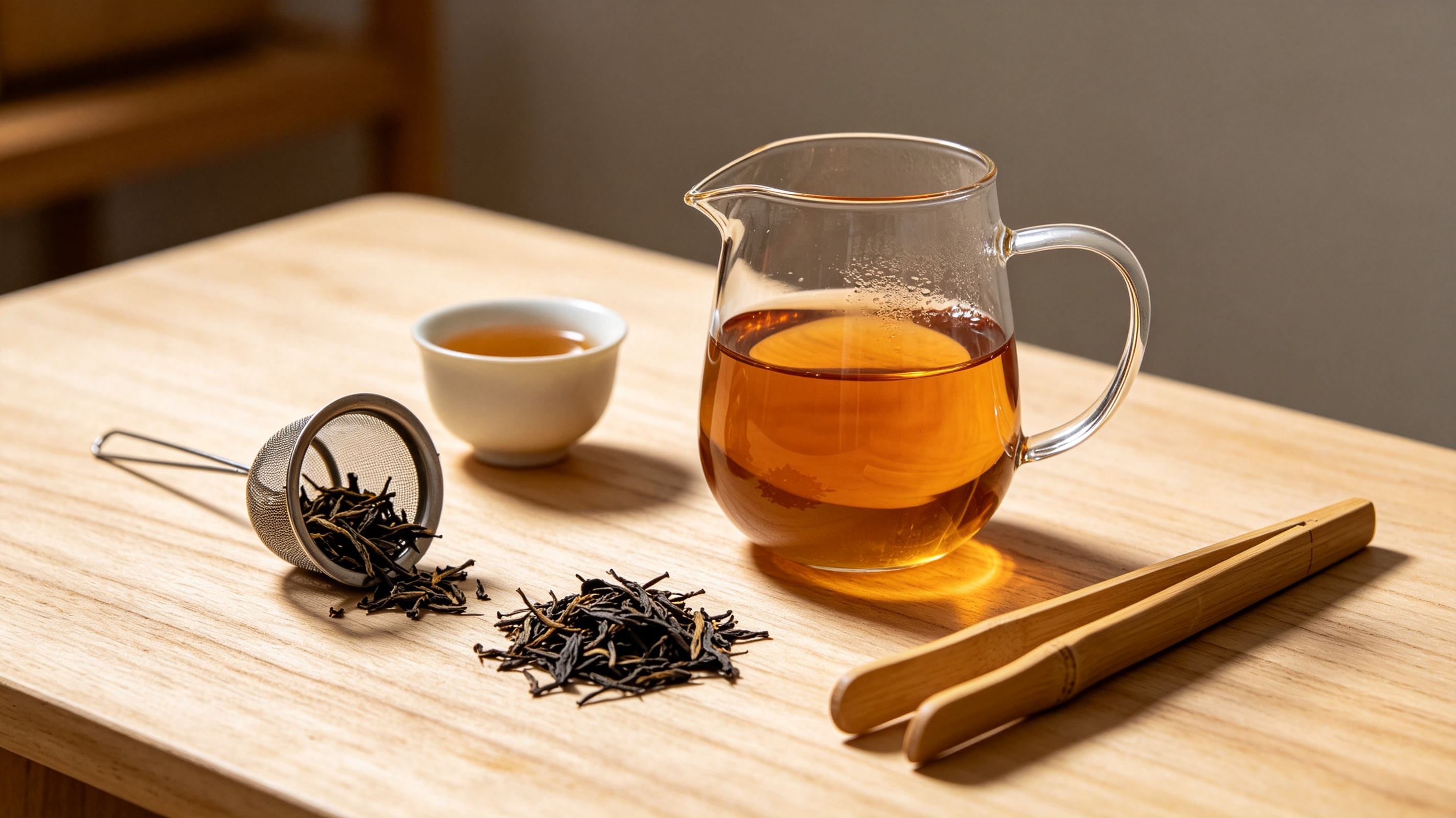
A practical gaiwan guide focuses on capacity, grip, fill level, pour speed, and complete drainage before decorative details.
Working With Gaiwan Guide in Real Life
A dry practice removes the pressure of timing expensive leaves. Fill the gaiwan partway with warm water, adjust the lid gap, and pour into a pitcher. Notice whether the rim stays cool enough and whether the lid feels secure.
Small changes in fill level make a large difference. Water near the top heats the rim and increases spills. Leaving a sensible gap often improves speed and comfort without changing the tea.
A gaiwan is a lidded bowl used to brew and pour tea. Its three parts—the bowl, lid, and saucer—make it simple, versatile, and easy to clean. It works especially well for oolong, white tea, pu’er, and comparative tasting.
The main beginner challenge is heat and pouring technique, not complexity. A well-sized porcelain gaiwan is often easier to learn than a tiny decorative one.
Choose a Manageable Size
A capacity around 90 to 120 milliliters is practical for one or two people. Very small gaiwans require precise pouring; very large ones become hot and difficult to hold.
Porcelain Is a Useful First Material
Glazed porcelain is neutral, easy to rinse, and allows comparison across teas. Thin walls heat quickly, while slightly thicker porcelain can be more comfortable for beginners.
How the Lid Works
The lid controls the opening during pouring and can move leaves away from the rim. A small gap lets tea flow while holding back most leaves. A separate strainer can catch fine particles.
A Simple Brewing Method
- Warm the gaiwan if appropriate for the tea.
- Add measured leaves.
- Pour water over the leaves.
- Cover and steep briefly.
- Hold the rim and lid knob without gripping the hot body.
- Pour all tea into a fairness pitcher or cup.
Why a Complete Pour Matters
Tea left in the gaiwan continues to extract. Pouring fully keeps later infusions consistent and prevents the bottom portion from becoming harsh.
Common Beginner Problems
- Using a gaiwan that is too large.
- Filling water to the very top.
- Gripping the hot bowl instead of the rim.
- Using a leaf amount suited to a mug.
- Pouring too slowly.
- Leaving tea between infusions.
Pair a gaiwan with suitable cups and a pitcher from the tea ware collection, and use tea from the oolong collection for repeated infusions.
Practice With Water First
Before adding valuable tea, fill the gaiwan with warm water and practice the grip and pour. Confidence comes quickly when you remove the pressure of brewing.
Test the Fit Before You Buy Online
Hand size and rim shape matter. A wide flared rim gives fingers a cooler gripping area, while a tight lid can make pouring awkward. Product capacity alone does not show whether the gaiwan will feel stable.
Look for photographs from the side and above, exact dimensions, and the weight when available. A slightly heavier beginner gaiwan may feel more secure than an ultra-thin collector piece.
- Check rim diameter.
- Check total height with lid.
- Confirm the saucer is easy to lift.
A Gaiwan Is a Tool, Not a Test
Use it when you want direct access to the leaves and short controlled infusions. Choose another vessel when a mug is more convenient. Good tea does not require one correct piece of teaware.
Where Personal Preference Enters the Decision
Before spending more on gaiwan guide, save the product page and identify which claims can be checked after delivery. Leaf appearance, package weight, ingredient list, seal quality, aroma, and brewing behavior are verifiable. Words such as rare, premium, reserve, or ancient need supporting detail.
Start with “Choose a manageable capacity.” and “Practice with warm water..” A small first order creates room to learn the tea without turning one uncertain purchase into months of storage. Compare the delivered product with the photographs and description while the listing is still available.
Price should be evaluated per enjoyable serving, not only per gram. A dense tea that supports several infusions can behave differently from a bulky blend used once. Shipping, packaging, freshness, and the chance that the tea suits your routine all belong in the decision.
- Review: Choose a manageable capacity.
- Review: Practice with warm water.
- Review: Fill below the rim.
- Review: Pour completely and promptly.
This verification step keeps gaiwan guide tied to a real result rather than a rule copied from another kitchen, product page, or tea table.
Keep Context Beside the Recommendation
No guide can declare one product or method universally best for gaiwan guide. Budget, shipping, hand size, storage space, cleanup, serving size, and taste can legitimately change the decision. A transparent tradeoff is better than a false winner.
Use the question “What size gaiwan is best for beginners?” to define the choice more narrowly. If the answer depends on a specific tea or household routine, test a small quantity or borrowed tool before making a larger commitment.
- Keep: the parts of gaiwan guide that produce a repeatable improvement.
- Recheck: results that appeared only once or under unusual conditions.
- Adapt: vessel size, water, timing, and serving to the actual situation.
- Stop: when safety, contamination, or damaged equipment becomes the concern.
Reduce risk before increasing order size
Begin with a small quantity, confirm the seller’s description, and test the tea in your normal water and teaware. A large discount is poor value when the product does not fit your routine.
Save the listing and photograph the delivered leaf. This makes it easier to compare the promise, the product, and any future reorder.
What This Looks Like at Home
A beginner using a 150-milliliter gaiwan may struggle with weight and heat. Moving to a 100-milliliter, slightly thicker porcelain model can make the same grip feel controlled.
Common Questions
What size gaiwan is best for beginners?
Around 90 to 120 milliliters is manageable for many people, though hand size matters.
Does a gaiwan need a strainer?
Not always. The lid holds back most leaves, but a small strainer can catch fine particles.
Can green tea be brewed in a gaiwan?
Yes. Use appropriate temperature and a leaf ratio suited to the vessel.
Before the Next Cup
- Choose a manageable capacity.
- Practice with warm water.
- Fill below the rim.
- Pour completely and promptly.
- Use a pitcher or cup that catches the full infusion.
Use the Idea Without Overcomplicating Tea
Used carefully, gaiwan guide becomes practical knowledge rather than another label to memorize.
For a different angle, read How to Read a Tea Label Before You Buy.