

Is Loose Leaf Tea Really Better? Taste, Health & Cost Compared
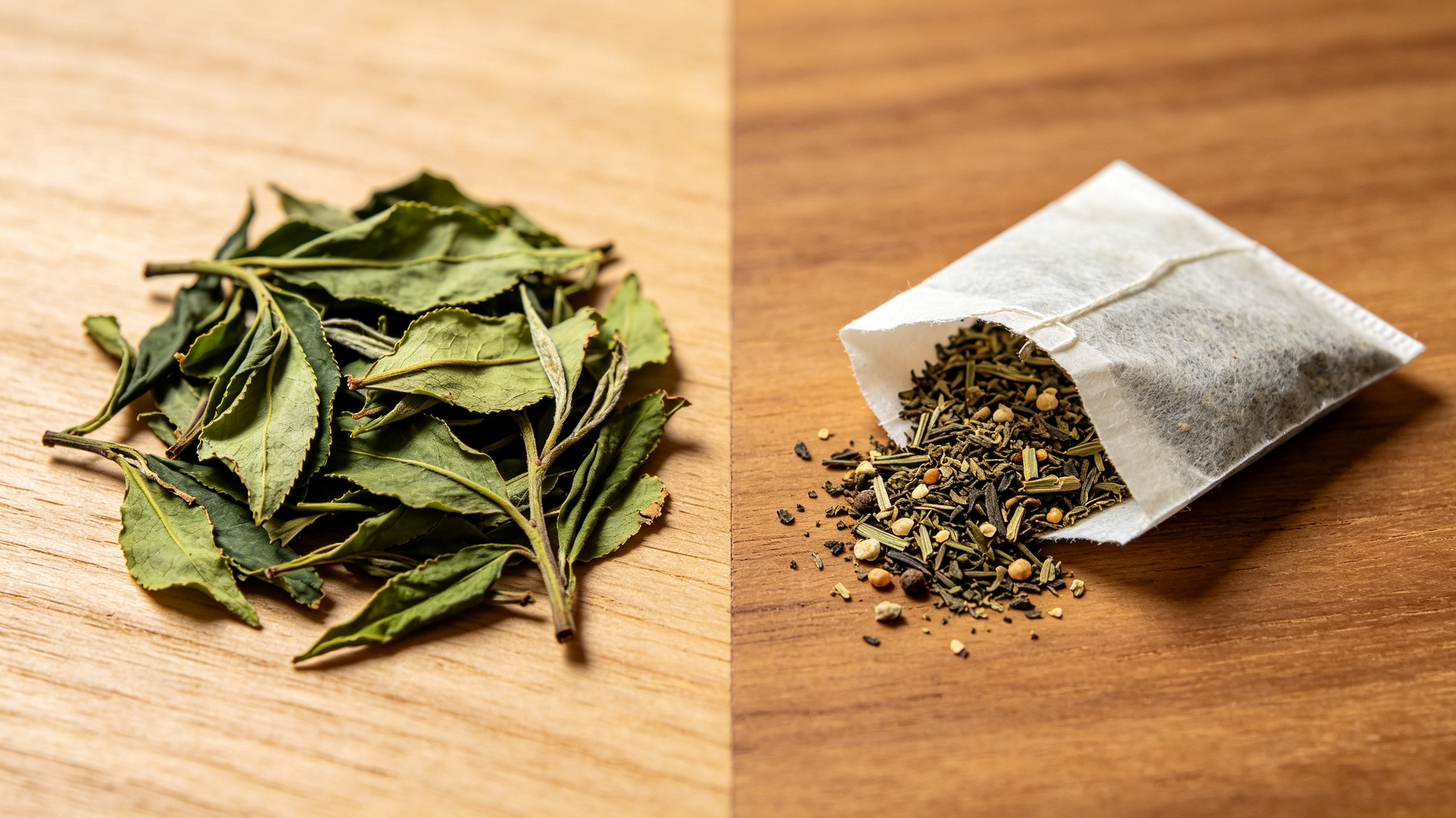
If you have ever stood in the tea aisle wondering, “Is loose leaf tea really better than tea bags?” you are not alone. The convenience of a pre-measured bag is hard to beat on a busy morning, yet tea enthusiasts consistently argue that loose leaf offers a superior experience. The truth is nuanced. While loose leaf tea generally provides better flavor, more health benefits, and greater environmental sustainability, tea bags still hold a valid place in modern tea drinking. Understanding the physical and chemical differences between the two can help you decide which brewing method aligns with your lifestyle and palate.
The Physical Difference: Whole Leaves vs. Fannings and Dust
The most significant difference between loose leaf tea and standard tea bags lies in the physical form of the leaf. Premium loose leaf tea typically consists of whole or large broken leaves that have been carefully processed to preserve their structural integrity. When hot water hits these whole leaves, they have the space to unfurl and expand, allowing water to circulate freely through the leaf veins. This expansion is crucial because it releases essential oils, complex flavor compounds, and aromatic molecules gradually.
In contrast, most commercial tea bags are filled with “fannings” and “dust.” These are tiny particles left over after higher-grade teas are processed, often resulting from the Crush, Tear, Curl (CTC) method designed for speed and mass production. Because these particles have a massive surface area relative to their volume, they release their flavor almost instantly. While this makes for a quick cup, it also releases high levels of tannins rapidly, which can lead to a bitter, astringent taste if steeped even slightly too long. Furthermore, the crushing process causes many volatile essential oils to evaporate before the tea ever reaches your cup.
Flavor Profile and Brewing Control
When evaluating whether loose leaf tea is really better for your palate, flavor complexity is the primary metric. Whole leaves contain layers of flavor that unfold over multiple steepings. A high-quality oolong or green tea might taste vegetal in the first infusion, floral in the second, and sweet in the third. Tea bags, due to their fine particle size, typically offer a one-dimensional flavor profile that degrades quickly after the first brew.
Brewing control also plays a massive role in the final cup. With loose leaf tea, you can adjust the leaf-to-water ratio, water temperature, and steeping time with precision. You can use a stainless steel tea infuser or a traditional gaiwan to monitor the leaves as they steep. Tea bags restrict this control; the leaves are confined in a small space, limiting water flow and making it difficult to achieve a balanced extraction without over-steeping. For those who enjoy iced tea, loose leaf is particularly advantageous because cold brewing whole leaves extracts smooth, sweet flavors without the bitterness that hot-brewed tea bags often produce.
Health Benefits and Nutrient Extraction
Many tea drinkers choose their brew method based on health considerations, leading to the question: is loose leaf tea healthier? Tea is rich in polyphenols, antioxidants like catechins, and L-theanine, an amino acid that promotes relaxation. Research suggests that the physical form of the tea affects how these compounds are extracted. Because whole leaves retain their cellular structure better than dust, they preserve more of these delicate compounds during storage.
However, extraction efficiency matters too. A study comparing bagged and loose black tea found that while tea bags can release antioxidants quickly, loose leaf tea maintains a more consistent release of polyphenols over longer steeping times. Additionally, there is growing concern about microplastics in tea bags. Many modern tea bags are sealed with polypropylene or made entirely of plastic mesh, which can shed billions of microplastic particles into your cup when exposed to near-boiling water. Loose leaf tea, brewed in ceramic, glass, or stainless steel vessels, eliminates this risk entirely.
Cost Analysis: Price Per Cup vs. Upfront Cost
A common misconception is that loose leaf tea is always more expensive. While the upfront cost per ounce is often higher, the cost per cup tells a different story. High-quality loose leaf tea can typically be steeped two to three times, effectively doubling or tripling the yield. A 50-gram tin of premium green tea might cost $20, but if you use 3 grams per cup and re-steep twice, you get roughly 50 cups of tea—about $0.40 per cup.
Compare this to premium tea bags, which often cost $0.50 to $0.80 per bag and can rarely be re-steeped. While budget tea bags are cheaper, they often lack the quality that makes tea drinking enjoyable, leading to waste when the tea is discarded after one bitter cup. For daily drinkers, investing in loose leaf tea and a simple brewing vessel often proves more economical over time, provided you value quality over mere caffeine delivery.
Environmental Impact and Sustainability
Sustainability is increasingly influencing consumer choices, and loose leaf tea has a clear advantage here. Tea bags generate significant waste; billions are discarded annually, many ending up in landfills where the plastic components take centuries to decompose. Even “biodegradable” tea bags often require industrial composting facilities to break down properly.
Loose leaf tea typically comes in minimal, recyclable, or compostable packaging. When paired with reusable brewing equipment, it creates a near-zero-waste ritual. Additionally, loose leaf tea supply chains often involve smaller producers who practice sustainable agriculture, whereas mass-market tea bags are frequently tied to industrial monocultures. Choosing loose leaf is not just a choice for better taste; it is a vote for a more sustainable tea industry.
FAQ
Why does loose leaf tea taste better than tea bags?
Loose leaf tea uses whole or large broken leaves that retain essential oils and complex flavor compounds. Tea bags typically contain fannings and dust, which release tannins too quickly, causing bitterness, and lose volatile aromatics during processing.
Is loose leaf tea healthier than tea bags?
Loose leaf tea may offer better health benefits because whole leaves preserve more antioxidants during storage, and brewing without plastic bags eliminates microplastic exposure. However, both forms contain beneficial polyphenols if brewed correctly.
Can you reuse loose leaf tea?
Yes, high-quality loose leaf tea can often be steeped 2-3 times. Each infusion reveals different flavor notes. Tea bags are generally not suitable for re-steeping as they release most flavor and compounds in the first minute.
Does loose leaf tea have more caffeine than tea bags?
Caffeine content depends more on tea type and steeping time than form. However, because tea bags release compounds faster due to smaller particle size, they can deliver a quick caffeine hit. Loose leaf allows you to control caffeine extraction through temperature and time.
So, is loose leaf tea really better? For flavor complexity, health safety, environmental impact, and long-term value, the answer is overwhelmingly yes. The ritual of measuring leaves, watching them unfurl, and tasting the evolving cup adds a mindfulness that tea bags simply cannot replicate. However, tea bags remain a practical solution for travel, office environments, or moments when convenience is the priority. The best approach is not to demonize tea bags but to elevate your daily ritual. Start with one versatile loose leaf tea, such as a jasmine green or a smooth black tea, and invest in a simple infuser. You may find that the extra minute of preparation is the most rewarding part of your day.