

Scented Tea vs Flavored Tea: What Is the Difference?
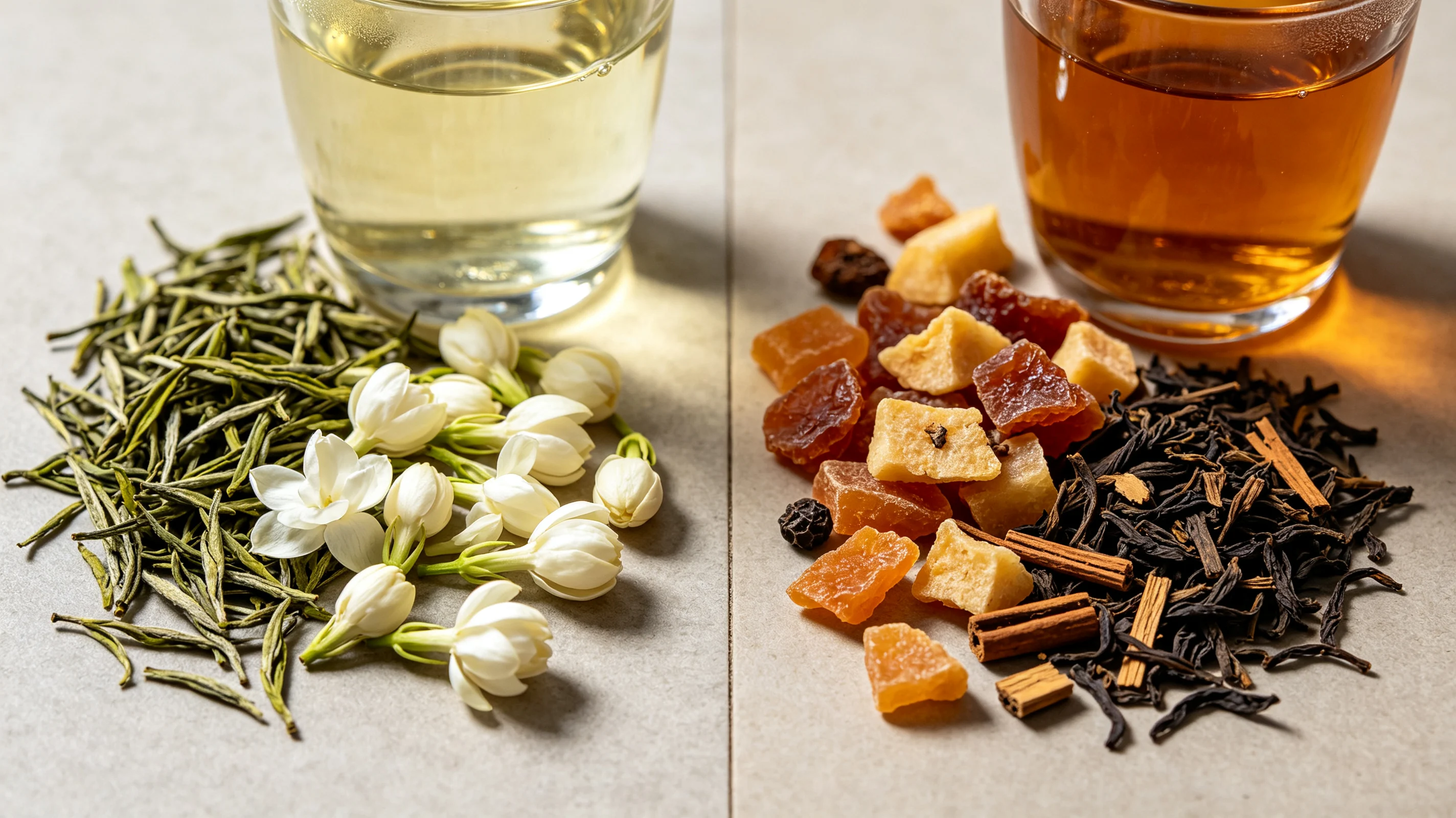
Scented tea vs flavored tea is a difference in how aroma reaches the leaf, not a simple good-versus-bad ranking.
Scented tea and flavored tea can both be aromatic, but the fragrance reaches the leaf in different ways. Scented tea traditionally absorbs aroma from flowers or other fragrant materials. Flavored tea usually receives added flavor through extracts, oils, flavorings, or blended ingredients.
The categories can overlap, and product labels are not always precise. The ingredient list and production description matter more than the marketing name.
How Traditional Scenting Works
Tea leaves are exposed to fresh aromatic material, often flowers, so the leaf absorbs fragrance. The flowers may later be removed, left in for appearance, or added again depending on the style.
How Flavor Is Added
Flavor may be applied as natural extracts, essential oils, nature-identical flavorings, or other food-safe flavor systems. Fruit pieces and petals may also be added for taste or visual appeal, though visible ingredients do not always create the strongest aroma.
Key Differences
| Question | Scented tea | Flavored tea |
|---|---|---|
| Main method | Leaf absorbs aroma during scenting | Flavor is added or blended |
| Common examples | Jasmine-scented green tea | Earl Grey, fruit-flavored black tea |
| Visible ingredients | May or may not remain | May include fruit, peel, petals, spices |
| What to check | Scenting process and base tea | Ingredient and flavor disclosure |
Natural Does Not Automatically Mean Better
Natural flavor can be enjoyable and safe, but the word does not explain quality, concentration, or whether the base tea is good. Traditional scenting can also be poorly balanced. Judge clarity, integration, and whether the aroma still allows the tea to taste like tea.
How to Choose
- Read the full ingredient list.
- Identify the base tea and caffeine status.
- Look for clear flavor disclosure.
- Avoid assuming petals prove natural scenting.
- Choose aroma intensity that suits your routine.
- Check whether the tea works hot, iced, or with milk.
Compare aromatic products through the flower tea collection and black tea collection.
Brewing Aromatic Tea
Use clean water and avoid oversteeping. Excessive heat can flatten delicate flower aroma, while too little heat may leave a flavored black tea thin. Taste before adding sugar because fragrance can create an impression of sweetness.
The Aroma May Behave Differently Over Time
Traditionally scented tea can release fragrance gradually and change across infusions, while some applied flavors are strongest in the dry leaf and first cup. This is not an absolute test, but it is a useful observation when product information is limited.
Store both types carefully. Aromatic tea can scent nearby products, and repeated exposure to air can leave a strong top note with a tired base. Smaller sealed portions protect balance.
- Compare dry aroma with brewed aroma.
- Observe whether the second infusion still has character.
- Keep aromatic blends away from delicate plain tea.
Choose Transparency Over Romance
Both scented and flavored tea can be excellent. The most trustworthy product tells you what the base tea is, how the aroma was created, and what ingredients remain in the blend.
Continue with Tea Terroir Meaning: How Place Shapes the Leaf.
Scented Tea vs Flavored Tea: What to Notice First
The ingredient list may disclose flavoring, petals, fruit, or spices, while the product story explains scenting. Neither alone is always sufficient. A jasmine tea can be scented with flowers and contain few visible petals; a fruit blend can display fruit pieces while relying on added flavor for its strongest aroma.
Balance is a better quality test than purity language. The aroma should feel integrated with the base tea, and the cup should remain pleasant after the strongest fragrance fades.
A Practical Scenario
Brew one traditionally scented jasmine tea and one fruit-flavored black tea. Smell the dry leaf, wet leaf, and empty cup. Notice whether the fragrance remains connected to taste or sits above a thin base.
Build a Baseline Before Making Fine Adjustments
A useful decision about scented tea vs flavored tea begins with a named situation. Decide whether the priority is speed, flavor development, portability, serving several people, repeated infusions, cost, or easy cleanup. A universal winner rarely exists because the priorities conflict.
Run the comparison with the same tea and water whenever possible. Apply “Identify the base tea.” and “Read every ingredient.,” then write which option made the desired result easier. Include the time spent setting up and cleaning, not only the first sip.
The result can legitimately change by occasion. A method chosen for a quiet weekend may be inappropriate at work, and a portable option may sacrifice some control. A fair comparison allows one person to keep both choices for different jobs.
| Check | Evidence to keep |
|---|---|
| Identify the base tea. | Observe the result and record the next adjustment. |
| Read every ingredient. | Observe the result and record the next adjustment. |
| Ask how scent or flavor was applied. | Observe the result and record the next adjustment. |
This verification step keeps scented tea vs flavored tea tied to a real result rather than a rule copied from another kitchen, product page, or tea table.
Allow for Tea, Water, and Personal Variation
No guide can declare one product or method universally best for scented tea vs flavored tea. Budget, shipping, hand size, storage space, cleanup, serving size, and taste can legitimately change the decision. A transparent tradeoff is better than a false winner.
Use the question “Is scented tea always natural?” to define the choice more narrowly. If the answer depends on a specific tea or household routine, test a small quantity or borrowed tool before making a larger commitment.
- Keep: the parts of scented tea vs flavored tea that produce a repeatable improvement.
- Recheck: results that appeared only once or under unusual conditions.
- Adapt: vessel size, water, timing, and serving to the actual situation.
- Stop: when safety, contamination, or damaged equipment becomes the concern.
A Focused Checklist
- Identify the base tea.
- Read every ingredient.
- Ask how scent or flavor was applied.
- Do not judge by visible petals alone.
- Taste for integration after cooling.
Choose by situation, not by a universal winner
A comparison becomes useful when it names the job: workday speed, focused tasting, serving guests, milk tea, travel, or repeated infusions. The same person may choose differently in two settings.
Compare total effort and cleanup as well as flavor. A method or product that remains unused cannot provide practical value.
Make the Next Cup More Informative
The real value of scented tea vs flavored tea is a cup or decision that can be repeated, explained, and adjusted without guesswork.