

Tea Terroir Meaning: How Place Shapes the Leaf
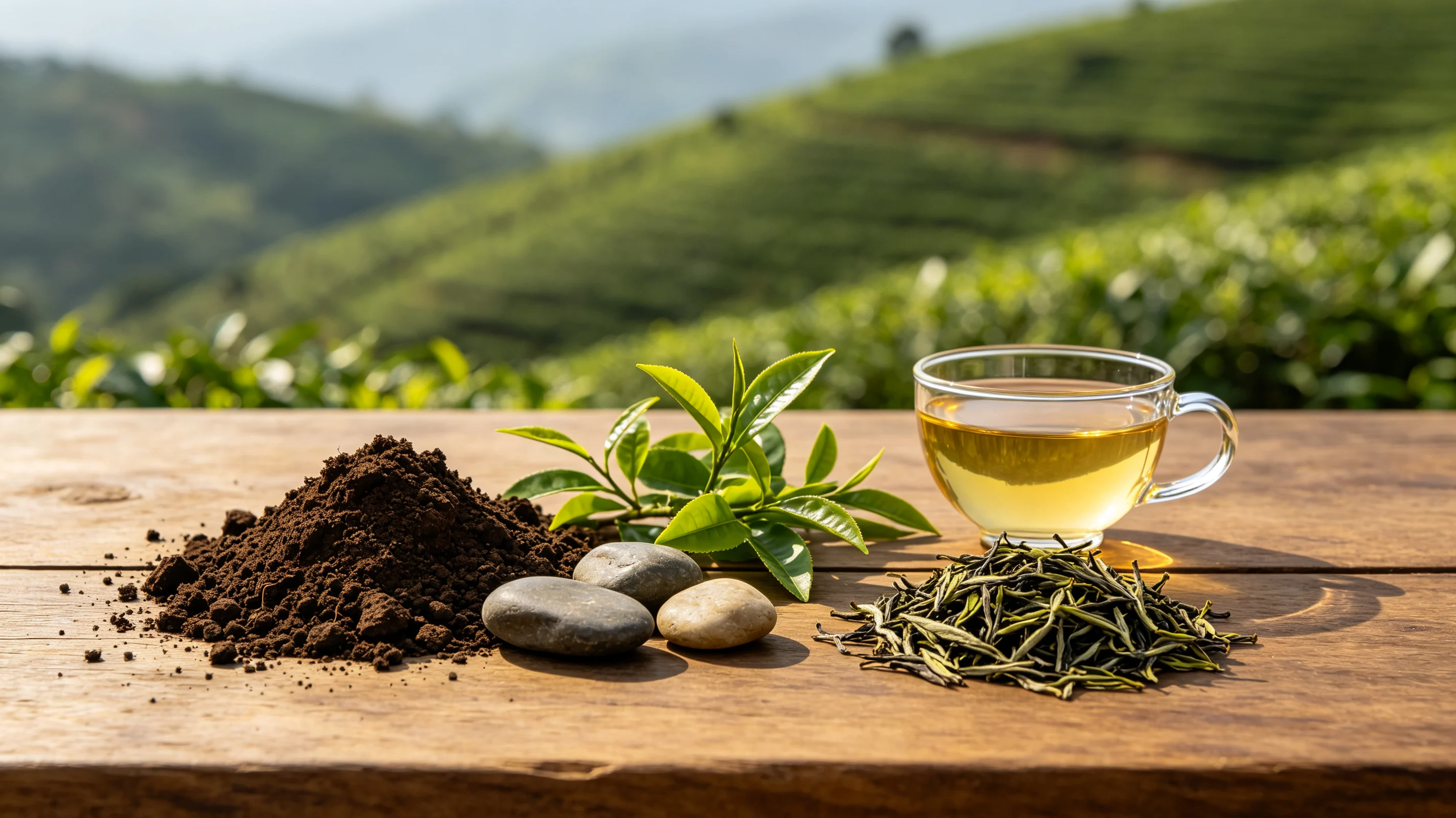
Tea terroir meaning becomes practical when place, plant, climate, and human skill are connected to a specific cup.
Tea terroir refers to the way place influences the leaf: climate, elevation, soil, rainfall, sunlight, garden ecology, cultivar, and local farming conditions. In tea, processing traditions are often closely tied to terroir as well.
The term is useful when it explains a pattern in the cup. It becomes empty when it is used only to make a product sound rare.
Climate and Growth Speed
Temperature, cloud cover, rainfall, and seasonal rhythm affect how quickly leaves grow. Slower growth can change concentration and texture, while warm conditions may create stronger yields and a different flavor balance.
Elevation
Higher elevation can mean cooler temperatures, mist, stronger day-night differences, and slower growth, but elevation alone does not guarantee quality. Exposure, soil, cultivar, and processing remain important.
Soil and Drainage
Tea plants respond to soil structure, drainage, acidity, and available minerals. It is safer to say these conditions shape plant growth than to claim you can directly taste a specific mineral from the soil in every cup.
Cultivar Belongs in the Conversation
Two cultivars grown in the same place can produce different aromas and textures. Terroir is not only land; it is the relationship between plant genetics and environment.
Human Skill Is Part of Place
Local knowledge determines when to harvest, how to wither, how strongly to roll, when to stop oxidation, and how to roast or dry. A region’s recognizable style often comes from this accumulated practice.
How to Read Terroir Claims
- Look for a named region rather than vague mountain language.
- Check whether cultivar or tea style is identified.
- Ask what sensory traits the place is expected to support.
- Be cautious when rarity is the only selling point.
- Compare multiple teas from the same region before forming conclusions.
The loose leaf tea collection is most useful when origin information is paired with processing and brewing guidance.
Regional Reputation Can Hide Garden-Level Differences
A well-known region may contain gardens with different elevation, exposure, farming practices, cultivars, and processing skill. The regional name is useful, but it does not make every lot interchangeable.
More detailed origin information is valuable when it can be verified and when it explains the cup. A precise village name should not become a substitute for freshness, clean storage, and competent processing.
- Treat region as a starting point.
- Compare producers within the same area.
- Look for sensory detail that connects the claim to the tea.
Place Matters, but the Cup Must Prove It
Terroir can help explain why a tea tastes the way it does. It should deepen understanding, not replace tasting. Origin is meaningful when it connects place, plant, craft, and a recognizable result.
Tea Terroir Meaning: A Practical Framework
Terroir claims become credible when they name the mechanism. Cooler elevation may slow growth; fog may alter light exposure; drainage may influence plant stress; local cultivars may respond differently to the same garden. Vague mountain language explains little.
Human choices are inseparable from place. Harvest standard, withering environment, oxidation skill, roasting tradition, and storage knowledge can create a regional signature as strongly as soil.
Use This Before You Decide
- Look for a named region or garden.
- Identify cultivar when available.
- Ask what climate or elevation changes.
- Consider local processing tradition.
- Treat rarity as a claim that needs evidence.
How to Verify the Advice in Your Own Kitchen
Use tea terroir meaning to make one prediction before brewing. Predict how quickly the leaves will open, how the aroma may develop, whether the tea might tolerate heat, or whether repeated infusions are likely. A technical term becomes useful only when it leads to something observable.
Check that prediction through the scenario described above and the first two review points: “Look for a named region or garden.” and “Identify cultivar when available..” If the cup contradicts the expectation, consider cultivar, roast, leaf size, storage, and brewing before rejecting the entire explanation.
Avoid turning one processing feature, season, grade, or origin claim into a complete quality score. Tea reaches the cup through several linked stages. The most reliable interpretation keeps the term narrow and lets aroma, taste, texture, and finish provide the final evidence.
- Review: Look for a named region or garden.
- Review: Identify cultivar when available.
- Review: Ask what climate or elevation changes.
- Review: Consider local processing tradition.
This verification step keeps tea terroir meaning tied to a real result rather than a rule copied from another kitchen, product page, or tea table.
What This Guide Cannot Decide for You
Tea Terroir Meaning provides a model, not a complete explanation of every tea. Cultivar, weather, processing skill, storage, water, and brewing can reinforce or contradict the expectation created by one term.
When the evidence is mixed, keep the label narrow. Use “Look for a named region or garden.” and “Identify cultivar when available.” to gather more context instead of expanding the claim until it explains everything.
- Keep: the parts of tea terroir meaning that produce a repeatable improvement.
- Recheck: results that appeared only once or under unusual conditions.
- Adapt: vessel size, water, timing, and serving to the actual situation.
- Stop: when safety, contamination, or damaged equipment becomes the concern.
What This Looks Like at Home
Taste two teas from the same region but different cultivars, then two teas of the same cultivar from different gardens. The exercise shows why place is a relationship among environment, plant, and craft—not a single magic ingredient.
Turn the definition into a prediction you can test
A technical term matters when it helps predict leaf behavior, flavor, storage, or brewing. Use the definition to form a hypothesis, then check it in the cup.
Avoid treating one feature as a complete quality score. Tea is the combined result of raw material, processing, storage, water, and preparation.
Common Questions
Can you taste soil minerals directly in tea?
It is safer to say soil conditions influence plant growth; direct one-to-one mineral flavor claims are often oversimplified.
Does high elevation guarantee better tea?
No. Exposure, cultivar, farming, weather, and processing also matter.
Is processing part of terroir?
Many tea drinkers include local human practice because it helps create the recognizable regional style.
Turn Information Into a Better Routine
When tea terroir meaning leads to better control and fewer assumptions, the topic has served its purpose.
For a different angle, read Tea Water Temperature Without Thermometer: Easy Methods.
Supporting guides: water for tea guide.