

Tea Harvest Seasons Explained: First Flush and Beyond
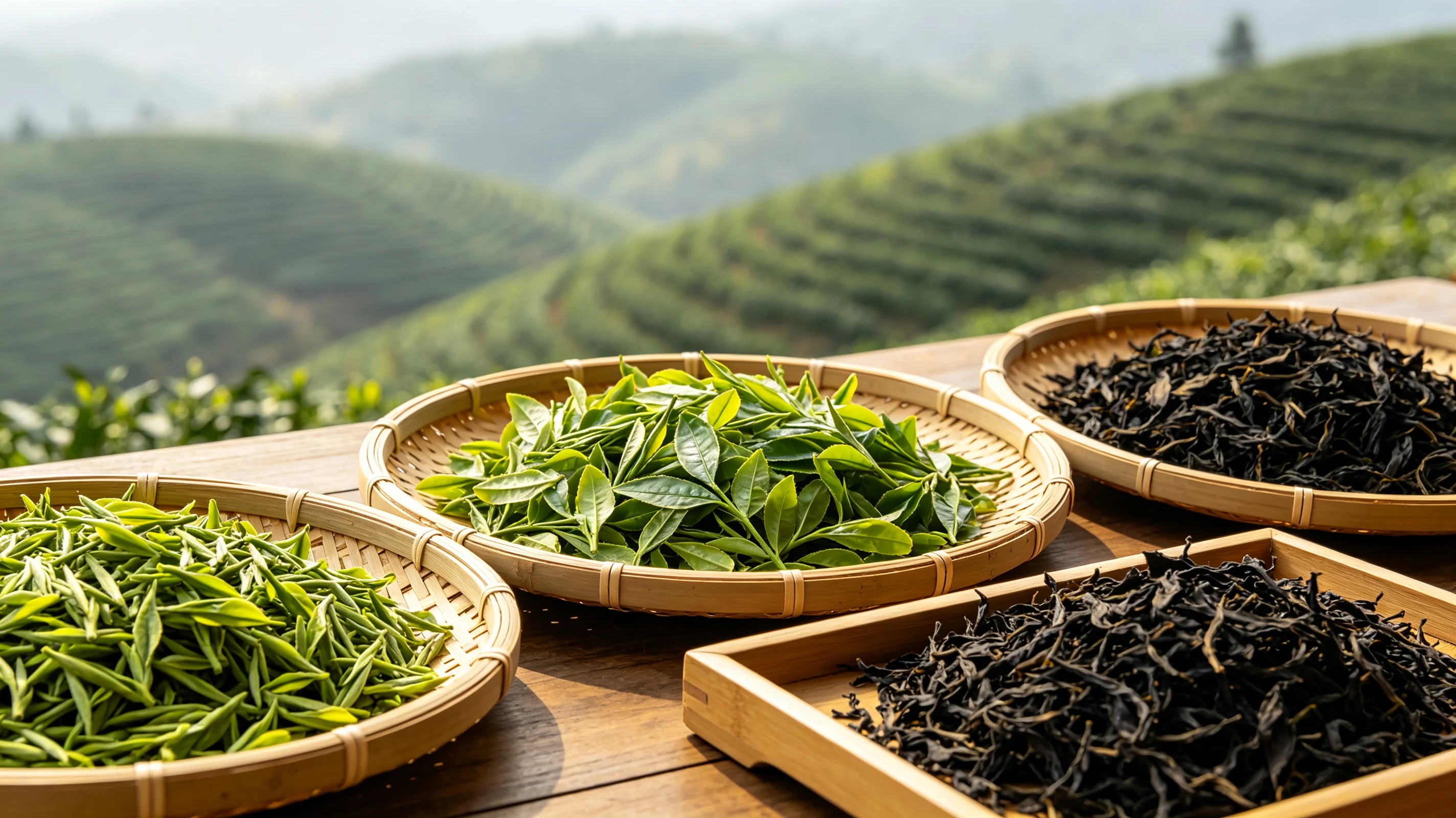
Tea harvest seasons are useful clues only when region, cultivar, processing, weather, and storage are also considered.
Turn the definition into a prediction you can test
A technical term matters when it helps predict leaf behavior, flavor, storage, or brewing. Use the definition to form a hypothesis, then check it in the cup.
Avoid treating one feature as a complete quality score. Tea is the combined result of raw material, processing, storage, water, and preparation.
Tea harvest seasons describe when leaves are picked, but the meaning varies by climate, region, cultivar, and tea style. First flush, spring tea, summer harvest, and autumn tea are useful clues, not universal quality rankings.
A producer may value early spring buds for delicacy, later leaves for body, or autumn material for fragrance and balance.
What First Flush Usually Means
First flush generally refers to the earliest significant growth after dormancy or a seasonal pause. In regions with clear winters, this material can be tender and aromatic. The exact timing and style differ widely.
Spring Tea
Spring tea often develops slowly in cooler conditions and may be prized for freshness, sweetness, and fine aroma. Yet spring is a broad season, and early, mid, and late harvests can produce different results.
Summer Harvest
Warmer weather can accelerate growth and create stronger structure. Summer leaves may suit robust black tea, certain oolongs, blending, or styles where body matters more than delicacy.
A related practical guide is Roasted Tea Guide: Flavor, Brewing, and What Roast Really Does.
Autumn Tea
Autumn harvests can offer clear fragrance and a different balance of body and aroma. In some regions they are highly appreciated; in others they are secondary. The tea category matters more than a blanket seasonal rule.
Season Does Not Replace Processing
Excellent raw material can still be mishandled, while skilled processing can make a later harvest compelling. Storage also matters. A famous spring label does not help if the tea is stale.
Questions to Ask When Buying Seasonal Tea
- What region and climate define the season?
- Is the date a harvest date, packing date, or marketing term?
- What flavor difference does the seller expect?
- Was the tea designed for immediate freshness or later resting?
- How should it be stored after opening?
Seasonal language appears across the green tea, white tea, and oolong tea categories, but it should always be interpreted within the style.
Use Season to Form a Hypothesis
A harvest season can suggest delicacy, strength, fragrance, or body. Brew the tea, compare it with another season when possible, and let the cup confirm whether the label matters to you.
Record Enough Detail to Avoid Starting Over
Use tea harvest seasons to make one prediction before brewing. Predict how quickly the leaves will open, how the aroma may develop, whether the tea might tolerate heat, or whether repeated infusions are likely. A technical term becomes useful only when it leads to something observable.
Check that prediction through the scenario described above and the first two review points: “Identify region and cultivar.” and “Distinguish harvest date from packing date..” If the cup contradicts the expectation, consider cultivar, roast, leaf size, storage, and brewing before rejecting the entire explanation.
Avoid turning one processing feature, season, grade, or origin claim into a complete quality score. Tea reaches the cup through several linked stages. The most reliable interpretation keeps the term narrow and lets aroma, taste, texture, and finish provide the final evidence.
- Identify region and cultivar. Record what changed before moving to the next variable.
- Distinguish harvest date from packing date. Record what changed before moving to the next variable.
- Compare within the same style. Record what changed before moving to the next variable.
- Check storage since harvest. Record what changed before moving to the next variable.
This verification step keeps tea harvest seasons tied to a real result rather than a rule copied from another kitchen, product page, or tea table.
Use Judgment After the Checklist Ends
Tea Harvest Seasons provides a model, not a complete explanation of every tea. Cultivar, weather, processing skill, storage, water, and brewing can reinforce or contradict the expectation created by one term.
When the evidence is mixed, keep the label narrow. Use “Identify region and cultivar.” and “Distinguish harvest date from packing date.” to gather more context instead of expanding the claim until it explains everything.
- Keep: the parts of tea harvest seasons that produce a repeatable improvement.
- Recheck: results that appeared only once or under unusual conditions.
- Adapt: vessel size, water, timing, and serving to the actual situation.
- Stop: when safety, contamination, or damaged equipment becomes the concern.
A Practical Review List
- Identify region and cultivar.
- Distinguish harvest date from packing date.
- Compare within the same style.
- Check storage since harvest.
- Ask what the seasonal difference should taste like.
Tea Harvest Seasons: From Definition to Practice
Seasonal language becomes meaningful through comparison. A spring green tea and an autumn oolong from unrelated regions cannot prove one season is better. Compare the same cultivar, garden, or style across harvests when possible.
Weather within a season can matter as much as the season name. Rain, temperature, sunlight, pests, and harvest timing all affect the raw leaf. A product description should explain the expected sensory difference rather than rely on first flush as a prestige label.
A Side-by-Side Example
Buy small samples of two harvests from the same producer. Brew them with the same ratio and taste for aroma clarity, body, sweetness, and finish. The later harvest may be stronger or more fragrant even if the early one is more expensive.
Keep the Method Practical
Keep tea harvest seasons connected to observable evidence, normal household conditions, and the way tea is actually used.
Use the Next Brew as Confirmation
Before treating tea harvest seasons as settled, repeat the method with the same tea and change only one condition that matters to the article. Use “Identify region and cultivar.” as the baseline and “Compare within the same style.” as the deliberate change. Write down whether aroma, taste, texture, convenience, or cleanup improved.
This final repeat protects against conclusions caused by a rushed session, unfamiliar water, an unusual cup, or a product that does not represent the wider category. When the result remains useful twice, keep the method. When it does not, preserve both records and narrow the claim rather than forcing a universal rule.