

Tea Grades Explained: What the Letters and Labels Really Mean
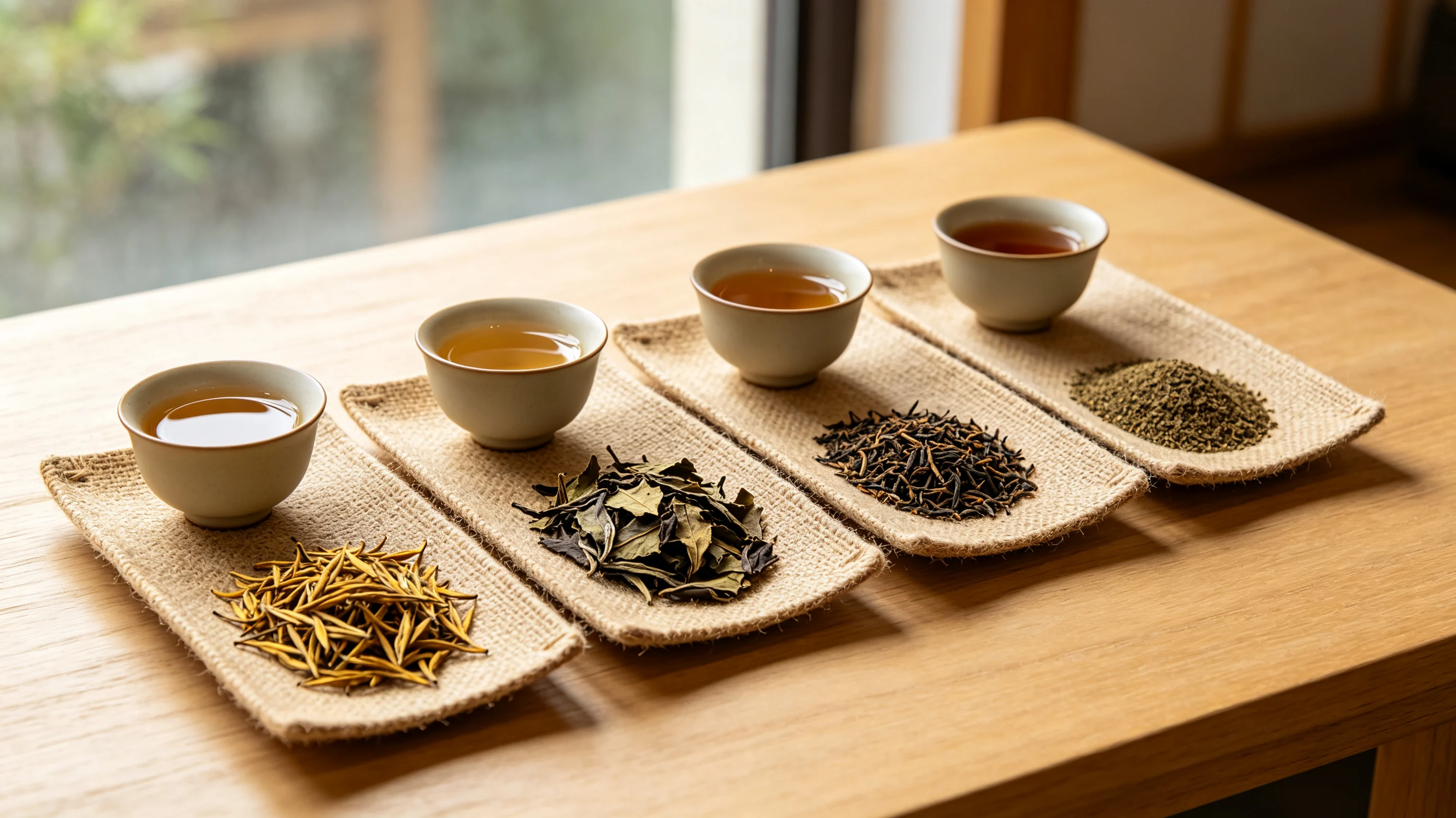
Tea grades explained honestly should reduce uncertainty instead of replacing tasting with a hierarchy.
Tea grades can look authoritative, especially when a product name includes several letters. In many systems, however, grade mainly describes leaf size, appearance, or sorting—not a universal score for taste.
Different regions and tea types use different conventions. A grade that is meaningful for orthodox black tea may say little about green tea, oolong, white tea, or pu’er.
What a Grade May Describe
- Whole, broken, fanning, or dust particle size.
- Presence of tips or buds.
- Uniformity of appearance.
- Harvest standard.
- Factory or regional sorting categories.
- Commercial lot specifications.
Why Black Tea Letter Grades Cause Confusion
Abbreviations such as OP, BOP, FOP, and longer combinations are commonly associated with orthodox black tea. They can indicate leaf size and the presence of tips, but they do not create a simple global ladder in which more letters always means better flavor.
Grade Is Not the Same as Freshness
A high-looking grade can still be old, poorly stored, or badly brewed. A modest broken-leaf grade can be aromatic and satisfying when fresh and well made.
What to Evaluate Beyond Grade
- Harvest or packing information when available.
- Origin and processing style.
- Dry leaf aroma.
- Clarity of ingredient list.
- Brewing instructions.
- Seller storage and packaging.
- Whether the flavor description matches the intended use.
Red Flags in Product Copy
- Claims that one grade system applies to every tea category.
- Long strings of letters presented without explanation.
- Grade used as a substitute for origin or freshness.
- Absolute claims such as highest grade with no defined standard.
- Beautiful leaf photos that do not match the delivered product.
Use the loose leaf tea collection to compare product descriptions across categories and the beginner tea guide for practical buying priorities.
A Better Way to Use Grades
Treat grade as one technical clue. It can help predict whether a black tea will brew quickly, whether the leaf is visually uniform, or whether tips are present. Then let aroma, taste, and suitability for your routine decide.
A Grade May Be Useful Inside One Supply Chain
A producer, auction, or factory can use grading consistently within its own system. That makes the grade helpful when comparing lots from the same source. Problems begin when the same letters are treated as a universal language across countries and tea categories.
Ask what the grade controls: particle size, buds, appearance, or a commercial specification. If the seller cannot explain the term, the letters add little buying value.
- Compare grades within the same system.
- Do not compare unrelated categories by letter count.
- Use a sample to confirm how the grade behaves in water.
Buy the Tea, Not the Alphabet
A clear seller should explain what a grade means for that specific product. When the label creates more mystery than information, ask for leaf size, harvest, processing, and brewing guidance instead.
A Real-World Test
Two black teas may carry different grades, yet the lower-looking grade can be fresher and better suited to milk. Brew them blind and compare aroma, body, astringency, and finish before letting the alphabet decide.
Working With Tea Grades Explained in Real Life
A useful grade should tell you something testable: particle size, tip content, plucking standard, or visual uniformity. When a seller uses a long abbreviation without explaining it, the label creates prestige but little practical information.
Grades are difficult to compare across regions and tea categories. A black tea letter grade should not be used to rank an oolong, green tea, or pu’er. Even within black tea, systems and commercial usage can vary.
Where Personal Preference Enters the Decision
Before spending more on tea grades explained, save the product page and identify which claims can be checked after delivery. Leaf appearance, package weight, ingredient list, seal quality, aroma, and brewing behavior are verifiable. Words such as rare, premium, reserve, or ancient need supporting detail.
Start with “Ask what the grade measures.” and “Confirm the system applies to that tea..” A small first order creates room to learn the tea without turning one uncertain purchase into months of storage. Compare the delivered product with the photographs and description while the listing is still available.
Price should be evaluated per enjoyable serving, not only per gram. A dense tea that supports several infusions can behave differently from a bulky blend used once. Shipping, packaging, freshness, and the chance that the tea suits your routine all belong in the decision.
| Check | Evidence to keep |
|---|---|
| Ask what the grade measures. | Observe the result and record the next adjustment. |
| Confirm the system applies to that tea. | Observe the result and record the next adjustment. |
| Check freshness and storage. | Observe the result and record the next adjustment. |
This verification step keeps tea grades explained tied to a real result rather than a rule copied from another kitchen, product page, or tea table.
Continue with Whole Leaf vs Broken Leaf Tea: Does Leaf Size Matter?.
Questions Readers Often Ask
Does more letters mean better tea?
Not reliably. Letter combinations often describe leaf characteristics, not a universal taste score.
Are fannings always bad?
No. They brew quickly and can be useful for strong, consistent tea bags or blends.
What should I check besides grade?
Origin, processing, freshness, ingredient transparency, aroma, and brewing guidance.
Keep Context Beside the Recommendation
No guide can declare one product or method universally best for tea grades explained. Budget, shipping, hand size, storage space, cleanup, serving size, and taste can legitimately change the decision. A transparent tradeoff is better than a false winner.
Use the question “Does more letters mean better tea?” to define the choice more narrowly. If the answer depends on a specific tea or household routine, test a small quantity or borrowed tool before making a larger commitment.
- Keep: the parts of tea grades explained that produce a repeatable improvement.
- Recheck: results that appeared only once or under unusual conditions.
- Adapt: vessel size, water, timing, and serving to the actual situation.
- Stop: when safety, contamination, or damaged equipment becomes the concern.
Reduce risk before increasing order size
Begin with a small quantity, confirm the seller’s description, and test the tea in your normal water and teaware. A large discount is poor value when the product does not fit your routine.
Save the listing and photograph the delivered leaf. This makes it easier to compare the promise, the product, and any future reorder.
Five Checks That Prevent Guessing
- Ask what the grade measures.
- Confirm the system applies to that tea.
- Check freshness and storage.
- Compare leaf size with brewing advice.
- Ignore undefined superlatives.
Let the Cup Confirm the Rule
The best approach to tea grades explained is the one that remains clear after the marketing language is removed.