

Whole Leaf vs Broken Leaf Tea: Does Leaf Size Matter?
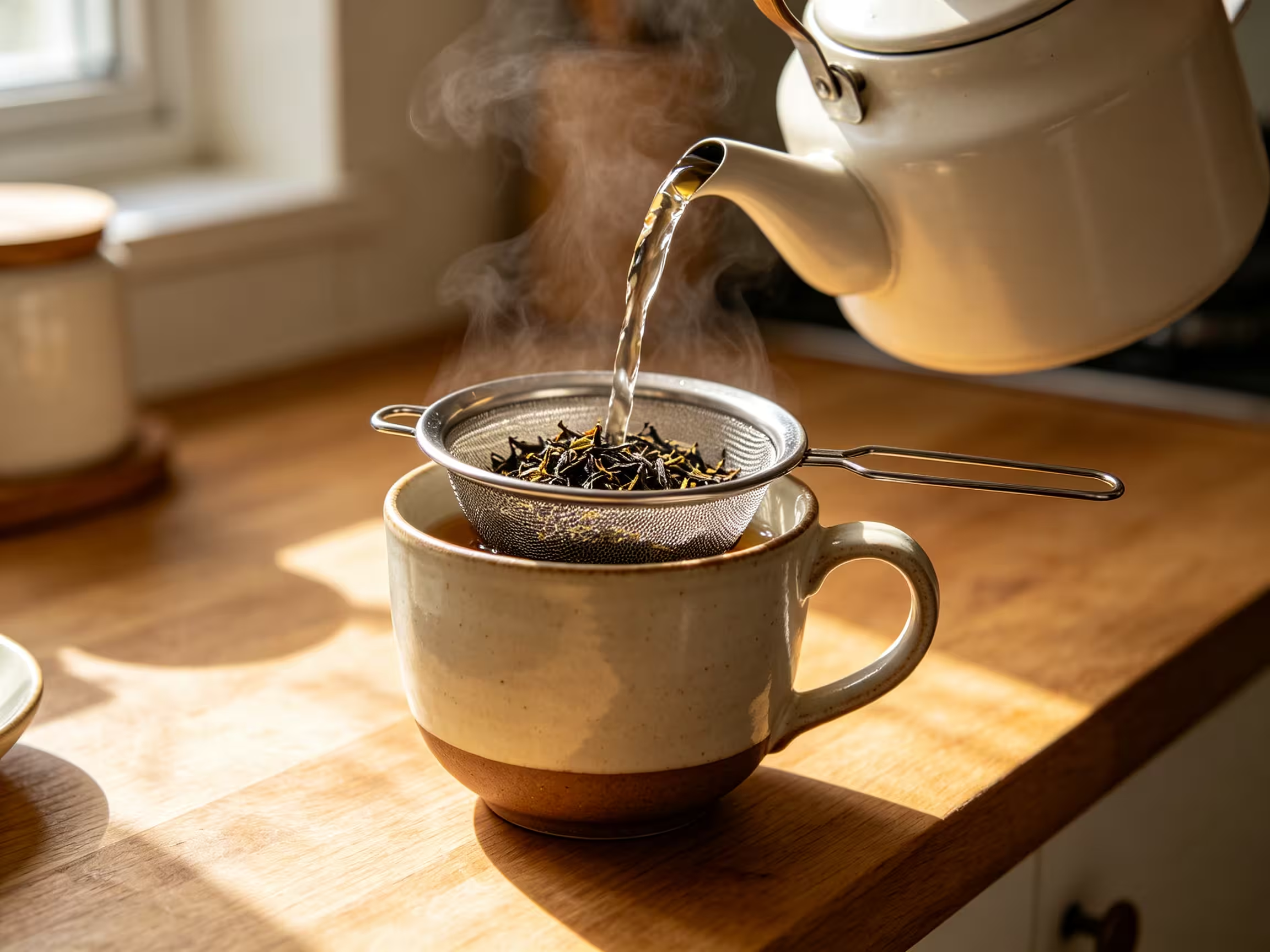
Whole leaf vs broken leaf tea is mainly a comparison of extraction speed, visual integrity, and intended brewing style.
Whole Leaf vs Broken Leaf Tea: The Decision That Matters
Broken leaves can be ideal for a fast breakfast cup because they produce color and body quickly. Whole leaves are often better when you want gradual extraction, visible expansion, and repeated infusions. The practical value depends on the use case.
Sifting and grading can create uniform particle sizes, which helps consistency. A bag containing a random mixture of large leaves and dust may brew unevenly even if some leaves look impressive.
Whole leaf and broken leaf tea behave differently in water, but leaf size alone does not determine quality. Whole leaves usually release flavor more gradually. Broken leaves expose more surface area and often brew faster and stronger.
Both can be useful. The important question is whether the leaf size suits the intended style and brewing method.
How Leaf Size Changes Extraction
Smaller particles allow water to reach more surface area. This can create quick color, briskness, and body, but it also shortens the window between balanced and oversteeped. Larger leaves often need more space and time.
Whole Leaf Strengths
- Gradual extraction.
- Potential for multiple infusions.
- Clear view of leaf material.
- Often more room for aroma to develop.
- Well suited to oolong, white tea, and careful tasting.
Broken Leaf Strengths
- Fast brewing.
- Strong color and body.
- Useful for breakfast tea and milk tea.
- Convenient for tea bags and short preparation.
- Can create consistency in blends.
Quality Exists in Both Forms
A carefully processed broken black tea can be fresher and more enjoyable than stale whole leaf. Conversely, impressive-looking leaves can still be flat, poorly stored, or unbalanced. Judge aroma, cleanliness, taste, and finish.
How to Brew Each
| Leaf style | Starting approach | Main risk |
|---|---|---|
| Whole leaf | Give space; allow a controlled full steep | Under-extraction in a cramped infuser |
| Broken leaf | Use a timer and taste early | Bitterness from oversteeping |
| Dust or fannings | Short steep; fine filter | Fast harshness and sediment |
A roomy basket from the tea ware collection helps larger leaves open, while the infuser guide explains mesh and space.
Read the Product Description, Then Look at the Leaf
Terms such as whole leaf, broken leaf, fannings, and dust describe size, not a universal hierarchy. Use them to predict extraction speed and brewing needs.
Transport and Packaging Can Change Leaf Appearance
Whole leaves may break during shipping, especially when they are dry, brittle, or packed loosely. A few fragments at the bottom of a bag do not automatically mean the product was misrepresented. The overall proportion and the brewed result matter.
For very large leaves, some breakage can make measurement easier without destroying quality. What matters is whether the package contains excessive dust, whether the tea brews unevenly, and whether the leaf appearance matches the seller’s description.
- Inspect the top and bottom of the package.
- Use a fine strainer for the final dusty portion.
- Shorten steeping when a serving contains more fragments.
Choose for the Cup You Want
Whole leaf is attractive when you enjoy slow development and re-steeping. Broken leaf is practical when you want a quick, strong cup. Freshness and good processing matter more than turning leaf size into a moral judgment.
Turn the Guidance Into a Repeatable Method
A useful decision about whole leaf vs broken leaf tea begins with a named situation. Decide whether the priority is speed, flavor development, portability, serving several people, repeated infusions, cost, or easy cleanup. A universal winner rarely exists because the priorities conflict.
Run the comparison with the same tea and water whenever possible. Apply “Use a fine filter for small particles.” and “Taste broken leaf earlier.,” then write which option made the desired result easier. Include the time spent setting up and cleaning, not only the first sip.
The result can legitimately change by occasion. A method chosen for a quiet weekend may be inappropriate at work, and a portable option may sacrifice some control. A fair comparison allows one person to keep both choices for different jobs.
- Review: Use a fine filter for small particles.
- Review: Taste broken leaf earlier.
- Review: Give whole leaf room to open.
- Review: Judge freshness before appearance.
This verification step keeps whole leaf vs broken leaf tea tied to a real result rather than a rule copied from another kitchen, product page, or tea table.
The Limits of a One-Size-Fits-All Answer
No guide can declare one product or method universally best for whole leaf vs broken leaf tea. Budget, shipping, hand size, storage space, cleanup, serving size, and taste can legitimately change the decision. A transparent tradeoff is better than a false winner.
Use the question “Is whole leaf tea always higher quality?” to define the choice more narrowly. If the answer depends on a specific tea or household routine, test a small quantity or borrowed tool before making a larger commitment.
- Keep: the parts of whole leaf vs broken leaf tea that produce a repeatable improvement.
- Recheck: results that appeared only once or under unusual conditions.
- Adapt: vessel size, water, timing, and serving to the actual situation.
- Stop: when safety, contamination, or damaged equipment becomes the concern.
Choose by situation, not by a universal winner
A comparison becomes useful when it names the job: workday speed, focused tasting, serving guests, milk tea, travel, or repeated infusions. The same person may choose differently in two settings.
Compare total effort and cleanup as well as flavor. A method or product that remains unused cannot provide practical value.
How the Decision Plays Out
Brew equal weights of whole-leaf and broken black tea for three minutes. The broken leaf may already be brisk and dark, while the whole leaf may remain softer. Repeat at five minutes and compare whether added time improves or damages each cup.
Before the Next Cup
- Use a fine filter for small particles.
- Taste broken leaf earlier.
- Give whole leaf room to open.
- Judge freshness before appearance.
- Choose by intended cup, not status.
Use the Idea Without Overcomplicating Tea
Used carefully, whole leaf vs broken leaf tea becomes practical knowledge rather than another label to memorize.
For a different angle, read Tea Aroma Guide: Why Fragrance Changes as Tea Cools.