

Tea Aroma Guide: Why Fragrance Changes as Tea Cools
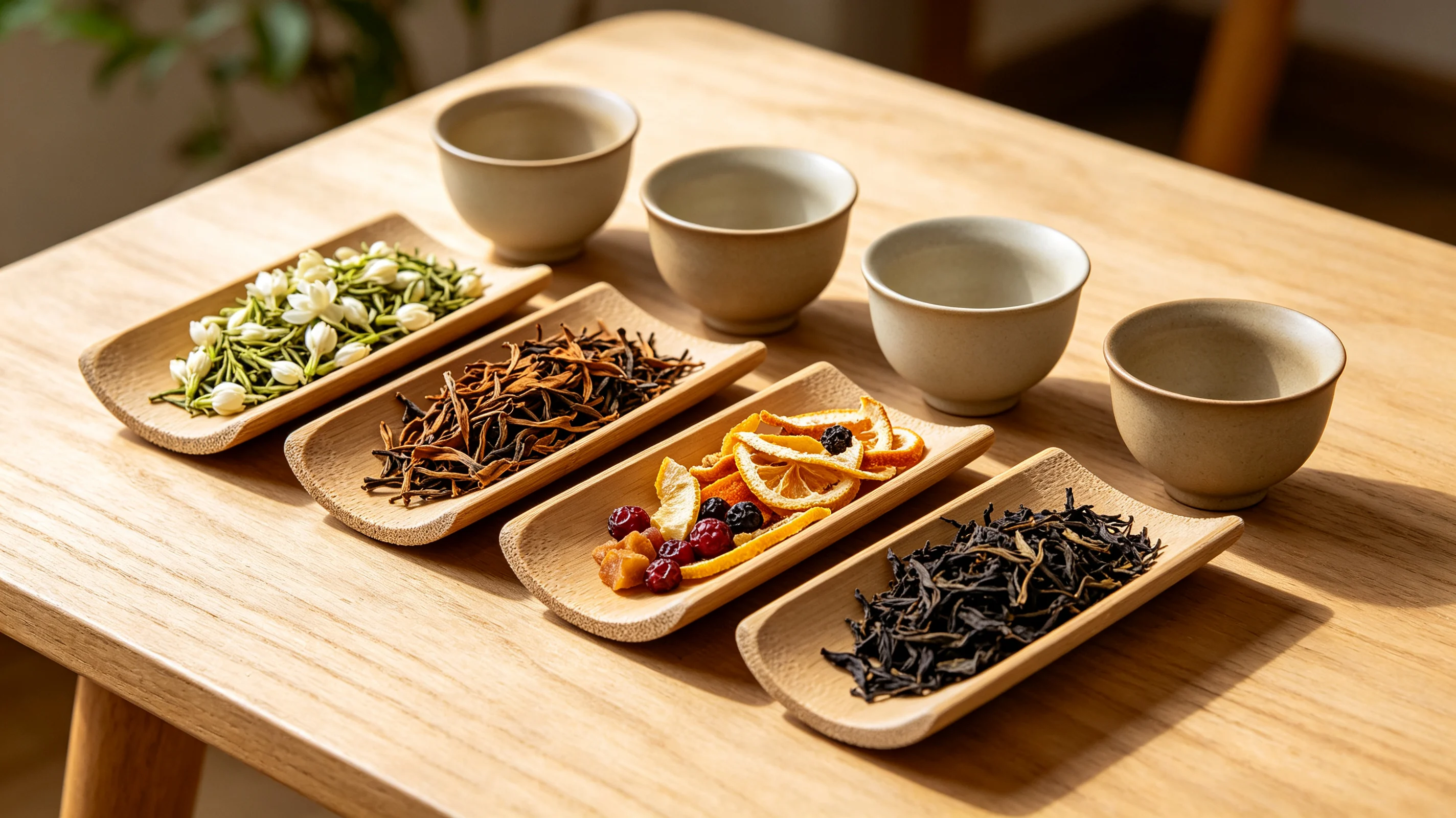
A useful tea aroma guide follows fragrance from dry leaf to wet leaf, warm liquor, cooling cup, and aftertaste.
Tea aroma is not one fixed smell. It changes when dry leaves meet warm air, when hot water opens the leaf, and again as the cup cools. A tea that seems faint at first may become floral when warm or reveal fruit and roasted notes near room temperature.
Learning to follow these stages is more useful than trying to identify a long list of aromas from the first sniff.
Four Places to Smell Tea
- Dry leaf: freshness, storage condition, roast, flowers, fruit, or stale odors.
- Warm dry leaf: aroma released after the empty vessel is warmed.
- Wet leaf: often the clearest view of processing and roast.
- Finished cup: the aroma that combines with taste and texture.
Why Heat Changes What You Notice
Very hot tea releases volatile aromas quickly, but steam can make careful smelling difficult. Warm tea is often easier to read because the fragrance remains active while the heat no longer overwhelms the nose. Cooler tea may reveal sweetness, fruit, wood, or mineral notes that were hidden earlier.
Cup Shape and Aroma
A narrower opening can hold fragrance near the rim, while a wide cup allows tea to cool faster. This difference is subtle, but fragrant oolong, jasmine tea, and floral black tea can feel more expressive in a cup that gathers aroma.
The tea cup guide explains how shape, material, and size affect the wider drinking experience.
Continue with How to Taste Loose Leaf Tea at Home: A Simple Session.
When Aroma Disappears
- Tea has been stored open or near strong odors.
- The water contains chlorine or a metallic smell.
- The leaves are old or the roast has faded.
- Water temperature is too low for the tea.
- Too little leaf was used for the vessel.
- The tea is served so hot that steam masks detail.
Aroma Is Not the Same as Flavoring
Natural tea aroma can come from cultivar, growing conditions, oxidation, roasting, aging, and scenting with flowers. Added flavor can also be enjoyable, but it should be disclosed clearly. Strong fragrance alone does not prove high leaf quality.
A Two-Cup Aroma Test
- Brew the same tea in two matching cups.
- Smell the first cup immediately.
- Cover the second for two minutes, then smell it.
- Taste both as they cool.
- Note whether the aroma becomes clearer, flatter, sweeter, or more roasted.
Smell the Empty Cup After Drinking
The empty cup can hold a concentrated trace of fragrance after the liquor is gone. This is especially noticeable with aromatic oolong, jasmine tea, and some black teas. Let the cup cool slightly, then smell the inside without pressing your nose against hot ceramic.
The empty-cup aroma is not a separate quality score, but it can reveal sweetness or floral character that was difficult to isolate while steam and taste were present. Compare it with the wet leaves to see whether the fragrance came mainly from the leaf, roast, flowers, or added flavor.
- Smell the cup immediately after the last sip.
- Return after thirty seconds.
- Compare with the wet-leaf aroma.
Follow the Tea, Not a Vocabulary List
Choose an aromatic tea from the oolong collection or flower tea collection and observe it through several temperatures. The useful skill is noticing change, not naming every scent perfectly.
Tea Aroma Guide: The Decision That Matters
A loud aroma is not automatically a better aroma. Clean, integrated fragrance that remains connected to the taste can be more satisfying than a perfume-like top note that disappears after the first sip. Notice whether the wet leaves, cup, and finish tell a consistent story.
Storage problems often appear first in aroma. Tea that has absorbed spice, cardboard, smoke, or a damp cupboard may still produce color, yet its fragrance feels blurred. Smelling the empty warm cup after drinking can reveal pleasant residue or stale foreign odors.
Use This Before You Decide
- Smell dry leaf, wet leaf, liquor, and empty cup.
- Wait until steam no longer overwhelms the nose.
- Check for foreign storage odors.
- Compare intensity with integration.
- Return to the cup as it cools.
Turn the Guidance Into a Repeatable Method
A single impressive cup is not enough to establish a reliable view of tea aroma guide. Repeat the tea on another day with the same water, leaf amount, vessel, and timing. If the same aroma, texture, or finish appears again, the observation is more useful than a one-time flavor guess.
Use the article’s practical scenario as a small calibration exercise: Try a fragrant oolong in a narrow cup and a wide cup. The narrow cup may gather aroma near the rim, while the wide cup cools faster and makes the later sweetness easier to notice. Neither cup is universally superior; each emphasizes a different stage. Then remove one source of noise, such as strongly scented food, a different cup, or a rushed serving temperature, and compare the result.
Sensory language should remain proportional to the evidence. Broad descriptions that can be repeated are more valuable than rare flavor names noticed once. When a note changes, record the changed conditions rather than rewriting the earlier experience as a mistake.
- Smell dry leaf, wet leaf, liquor, and empty cup. Record what changed before moving to the next variable.
- Wait until steam no longer overwhelms the nose. Record what changed before moving to the next variable.
- Check for foreign storage odors. Record what changed before moving to the next variable.
- Compare intensity with integration. Record what changed before moving to the next variable.
This verification step keeps tea aroma guide tied to a real result rather than a rule copied from another kitchen, product page, or tea table.
The Limits of a One-Size-Fits-All Answer
Tea Aroma Guide cannot remove individual sensory memory, attention, or preference. Two careful drinkers may notice different aromas while agreeing on body, dryness, and finish. The guide is successful when each person can explain the observation and repeat the conditions.
Use the first FAQ question—“Why does tea smell stronger than it tastes?”—as a reminder that the practical answer has boundaries. Revisit the tea on another day before making a purchase or quality judgment from a subtle one-time impression.
- Keep: the parts of tea aroma guide that produce a repeatable improvement.
- Recheck: results that appeared only once or under unusual conditions.
- Adapt: vessel size, water, timing, and serving to the actual situation.
- Stop: when safety, contamination, or damaged equipment becomes the concern.
A Simple Experiment
Try a fragrant oolong in a narrow cup and a wide cup. The narrow cup may gather aroma near the rim, while the wide cup cools faster and makes the later sweetness easier to notice. Neither cup is universally superior; each emphasizes a different stage.
Control the room as carefully as the cup
Strong food, perfume, toothpaste, smoke, and scented cleaning products can change what you notice. A quiet environment does not make a tasting more prestigious; it makes the comparison easier to repeat.
Repeat one tea on another day before treating a subtle impression as permanent. Sensory confidence grows from repeated observations rather than from forcing a long list of flavor names.
Questions Readers Often Ask
Why does tea smell stronger than it tastes?
Some volatile aromas reach the nose readily while the liquid itself remains light or vegetal.
Can cup shape change aroma?
Yes, mainly by controlling cooling and how fragrance gathers near the rim.
Does strong aroma prove added flavor?
No. Cultivar and processing can create intense natural aroma; the ingredient list and production description provide better evidence.
Turn Information Into a Better Routine
When tea aroma guide leads to better control and fewer assumptions, the topic has served its purpose.