

What Tea Liquor Color Can—and Cannot—Tell You
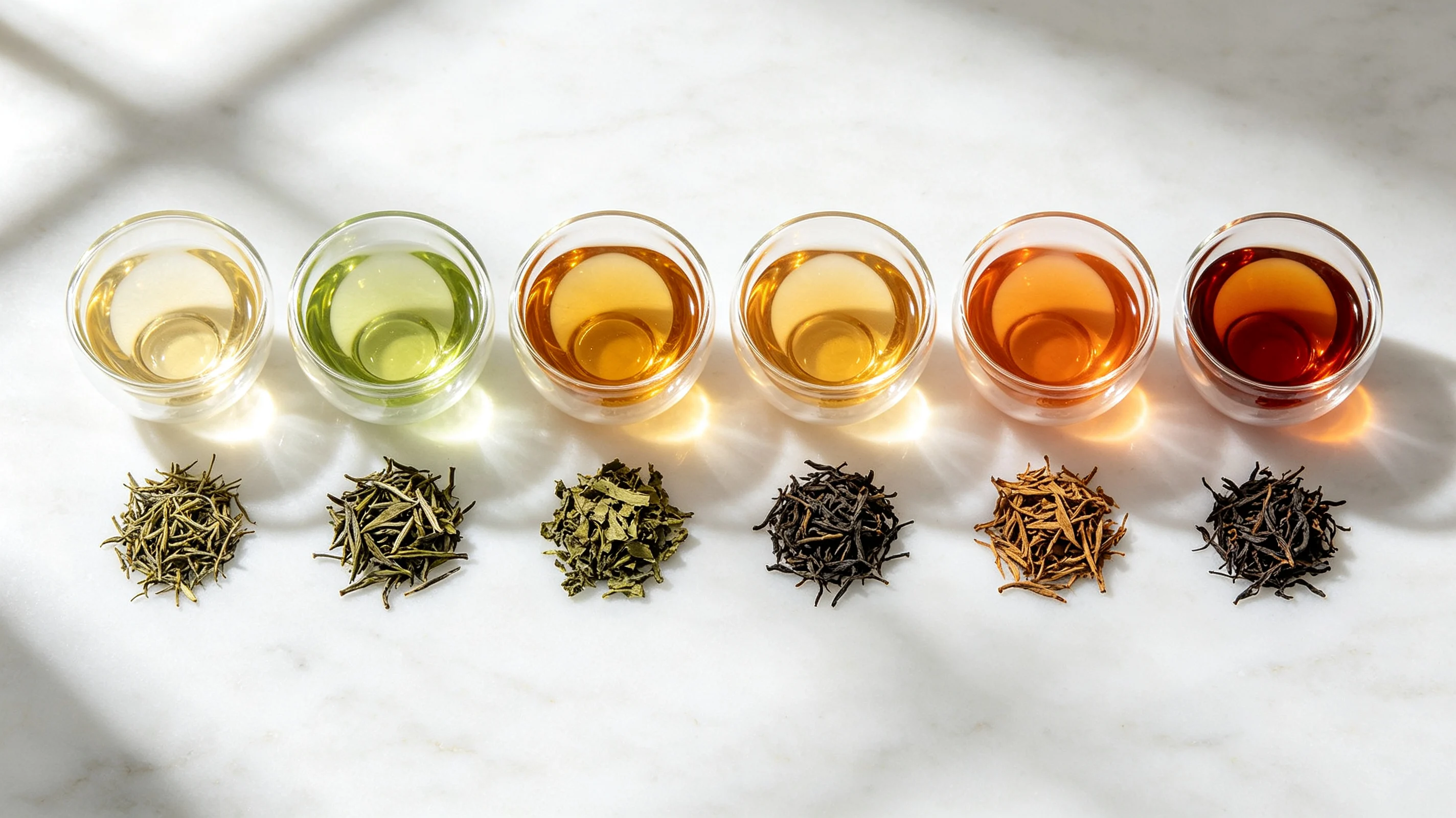
Tea liquor color is most informative when it is linked to a known leaf and controlled brewing conditions.
Tea liquor color is useful evidence, but it is not a quality score. Pale tea can be aromatic and concentrated; dark tea can be smooth, weak, oversteeped, or simply made from a heavily oxidized leaf.
Color becomes meaningful only when it is considered with aroma, taste, texture, leaf type, and brewing conditions.
What Influences Tea Color?
- Tea category and oxidation level.
- Roasting or firing.
- Leaf size and degree of breakage.
- Age and storage.
- Water chemistry.
- Leaf amount, temperature, and steeping time.
- Added flowers, fruit, spices, or flavoring ingredients.
Pale Does Not Mean Weak
White tea and some green teas can produce pale yellow liquor while carrying clear aroma and a long finish. Strength is not only visual. Texture, aftertaste, and aromatic intensity may be more informative.
Dark Does Not Mean Bitter
Ripe pu’er and some black teas can produce deep amber or reddish-brown liquor without harshness. Conversely, a light green tea can taste bitter if brewed too hot. Color and bitterness often move independently.
Clarity, Haze, and Surface Film
Clear liquor can look attractive, but a slight haze is not automatically a defect. Fine particles, cooling, oils from ingredients, and water minerals can all affect appearance. A film on top may come from hard water interacting with tea compounds rather than poor-quality leaves.
If the same tea changes dramatically between kitchens, review the best water for tea guide before judging the leaf.
Use a White Cup for Comparison
A white or light interior makes color easier to compare. Pour two infusions side by side and observe hue, depth, and clarity under natural light. Avoid judging through strongly colored glass or a dark cup when accurate comparison matters.
What Color Can Tell You Reliably
| Observation | Possible explanation | What to check next |
|---|---|---|
| Much darker than usual | More leaf, hotter water, or longer steep | Taste for roughness and body |
| Unexpectedly pale | Too little leaf or cool water | Check aroma and leaf expansion |
| Cloudy after cooling | Fine particles or temperature change | Taste before assuming a problem |
| Dull brown-green | Old leaf, storage, or overbrewing | Smell dry and wet leaves |
Photography Can Distort the Evidence
Phone cameras may brighten pale tea, deepen amber tones, and alter white balance under warm indoor light. Product photographs can therefore suggest a liquor color that will not look identical at home. Natural window light and a white background give a more useful comparison.
When tracking a tea over time, use the same cup, location, and approximate time of day. A changing photograph may otherwise reflect lighting rather than storage or brewing. Color is most useful when the comparison conditions are repeatable.
- Use a white or clear vessel.
- Avoid colored LED light.
- Photograph both cups in the same frame when comparing.
Let the Cup Confirm the Appearance
Use color as one part of a wider tasting process. The loose leaf tea collection includes teas that naturally range from pale gold to deep amber. The best judgment still comes after smelling and tasting.
Working With Tea Liquor Color in Real Life
Color becomes useful when you compare the same tea across sessions. If a familiar green tea suddenly turns dull and dark, the cause may be hotter water, longer time, more leaf, or aging. The comparison is stronger than judging one unknown tea by appearance alone.
Lighting matters. Warm indoor bulbs make amber look deeper and green look browner. A white cup and indirect daylight give a more reliable view, while dark glazed cups are better for atmosphere than analytical comparison.
How the Decision Plays Out
Photograph the same black tea at two, three, and five minutes using the same white cup. The pictures create a personal extraction reference. Then taste each cup: the darkest one may not be the most balanced.
Where Personal Preference Enters the Decision
Use tea liquor color to make one prediction before brewing. Predict how quickly the leaves will open, how the aroma may develop, whether the tea might tolerate heat, or whether repeated infusions are likely. A technical term becomes useful only when it leads to something observable.
Check that prediction through the scenario described above and the first two review points: “Use a white or light interior.” and “Compare under similar light..” If the cup contradicts the expectation, consider cultivar, roast, leaf size, storage, and brewing before rejecting the entire explanation.
Avoid turning one processing feature, season, grade, or origin claim into a complete quality score. Tea reaches the cup through several linked stages. The most reliable interpretation keeps the term narrow and lets aroma, taste, texture, and finish provide the final evidence.
- Review: Use a white or light interior.
- Review: Compare under similar light.
- Review: Record time, temperature, and ratio.
- Review: Taste before calling haze a defect.
This verification step keeps tea liquor color tied to a real result rather than a rule copied from another kitchen, product page, or tea table.
Keep Context Beside the Recommendation
Tea Liquor Color provides a model, not a complete explanation of every tea. Cultivar, weather, processing skill, storage, water, and brewing can reinforce or contradict the expectation created by one term.
When the evidence is mixed, keep the label narrow. Use “Use a white or light interior.” and “Compare under similar light.” to gather more context instead of expanding the claim until it explains everything.
- Keep: the parts of tea liquor color that produce a repeatable improvement.
- Recheck: results that appeared only once or under unusual conditions.
- Adapt: vessel size, water, timing, and serving to the actual situation.
- Stop: when safety, contamination, or damaged equipment becomes the concern.
A Focused Checklist
- Use a white or light interior.
- Compare under similar light.
- Record time, temperature, and ratio.
- Taste before calling haze a defect.
- Distinguish deep color from strong aroma or body.
Turn the definition into a prediction you can test
A technical term matters when it helps predict leaf behavior, flavor, storage, or brewing. Use the definition to form a hypothesis, then check it in the cup.
Avoid treating one feature as a complete quality score. Tea is the combined result of raw material, processing, storage, water, and preparation.
Quick Answers
Does darker tea contain more caffeine?
Color alone cannot answer that. Leaf material, amount, temperature, time, and serving size all matter.
Is cloudy tea spoiled?
Not necessarily. Cooling, particles, ingredients, and minerals can create haze; odor and storage history matter.
Why does green tea turn brown?
High heat, long extraction, oxidation, age, or lighting can all contribute.
Make the Next Cup More Informative
The real value of tea liquor color is a cup or decision that can be repeated, explained, and adjusted without guesswork.
A related practical guide is Gongfu Brewing vs Western Brewing: Which Method Fits You?.