

Gongfu Brewing vs Western Brewing: Which Method Fits You?
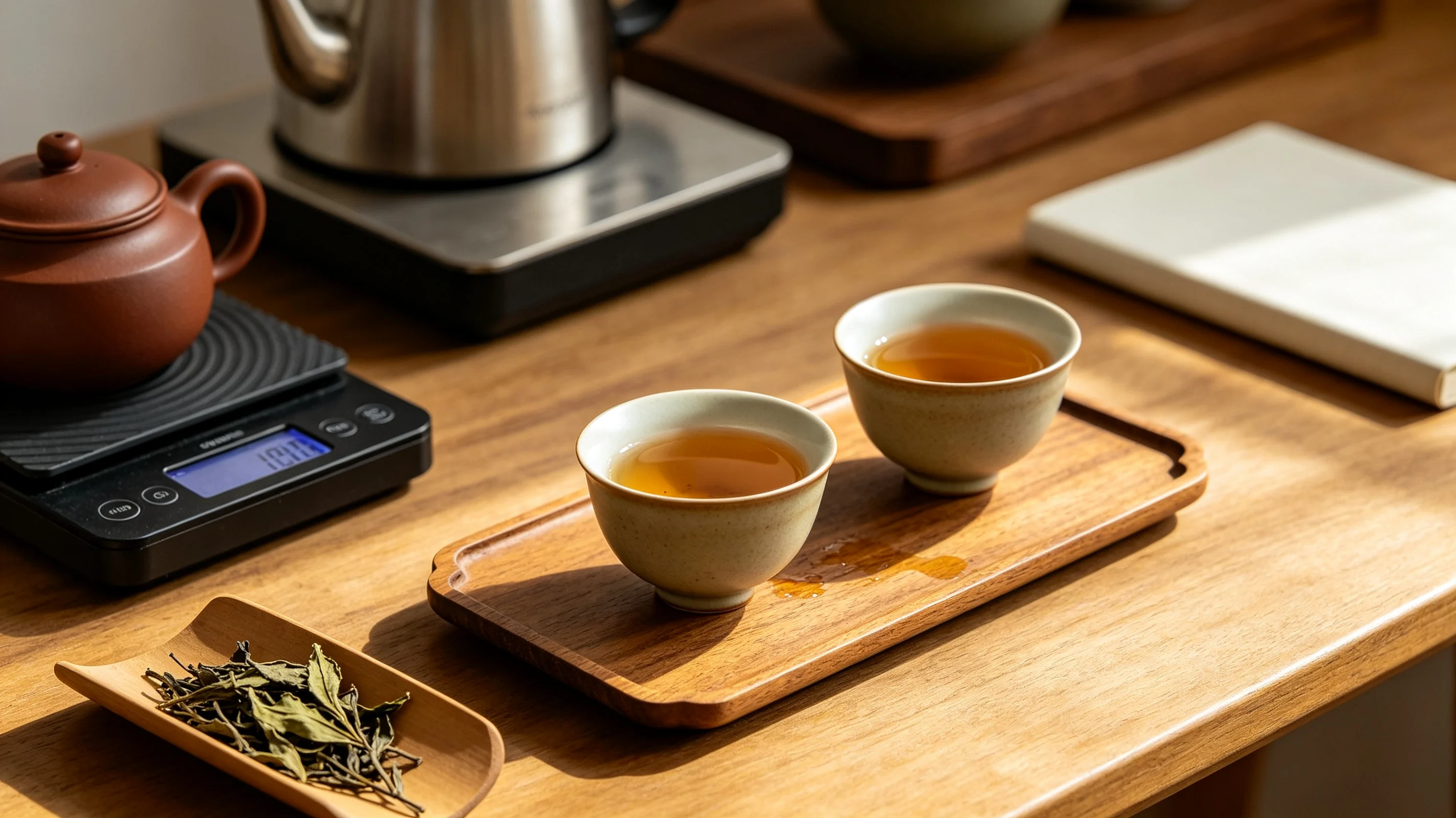
Gongfu brewing vs Western brewing is best treated as a choice in flavor distribution, time, vessel size, and attention.
Gongfu brewing and Western brewing use the same basic ingredients—tea leaves and water—but organize them differently. Gongfu style uses more leaf, less water, and repeated short infusions. Western style usually uses less leaf, more water, and one longer infusion.
Neither method is automatically more authentic or more correct. The better method is the one that fits your tea, available time, equipment, and interest in tasting changes between infusions.
The Core Differences
| Feature | Gongfu style | Western style |
|---|---|---|
| Leaf amount | Higher relative to water | Lower relative to water |
| Vessel | Small gaiwan or teapot | Mug, infuser, or larger teapot |
| Steeping | Several short infusions | One or two longer infusions |
| Experience | Focused and comparative | Convenient and relaxed |
| Best use | Exploring changing flavors | Daily drinking and larger servings |
When Gongfu Brewing Works Best
Gongfu brewing is especially rewarding with oolong, pu’er, some white teas, and whole-leaf teas that change over several steeps. The method makes it easier to notice aroma, texture, and the way a tea opens gradually.
It also requires attention. You need a small vessel, a way to pour fully, and enough time to make several infusions. A simple gaiwan is sufficient; an elaborate tea table is optional.
When Western Brewing Is the Better Choice
Western brewing is practical for work, breakfast, travel, and any moment when you want one full cup. A roomy basket infuser offers good control without turning the session into a formal activity.
If you brew directly in a mug, the choice between tools is covered in the tea infuser and tea strainer comparison.
Do the Methods Change Flavor?
Yes. A high leaf ratio with short steeps can produce concentrated aroma without the same long extraction. A lower ratio and longer steep often blends the tea’s stages into one stable cup. Neither result is inherently superior.
A Simple Way to Compare Them
- Choose one oolong, white tea, or pu’er that can be re-steeped.
- Brew one portion in a small vessel using short infusions.
- Brew another portion in a mug using a normal Western ratio.
- Compare the first cup, middle infusions, texture, and overall convenience.
- Keep the method that suits the way you actually drink tea.
Common Mistakes
- Using a gongfu leaf amount with a five-minute Western steep.
- Leaving tea sitting in a small pot between pours.
- Assuming special equipment guarantees better tea.
- Using a tiny tea ball for expanding leaves.
- Turning a weekday cup into a performance you do not enjoy.
The Same Tea Can Serve Two Different Purposes
A rolled oolong brewed gongfu style may show a floral first infusion, a fuller middle, and a mineral finish. The same leaf in a mug may combine those stages into one calm, practical cup. The difference does not mean one method revealed the truth and the other failed.
Use the smaller method when changes between steeps are the point. Use the larger method when the tea needs to accompany reading, food, or work. Many people enjoy the same tea both ways and adjust the leaf amount rather than choosing a permanent side.
| Situation | Useful method |
|---|---|
| Short focused session | Gongfu |
| Desk or breakfast mug | Western |
| Serving several small cups | Gongfu with pitcher |
| One large shared pot | Western-style teapot |
Choose a Method, Not an Identity
Explore teas with enough leaf quality to respond to either method through the loose leaf tea collection. Then let the situation decide: focused tasting when you have time, and a well-made mug when you do not.
What This Looks Like at Home
A 100-milliliter gaiwan with a higher leaf ratio may produce six short infusions, while a 300-milliliter mug uses less leaf for one longer cup. Compare total water, total leaf, attention, cleanup, and flavor development—not just the intensity of the first pour.
How to Apply Gongfu Brewing vs Western Brewing
The fairest comparison uses one tea, one water source, and two measured portions. A rolled oolong is particularly useful because the leaf opens visibly and often changes over several steeps. Western brewing may emphasize a unified cup; gongfu brewing may separate floral, roasted, and mineral stages.
Time cost is part of quality. A method that produces fascinating infusions but is too demanding for a workday is not a practical daily method. Many drinkers use a mug during the week and a small vessel when they want to pay attention.
What Strong Evidence Looks Like in Daily Tea
A useful decision about gongfu brewing vs western brewing begins with a named situation. Decide whether the priority is speed, flavor development, portability, serving several people, repeated infusions, cost, or easy cleanup. A universal winner rarely exists because the priorities conflict.
Run the comparison with the same tea and water whenever possible. Apply “Use one tea for both methods.” and “Measure total leaf and total water.,” then write which option made the desired result easier. Include the time spent setting up and cleaning, not only the first sip.
The result can legitimately change by occasion. A method chosen for a quiet weekend may be inappropriate at work, and a portable option may sacrifice some control. A fair comparison allows one person to keep both choices for different jobs.
- Review: Use one tea for both methods.
- Review: Measure total leaf and total water.
- Review: Pour the small vessel completely.
- Review: Do not combine a high leaf ratio with a long mug steep.
This verification step keeps gongfu brewing vs western brewing tied to a real result rather than a rule copied from another kitchen, product page, or tea table.
Common Questions
Is gongfu brewing always better?
No. It reveals change well, but Western brewing is often more convenient and can make an excellent full cup.
Do I need expensive clay teaware?
No. A neutral porcelain gaiwan and ordinary cups are enough to learn the method.
Which teas suit repeated short infusions?
Oolong, pu’er, many white teas, and some whole-leaf green or black teas often respond well.
Know When the Rule Needs to Bend
No guide can declare one product or method universally best for gongfu brewing vs western brewing. Budget, shipping, hand size, storage space, cleanup, serving size, and taste can legitimately change the decision. A transparent tradeoff is better than a false winner.
Use the question “Is gongfu brewing always better?” to define the choice more narrowly. If the answer depends on a specific tea or household routine, test a small quantity or borrowed tool before making a larger commitment.
- Keep: the parts of gongfu brewing vs western brewing that produce a repeatable improvement.
- Recheck: results that appeared only once or under unusual conditions.
- Adapt: vessel size, water, timing, and serving to the actual situation.
- Stop: when safety, contamination, or damaged equipment becomes the concern.
Choose by situation, not by a universal winner
A comparison becomes useful when it names the job: workday speed, focused tasting, serving guests, milk tea, travel, or repeated infusions. The same person may choose differently in two settings.
Compare total effort and cleanup as well as flavor. A method or product that remains unused cannot provide practical value.
Five Checks That Prevent Guessing
- Use one tea for both methods.
- Measure total leaf and total water.
- Pour the small vessel completely.
- Do not combine a high leaf ratio with a long mug steep.
- Choose the method that fits the actual occasion.
Let the Cup Confirm the Rule
The best approach to gongfu brewing vs western brewing is the one that remains clear after the marketing language is removed.
Continue with Why Tea Tastes Astringent and How to Adjust the Cup.