

How to Taste Loose Leaf Tea at Home: A Simple Session
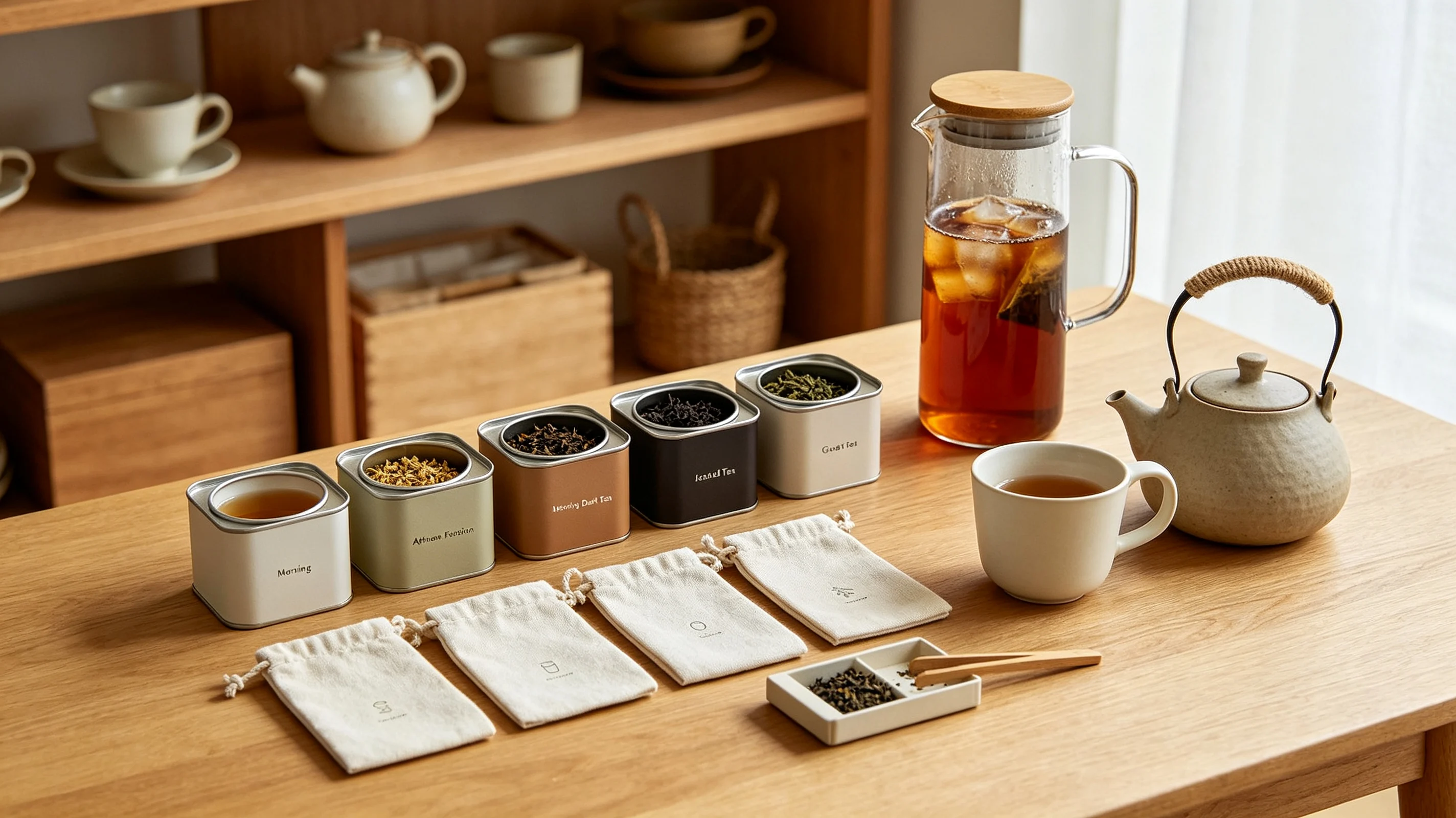
Learning how to taste loose leaf tea at home means controlling a few variables and asking the same clear questions each time.
Keep the ritual light enough to repeat
A reliable sequence of water, measured leaf, timed infusion, and brief notes creates more learning than an elaborate setup used once. Remove any step that does not improve attention or the cup.
The session should end with a decision: change the recipe, buy again, serve with food, or use the tea in another context.
You can taste loose leaf tea at home without professional equipment. Two matching cups, a kettle, a timer, and a notebook are enough. What matters most is controlling the brewing conditions so the differences you notice come from the tea rather than random changes.
A home tasting can compare two teas, two water temperatures, or two steeping times. Keep the session narrow. Five teas at once often create fatigue and vague notes.
Set Up a Fair Comparison
- Use identical cups or vessels whenever possible.
- Measure the same water volume for each tea.
- Weigh the leaves or use equal, appropriate portions.
- Use the same water source.
- Begin with two or three samples, not an entire shelf.
Observe Before You Drink
Look at the dry leaves first. Notice whether they are whole, broken, rolled, twisted, flat, or blended with flowers and fruit. Smell them without trying to name every aroma. Strength, freshness, and cleanliness are already useful observations.
Taste in Three Temperatures
Take a small sip while the tea is hot, again when it is warm, and once more near room temperature. Heat can hide sweetness and amplify certain aromas. As the tea cools, texture and aftertaste often become easier to judge.
Use Four Questions
- What is the first clear aroma?
- Does the taste feel sweet, savory, bitter, roasted, floral, fruity, or mineral?
- Is the texture light, round, creamy, brisk, drying, or coating?
- What remains ten seconds after swallowing?
Keep brewing variables steady with the water guide and the tea measurement guide.
Compare, Do Not Score Too Quickly
A numerical score can be useful later, but early tasting improves faster through comparison. Which cup has clearer aroma? Which has a longer finish? Which one would you choose for a quiet session, breakfast, or iced tea? Context creates more useful judgments than a single number.
Try a Second Infusion
When the tea allows it, brew the same leaves again. Oolong, white tea, pu’er, and many green teas may change significantly. A tea that seems restrained in the first cup may become sweeter or more aromatic in the second.
Record Only What You Will Reuse
Write the tea name, amount, water temperature, steeping time, and three sensory words. Add one adjustment for next time. This short format is enough to build a reliable personal reference without making tea feel like an exam.
Build the Session Around One Variable
A useful tasting has a question. You might compare filtered water with tap water, a two-minute steep with a three-minute steep, or two black teas brewed under the same conditions. Without a question, the table can become a collection of unrelated cups.
Write the variable at the top of the page before brewing. Everything else should remain as stable as possible. This small discipline makes the conclusion practical: you will know what to change the next time you make tea.
- Question: which water gives clearer aroma?
- Question: does a shorter steep reduce dryness?
- Question: which tea remains pleasant after cooling?
Finish With a Practical Decision
At the end of the session, decide what the tea is for. Some teas reward careful tasting; others are excellent daily companions. A useful tasting session helps you brew and buy more confidently, not merely produce elaborate notes.
Use a Second Session to Confirm the First
Test the complete workflow for how to taste loose leaf tea: prepare the water, measure the leaf, brew, pour, remove the leaves, handle drips, and clean the equipment. A setup that looks simple can fail at the moment an infuser has nowhere to rest or wet leaves cannot be discarded.
Build the first test around “Limit the session to two or three teas.” and “Label cups before pouring..” Then remove any object or step that does not improve control, comfort, or cleanup. The best routine is not the most elaborate one; it is the one you can repeat without hesitation.
After several sessions, notice where attention is actually required. A timer may matter more than another cup, and a stable tray may matter more than decorative accessories. Spend effort on the point where the routine normally breaks down.
| Check | Evidence to keep |
|---|---|
| Limit the session to two or three teas. | Observe the result and record the next adjustment. |
| Label cups before pouring. | Observe the result and record the next adjustment. |
| Keep water and timing consistent. | Observe the result and record the next adjustment. |
This verification step keeps how to taste loose leaf tea tied to a real result rather than a rule copied from another kitchen, product page, or tea table.
Avoid Turning a Useful Guide Into a Rigid Formula
How to Taste Loose Leaf Tea cannot remove individual sensory memory, attention, or preference. Two careful drinkers may notice different aromas while agreeing on body, dryness, and finish. The guide is successful when each person can explain the observation and repeat the conditions.
Use the first FAQ question—“Do I need professional tasting bowls?”—as a reminder that the practical answer has boundaries. Revisit the tea on another day before making a purchase or quality judgment from a subtle one-time impression.
- Keep: the parts of how to taste loose leaf tea that produce a repeatable improvement.
- Recheck: results that appeared only once or under unusual conditions.
- Adapt: vessel size, water, timing, and serving to the actual situation.
- Stop: when safety, contamination, or damaged equipment becomes the concern.
A Practical Review List
- Limit the session to two or three teas.
- Label cups before pouring.
- Keep water and timing consistent.
- Taste at more than one temperature.
- Record one decision, not only adjectives.
Continue with Gongfu Brewing vs Western Brewing: Which Method Fits You?.
A Better Way to Use How to Taste Loose Leaf Tea
Consistency is more valuable than specialized equipment. Use the same two cups, the same kettle, and the same scale whenever you compare teas. Natural daylight helps with color, but aroma and texture should lead the judgment.
Keep the session short enough to remain attentive. Two teas provide a clear comparison; three are manageable; five often produce fatigue. Strong smoke, spice, or ripe pu’er should come last because they can dominate the next sample.
A Practical Scenario
A beginner can compare two black teas using three grams of each, 240 milliliters of the same water, and the same steeping time. After tasting hot and warm, write which has clearer aroma, fuller body, and a more pleasant finish. That is already a meaningful home tasting.
Keep the Method Practical
Keep how to taste loose leaf tea connected to observable evidence, normal household conditions, and the way tea is actually used.