

How Much Loose Leaf Tea Per Cup? Easy Guide
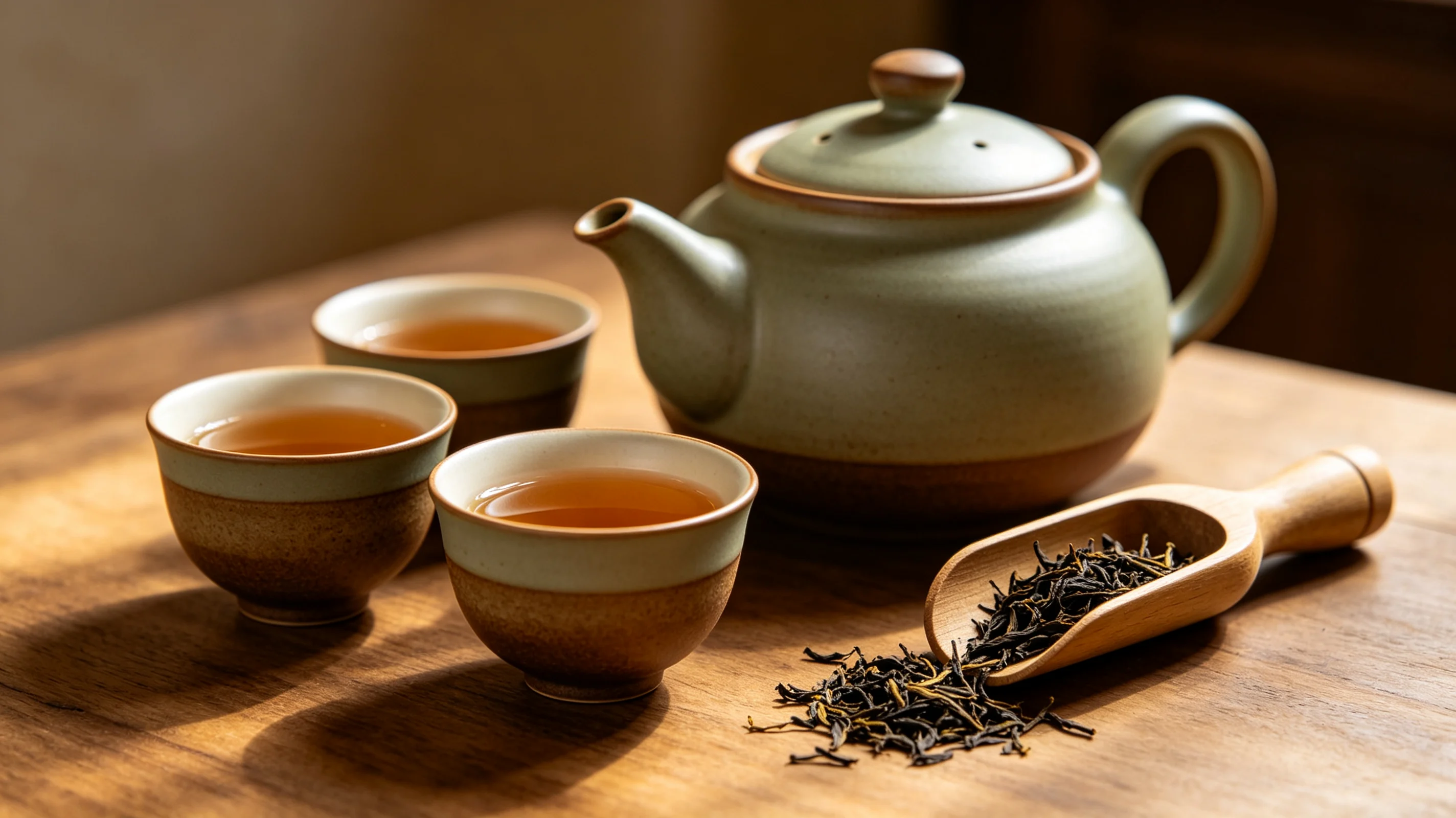
If you are wondering how much loose leaf tea per cup to use, start with about 2 to 3 grams of tea for every 8 ounces, or 240 milliliters, of water. That is a useful starting point for many green, black, and everyday loose leaf teas.
However, one measurement cannot work perfectly for every tea. A teaspoon of small, dense black tea may contain much more tea than a teaspoon of large, fluffy white tea. Rolled oolong expands dramatically, while fruit and herbal blends may require more volume to produce a full cup. Cup size, leaf shape, brewing style, and personal taste all matter.
This guide explains how to measure loose leaf tea with or without a scale, how to adjust the amount for different tea types, and how to fix tea that tastes too weak or too strong.
How Much Loose Leaf Tea Per Cup? The Quick Answer
For standard Western-style brewing, use the following amounts as practical starting points for 8 ounces, or 240 milliliters, of water:
- Green tea: 2 to 3 grams, or about 1 teaspoon.
- Black tea: 2 to 3 grams, or about 1 teaspoon.
- Oolong tea: 3 to 4 grams, depending on leaf size and shape.
- White tea: 3 to 4 grams, often 1 to 2 tablespoons because the leaves are bulky.
- Pu’er tea: 3 to 4 grams for a regular mug or small teapot.
- Flower tea: 2 to 4 grams, depending on the flowers and tea base.
- Fruit or herbal tea: 4 to 6 grams, often 1 to 2 tablespoons.
These are starting points, not strict rules. If the tea tastes too light, add more leaf next time. If it tastes too strong, reduce the amount or increase the water.
Why One Teaspoon Is Not Always One Serving
Many tea packages recommend one teaspoon per cup, but teaspoons measure volume rather than weight. Tea leaves vary greatly in size, shape, and density.
One teaspoon of fine black tea may weigh close to 3 grams. One teaspoon of large white tea may weigh less than 1 gram because the leaves are light and take up more space. A teaspoon of tightly rolled oolong may contain more tea than it appears to hold.
This is why two teas measured with the same spoon can produce very different strengths. The teaspoon rule is convenient, but it should be treated as a starting point rather than a universal formula.
Measuring Loose Leaf Tea by Weight vs Volume
Measuring tea by weight is more consistent than measuring by volume. A small digital scale can tell you exactly how many grams you are using, regardless of whether the leaves are fine, rolled, twisted, or fluffy.
Weight is especially useful when comparing teas, repeating a successful brew, or preparing a larger teapot. If you used 3 grams today and enjoyed the result, you can use 3 grams again tomorrow.
Measuring by volume is faster and perfectly acceptable for daily tea. A regular teaspoon or tea scoop is usually enough once you become familiar with the leaves.
- Use a scale: When testing a new tea, comparing brewing methods, or seeking consistent results.
- Use a spoon: For quick daily brewing and teas you already know.
- Use your eyes: Only after you have learned how much a familiar tea expands and tastes.
Understanding the Tea-to-Water Ratio
The tea-to-water ratio is the relationship between the amount of dry tea and the amount of water used for brewing. A common starting ratio for Western-style brewing is approximately 1 gram of tea for every 80 to 120 milliliters of water.
A stronger ratio uses more tea for the same amount of water. A lighter ratio uses less tea. Neither is automatically correct. The right ratio depends on the tea and the result you want.
Short, concentrated brewing methods often use much more tea and much less water. For example, a small gaiwan may contain several grams of tea but use very short infusions. A large mug usually uses less tea and a longer steep.
Do not copy a high-leaf gongfu ratio and then leave the tea in a large mug for several minutes. Tea amount, water volume, and steeping time must work together.
How Much Green Tea Per Cup?
Start with 2 to 3 grams of loose leaf green tea per 8-ounce cup. For many teas, this is approximately one level teaspoon, although large or twisted leaves may need more volume.
Green tea can become bitter when too much leaf is combined with very hot water or long steeping. If the cup tastes weak, try adding slightly more tea before dramatically increasing the steeping time.
For delicate green tea, a moderate amount of leaf, cooler water, and a shorter steep usually creates a smoother result.
How Much Black Tea Per Cup?
Use about 2 to 3 grams of loose leaf black tea per 8 ounces of water. Fine or broken black tea releases flavor quickly, so a level teaspoon may be enough.
Larger whole-leaf black tea may require a slightly rounded teaspoon. If you plan to add milk, you can use a little more tea to create enough body, but avoid compensating with an excessively long steep.
When black tea tastes thin, increase the leaf amount gradually. When it tastes rough or drying, shorten the steep before reducing the tea completely.
How Much Oolong Tea Per Cup?
Start with 3 to 4 grams of oolong tea per 8 ounces of water. Rolled oolong may look small when dry, but the leaves expand significantly during brewing.
Do not fill a small infuser tightly with rolled oolong. The leaves need space to open. A roomy basket infuser or teapot usually works better than a small tea ball.
Oolong is also suitable for multiple infusions. Using a little more leaf and making several controlled steeps can produce a more interesting result than trying to extract everything in one long brew.
How Much White Tea Per Cup?
White tea often requires more volume but not necessarily much more weight. Start with 3 to 4 grams per 8 ounces of water.
Large white tea leaves may require one or two tablespoons to reach that weight. Pressing the leaves tightly into a teaspoon gives an inaccurate measurement and may break delicate leaves.
Place the leaves loosely into the infuser or teapot. If the cup tastes too subtle, add more leaf rather than immediately using boiling water or an extremely long steep.
How Much Pu’er Tea Per Cup?
For a regular mug or Western-style teapot, start with 3 to 4 grams of pu’er tea per 8 ounces of water. Compressed pu’er should be separated carefully into a small piece rather than crushed into fine powder.
Pu’er can become very strong when too much leaf is steeped for several minutes. Begin with a moderate amount and increase gradually.
When using a small gaiwan and short infusions, you may use a higher tea-to-water ratio. The shorter brewing time prevents the tea from becoming excessively heavy.
How Much Flower, Fruit, or Herbal Tea Per Cup?
Flower, fruit, and herbal blends often need more volume than true tea because ingredients such as petals, dried fruit, citrus peel, roots, and herbs are bulky.
Start with 4 to 6 grams, or approximately 1 to 2 tablespoons, per 8 ounces of water. Very light flowers may need more volume, while dense roots or spices may need less.
These blends often benefit from longer steeping than green or black tea. If the drink tastes weak, increasing both the ingredient amount and steeping time may help.
How to Measure Loose Leaf Tea Without a Scale
You do not need a digital scale to make good tea. Use a teaspoon or tablespoon and learn how the leaves behave.
- Small, dense leaves: Begin with one level teaspoon.
- Medium twisted leaves: Begin with one rounded teaspoon.
- Large, fluffy leaves: Begin with one to two tablespoons.
- Rolled oolong: Begin with one level or slightly rounded teaspoon and allow room for expansion.
- Fruit and herbal blends: Begin with one to two tablespoons.
After brewing, look at the wet leaves. If they are tightly compressed inside the infuser, use a larger infuser or less tea. If the tea tastes watery even after proper steeping, add more leaf next time.
How Much Tea for Different Cup Sizes?
Many brewing problems happen because a recipe says “one cup,” while the actual mug holds much more than 8 ounces. Measure your favorite mug with water once so you know its real capacity.
- 6-ounce cup: Use about 1.5 to 2 grams of tea.
- 8-ounce cup: Use about 2 to 3 grams of tea.
- 12-ounce mug: Use about 3 to 4.5 grams of tea.
- 16-ounce mug: Use about 4 to 6 grams of tea.
For fruit, herbal, and very bulky teas, use amounts toward the upper end of these ranges. For fine, quickly extracting teas, begin near the lower end.
How Much Loose Leaf Tea for a Teapot?
To calculate tea for a teapot, start with the total water capacity. A 24-ounce teapot holds approximately three standard 8-ounce servings, so it usually needs three times the amount used for one cup.
For many true teas, a 24-ounce teapot may need about 6 to 9 grams of tea. A large fruit or herbal tea pot may need 12 grams or more, depending on the blend.
Do not add an automatic “extra spoon for the pot” unless you have tasted the tea and found it necessary. Measure according to actual water volume rather than traditional sayings.
If you are still exploring different leaf shapes and brewing styles, a focused loose leaf tea collection can help you compare green, black, oolong, white, flower, fruit, and other teas before developing a preferred measuring routine.
Should You Add More Tea or Steep Longer?
If tea tastes weak, adding slightly more leaf is often better than extending the steep dramatically. A very long steep can increase bitterness and astringency without creating the clean body you want.
Change one variable at a time:
- Keep the water temperature and steeping time the same.
- Add approximately half a teaspoon more tea.
- Brew again and compare the result.
- If it is still weak, increase the steeping time slightly.
If tea tastes too strong, remove the leaves sooner, use less tea, or add more water. Do not immediately lower the temperature unless the tea also tastes bitter or harsh.
Does More Tea Mean More Caffeine?
Using more tea leaves can increase the amount of caffeine available in the finished cup, although the final amount also depends on tea type, water temperature, steeping time, and the number of infusions.
If you are sensitive to caffeine, simply using a smaller cup may be easier than making a very weak large mug. You can also choose naturally caffeine-free fruit, flower, or herbal infusions that do not contain true tea leaves.
Do not rely on a quick rinse as a dependable method for removing most caffeine. Choose the tea type, serving size, and time of day based on your own sensitivity.
How Much Tea Should You Use for Multiple Infusions?
Tea intended for multiple infusions often uses a slightly higher leaf amount and shorter brewing times. Oolong, white tea, pu’er, and some green teas can develop different flavors over several steeps.
For a regular mug, you can still begin with the standard amount and reuse the leaves. For a small teapot or gaiwan, use more leaf relative to the water and keep each infusion short.
Do not oversteep the first infusion. If the first brew removes too much flavor, later infusions may taste flat.
How Much Loose Leaf Tea for Iced Tea?
Iced tea usually needs a stronger starting brew because melting ice dilutes the drink. Use approximately one and a half to two times your normal tea amount when brewing hot tea that will be poured over ice.
For an 8-ounce finished iced tea, you might use 3 to 5 grams of true tea or 6 to 8 grams of fruit and herbal tea, depending on the desired strength.
Cold brew tea is different. Because cold water extracts flavor slowly, use a generous amount of tea and allow several hours in the refrigerator. Taste before serving rather than relying only on the clock.
Common Loose Leaf Tea Measuring Mistakes
- Assuming every teaspoon weighs the same: Leaf size and density vary widely.
- Ignoring mug capacity: Many mugs hold far more than a standard cup.
- Packing leaves into the spoon: Large leaves should be measured loosely.
- Overfilling the infuser: Tea leaves need room to expand.
- Using a long steep to fix weak tea: More leaf often creates better body with less bitterness.
- Changing several variables at once: Adjust tea amount, time, or temperature separately.
- Following measurements without tasting: The best ratio is the one that produces a balanced cup for you.
FAQ
How many teaspoons of loose leaf tea per cup?
Start with one level teaspoon for an 8-ounce cup. Use more volume for large, fluffy white tea, flower tea, fruit tea, or herbal blends.
How many grams of tea should I use per cup?
Use approximately 2 to 3 grams of green or black tea per 8 ounces of water. Oolong, white tea, pu’er, and herbal blends may require 3 to 6 grams depending on the leaf.
How much loose leaf tea should I use for a 12-ounce mug?
Start with 3 to 4.5 grams of true tea for a 12-ounce mug. Use more for bulky fruit, flower, or herbal blends.
Should I add more tea or steep longer?
If the tea tastes weak but not under-extracted, add more tea before extending the steep significantly. Long steeping can create bitterness without improving body.
Can loose leaf tea be brewed more than once?
Yes. Oolong, white tea, pu’er, and many green teas can be brewed more than once. Use controlled steeping times so the first infusion does not remove all the flavor.
Start With a Ratio, Then Trust Your Taste
The simplest answer to how much loose leaf tea per cup is 2 to 3 grams for every 8 ounces of water. That gives you a dependable starting point, but it is not the final rule for every tea.
Pay attention to leaf size, cup capacity, brewing style, and the taste in front of you. Measure consistently at first, change one variable at a time, and keep the adjustments that make the cup more balanced. Good tea measurement is not about following a perfect number forever. It is about learning how to produce the flavor you enjoy reliably.