

Tea Tasting Notes: How to Describe Flavor Without Pretending
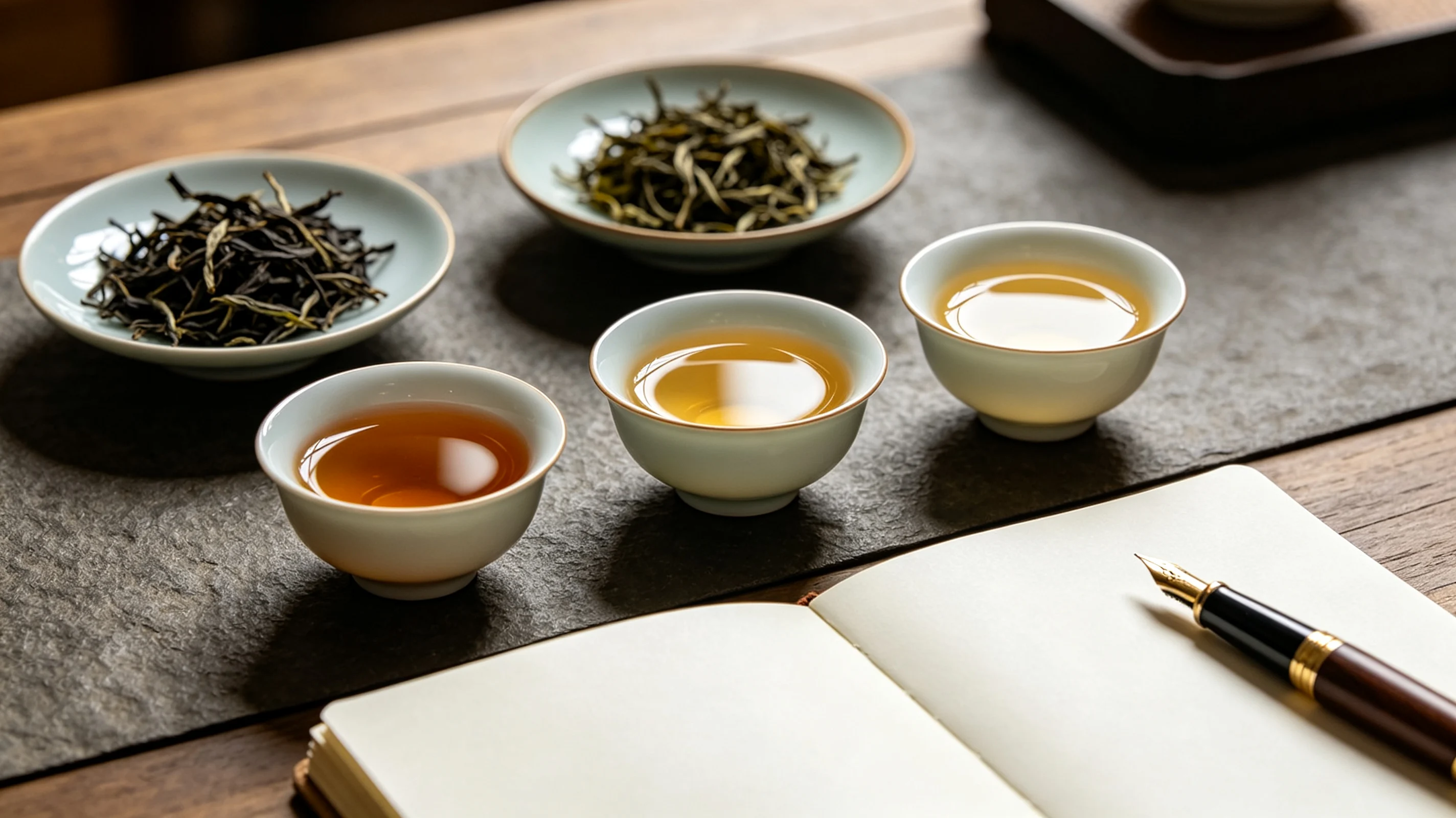
Tea tasting notes are most useful when they describe what happened in the cup, not when they try to sound impressive. You do not need a trained palate or a poetic vocabulary to notice whether a tea feels bright, soft, roasted, floral, drying, sweet, or heavy.
The easiest place to begin is with a familiar tea brewed carefully. Keep the water, leaf amount, and steeping time consistent, then pay attention to one sensory layer at a time. The goal is not to guess the correct answer. It is to make your own experience easier to remember and compare.
Start With What You Can Observe
Begin with facts before interpretations. Note the dry leaf shape, the color of the infusion, the strength of the aroma, and whether the tea feels light or full in the mouth. These observations create a reliable base for more specific flavor words.
- Aroma: faint, clear, intense, floral, fruity, roasted, grassy, woody, or earthy.
- Taste: sweet, bitter, savory, tart, mineral, nutty, smoky, or clean.
- Texture: thin, silky, creamy, brisk, drying, round, or coating.
- Finish: short, lingering, cooling, warming, sweet, dry, or fragrant.
Use Comparisons From Your Own Life
A tasting note becomes more honest when it uses references you genuinely know. One person may recognize apricot, toasted rice, wet stone, or orange peel; another may simply notice fresh fruit, warm grain, or a clean mineral edge. Both descriptions can be useful.
Avoid copying a product description while tasting. Read it afterward and compare. When the seller says orchid and you notice fresh flowers, your note is not wrong; it is simply less specific.
Separate Aroma From Taste
Tea can smell strongly of flowers while tasting mostly vegetal. A roasted oolong may smell like toasted nuts but finish with stone-fruit sweetness. Writing these layers separately prevents one dramatic aroma from taking over the whole note.
A Five-Minute Tasting Exercise
- Smell the dry leaves before heating the water.
- Smell the wet leaves immediately after the first infusion.
- Take one sip while the tea is hot and notice body rather than flavor.
- Return when the cup is warm and identify one aroma and one taste.
- After swallowing, wait ten seconds and describe the finish.
For more consistent comparisons, use the principles in the loose leaf tea measurement guide and begin with clean, neutral water as described in the water for tea guide.
Words to Avoid When They Add Nothing
Terms such as premium, exquisite, complex, luxurious, and high grade sound positive but do not explain the tea. Replace them with sensory evidence. Instead of saying a tea is complex, describe how it changes from floral to roasted or from brisk to sweet.
Keep Notes Short Enough to Use
A useful entry can be three lines: brewing conditions, the main sensory impression, and whether you would change anything next time. Longer notes are valuable for comparison sessions, but daily tea does not need to become homework.
A Note Can Be Specific Without Being Certain
Sensory language is often approximate. If an aroma reminds you of peach skin rather than peach flesh, write that distinction. If you are deciding between cocoa and toasted grain, record both possibilities instead of forcing one answer. Uncertainty is useful because it shows where to look during the next infusion.
It also helps to separate intensity from preference. A tea can have a strong floral aroma that you do not enjoy, or a quiet mineral finish that you value. Describing what is present before deciding whether you like it keeps the note more accurate.
- Record the temperature at which an aroma became clearest.
- Describe one physical sensation in the mouth.
- Mark whether the second infusion confirmed or changed the first impression.
Let Accuracy Matter More Than Performance
Good tea tasting notes are personal records, not auditions. Use plain language, admit uncertainty, and notice changes as the tea cools or is re-steeped. Over time, repeated observations will build a vocabulary that is genuinely yours.