
Tea Infuser vs Tea Strainer: Which Do You Need?
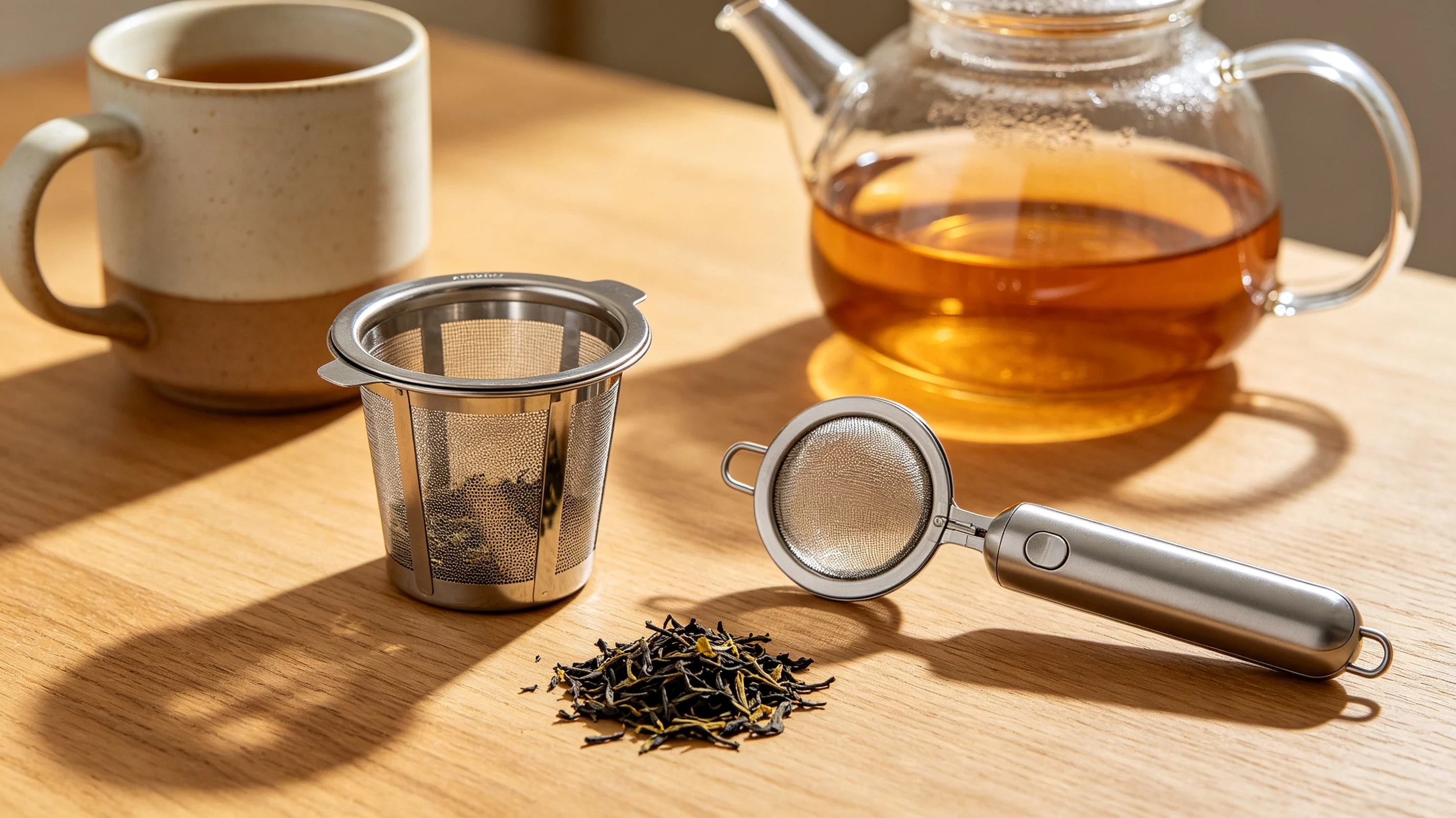
Understanding the difference between a tea infuser vs tea strainer can make loose leaf tea much easier to brew. The two tools are often confused because both help separate tea leaves from the finished drink. However, they usually do that job at different stages of the brewing process.
A tea infuser holds the leaves while they steep in water. A tea strainer catches loose leaves as brewed tea is poured into a cup. Some modern tools can perform both jobs, but knowing the basic difference helps you choose equipment that gives the leaves enough room, fits your cup or teapot, and does not make cleanup harder than necessary.
What Is a Tea Infuser?
A tea infuser is a container that holds loose tea leaves inside hot or cold water during steeping. It may be shaped like a basket, ball, spoon, tube, bag, or removable filter. Water moves through openings in the infuser while the leaves remain contained.
The main purpose of an infuser is to let tea brew without allowing loose leaves to spread through the entire cup or teapot. When the tea reaches the desired strength, you remove the infuser and stop most of the extraction.
A good tea infuser should give leaves enough space to expand. This is especially important for rolled oolong, larger white tea leaves, flower tea, fruit blends, and whole-leaf green or black tea. An infuser that is too small may keep the leaves tightly packed and prevent water from circulating evenly.
What Is a Tea Strainer?
A tea strainer is usually placed over or inside a cup while brewed tea is poured. It catches loose leaves that are already moving with the tea liquor. Unlike an infuser, a traditional strainer does not necessarily hold the leaves throughout the steeping process.
Tea strainers are useful when leaves are brewed freely inside a teapot, glass pitcher, gaiwan, or other vessel. Once the tea is ready, it is poured through the strainer so the cup receives mostly clear tea.
This method gives the leaves plenty of room to open, which can improve circulation and extraction. The trade-off is that the leaves remain in the brewing vessel until all the tea is poured or transferred. If some tea remains with the leaves, it may continue to steep and become stronger.
Tea Infuser vs Tea Strainer: The Main Difference
The main difference between a tea infuser and a tea strainer is when each tool separates the leaves from the water.
- Tea infuser: Holds the leaves during steeping and is removed when the tea is ready.
- Tea strainer: Filters leaves from tea while the finished infusion is being poured.
An infuser controls the leaves before and during brewing. A strainer filters the tea afterward. If you brew directly in a mug, an infuser is usually more convenient. If you brew leaves freely in a teapot, a strainer may be the better choice.
Some teapots include a built-in filter near the spout. This design acts more like a strainer than a removable infuser because the leaves move freely inside the pot and are filtered only when the tea is poured.
Which Is Better for Loose Leaf Tea?
Neither tool is always better. The right choice depends on your brewing vessel, leaf size, serving style, and how much control you want over steeping.
A basket infuser is often the easiest option for daily mug brewing. It contains the leaves, gives them room to open, and can be removed as soon as the tea tastes right. This helps prevent oversteeping.
A tea strainer is useful for teapot brewing, especially when the pot allows the leaves to move freely. It can also be useful for fruit tea, flower tea, and larger herbal ingredients that may not fit comfortably inside a small infuser.
If convenience and precise timing matter most, choose an infuser. If maximum leaf movement and traditional teapot brewing matter more, choose a strainer.
Basket Infuser vs Tea Ball
A basket infuser is usually a better all-purpose tool than a tea ball because it gives tea leaves more room. Basket infusers are wider and deeper, allowing water to move around the leaves more evenly.
Tea balls are compact and familiar, but many are too small for whole leaves. As the tea expands, it may become pressed against the metal mesh. This does not make tea balls unusable, but it can limit them to finely cut tea, small servings, or blends that do not expand very much.
- Choose a basket infuser: For whole-leaf tea, rolled oolong, flower tea, white tea, or regular daily brewing.
- Choose a tea ball: For travel, small cups, finely cut leaves, or occasional use.
If you already own a tea ball, you do not need to throw it away. Use a smaller amount of tea and avoid packing it tightly. The leaves should have at least some room to move when water enters the infuser.
How Much Space Do Tea Leaves Need?
Tea leaves need enough space for water to circulate around them. The exact amount depends on the tea. Fine black tea may expand only modestly, while rolled oolong can grow several times larger after absorbing water.
Large white tea leaves, flower blends, dried fruit, citrus peel, and herbal ingredients may also occupy more volume than their weight suggests. A small spoonful can quickly fill a narrow infuser.
A practical rule is not to fill an infuser completely with dry tea. Leave room for expansion. If the wet leaves emerge as a tight solid shape, the infuser was probably too full or too small.
How to Choose a Tea Infuser for a Mug
The best tea infuser for a mug is usually a deep basket with fine mesh, stable handles, and enough width to fit securely over the cup. It should be easy to lift without spilling wet leaves across the table.
Before buying, check the following details:
- Diameter: Make sure the basket fits your usual cups and mugs.
- Depth: A deeper basket gives leaves more room and keeps them under the water.
- Mesh size: Fine mesh helps contain smaller particles without blocking water flow.
- Handles: Wide handles prevent the infuser from falling into the cup.
- Lid: A lid can help retain heat and may serve as a tray for the wet infuser.
- Cleaning: Smooth surfaces and accessible corners are easier to rinse.
A shallow infuser may sit above the water line in a large mug, especially if you brew a smaller serving. Check how deeply the infuser reaches before assuming it will work with every cup.
How to Choose a Tea Strainer for a Teapot
A tea strainer for a teapot should be wide enough to catch leaves without slowing the pour too much. It should also sit securely over the cup or serving pitcher.
Fine mesh is useful for small leaves, but very fine filters can clog with fruit pulp, herbs, or broken tea. A slightly more open strainer may work better for larger ingredients and faster pouring.
If your teapot already includes a built-in spout filter, you may not need a separate strainer for large leaves. However, a separate strainer can still catch small particles and create a clearer cup.
When comparing infusers, cups, pots, and other brewing accessories, a focused tea ware collection can help you choose tools based on how you actually brew rather than appearance alone.
Stainless Steel, Silicone, or Fabric Infuser?
Tea infusers are available in several materials, and each has advantages and limitations.
Stainless Steel
Stainless steel infusers are durable, reusable, and easy to rinse. Fine stainless steel mesh can contain small leaves while still allowing good water movement. It is a practical choice for regular use.
Silicone
Silicone infusers are often colorful and shaped for novelty. They can be easy to handle, but many designs have limited internal space or relatively large holes. Choose one based on function, not only appearance.
Fabric or Reusable Tea Bags
Reusable fabric filters are lightweight and useful for travel or large batches. They can hold fine leaves and herbal ingredients, but they need thorough washing and drying to avoid retained odors.
Paper Filters
Disposable paper filters are convenient for travel, work, and easy cleanup. They give leaves more room than many tea balls when the bag is large enough. However, they create ongoing waste and need to be replaced.
How to Use a Tea Infuser
Using a tea infuser is simple, but the right method helps prevent weak or bitter tea.
- Place the infuser inside a clean cup, mug, or teapot.
- Add the appropriate amount of loose leaf tea.
- Pour water at the correct temperature for the tea type.
- Cover the cup if the infuser includes a lid.
- Steep for the recommended time, then taste.
- Remove the infuser completely when the tea is ready.
- Place the wet infuser on a tray or lid and save the leaves for another infusion when appropriate.
Do not squeeze or press the wet leaves unless the tea instructions specifically call for it. Pressing may release more fine particles and harsher flavor into the cup.
How to Use a Tea Strainer
A tea strainer is used after tea has brewed freely inside another vessel.
- Add loose tea leaves directly to a teapot, gaiwan, pitcher, or heat-safe container.
- Pour in water and allow the tea to steep.
- Place the strainer securely over the serving cup or pitcher.
- Pour the brewed tea slowly through the strainer.
- Empty the leaves from the strainer before the next pour if needed.
- Pour all finished tea away from the leaves to stop continued extraction.
If you leave a small amount of tea sitting with the leaves, that remaining liquid may become very strong. Pouring the entire infusion into a serving pitcher is often the easiest way to maintain consistent flavor.
Can a Tea Strainer Be Used as an Infuser?
Some strainers can be used as infusers if they are deep enough to sit inside the water and stable enough to remain in the cup. In fact, many modern basket infusers look similar to deep strainers.
A shallow handheld strainer is not suitable for steeping because it cannot hold the leaves below the water. The distinction depends more on design and use than on the product name.
When shopping, look at the actual dimensions and shape rather than relying entirely on whether the tool is labeled an infuser, filter, or strainer.
Common Tea Infuser Mistakes
Most problems with tea infusers come from using too much leaf, choosing a container that is too small, or leaving the infuser in the cup after the tea is ready.
- Overfilling the infuser: Leaves need room to expand.
- Using a tiny tea ball for large leaves: This restricts circulation.
- Leaving the infuser in the mug: The tea continues to extract and may become bitter.
- Choosing mesh that is too open: Fine leaf particles may escape into the drink.
- Choosing mesh that is too fine: Fruit pulp and small herbs may clog the filter.
- Ignoring cup dimensions: The infuser may not fit securely or reach the water.
- Buying only by appearance: Novelty designs may offer too little brewing space.
How to Clean a Tea Infuser or Strainer
The easiest way to clean a tea infuser or strainer is to empty and rinse it immediately after use. Wet tea leaves are easier to remove before they dry against the mesh.
Use warm water and a soft brush or sponge when particles remain trapped. For stained stainless steel, soaking the infuser in warm water can loosen residue. Avoid using harsh tools that bend or damage fine mesh.
Let the tool dry completely before storing it. Fabric filters need particular care because moisture and tea residue can create odors. Store all infusers away from strongly scented products so they do not affect delicate tea.
FAQ
Is a tea infuser the same as a tea strainer?
Not exactly. A tea infuser holds leaves while they steep. A tea strainer usually filters leaves from the tea while the finished infusion is being poured.
Which is better for loose leaf tea?
A basket infuser is often more convenient for brewing directly in a mug. A tea strainer is useful when leaves are brewed freely inside a teapot or pitcher.
Are tea balls good for loose leaf tea?
Tea balls can work for small or finely cut leaves, but many are too cramped for large whole leaves or rolled oolong. A wider basket infuser usually provides more space.
Can you use a tea strainer as an infuser?
You can use a deep basket-style strainer as an infuser if it sits securely inside the cup and remains below the water. A shallow handheld strainer will not work well for steeping.
How do you keep tea leaves out of the cup?
Use an infuser with sufficiently fine mesh, or pour freely brewed tea through a strainer. Very small particles may still pass through some filters, especially with broken tea leaves.
Choose the Tool That Fits the Way You Brew
The tea infuser vs tea strainer decision becomes simple when you look at your brewing routine. For one mug at a time, a roomy basket infuser offers control, easy removal, and simple cleanup. For free-leaf teapot brewing, a strainer lets the leaves open fully and filters them during pouring.
Whichever tool you choose, give the leaves space, remove or separate them when the tea tastes ready, and select a design you will not avoid cleaning. The best tea tool is not the most complicated one. It is the one that makes loose leaf tea easier to brew consistently.