

Roasted Tea Guide: Flavor, Brewing, and What Roast Really Does
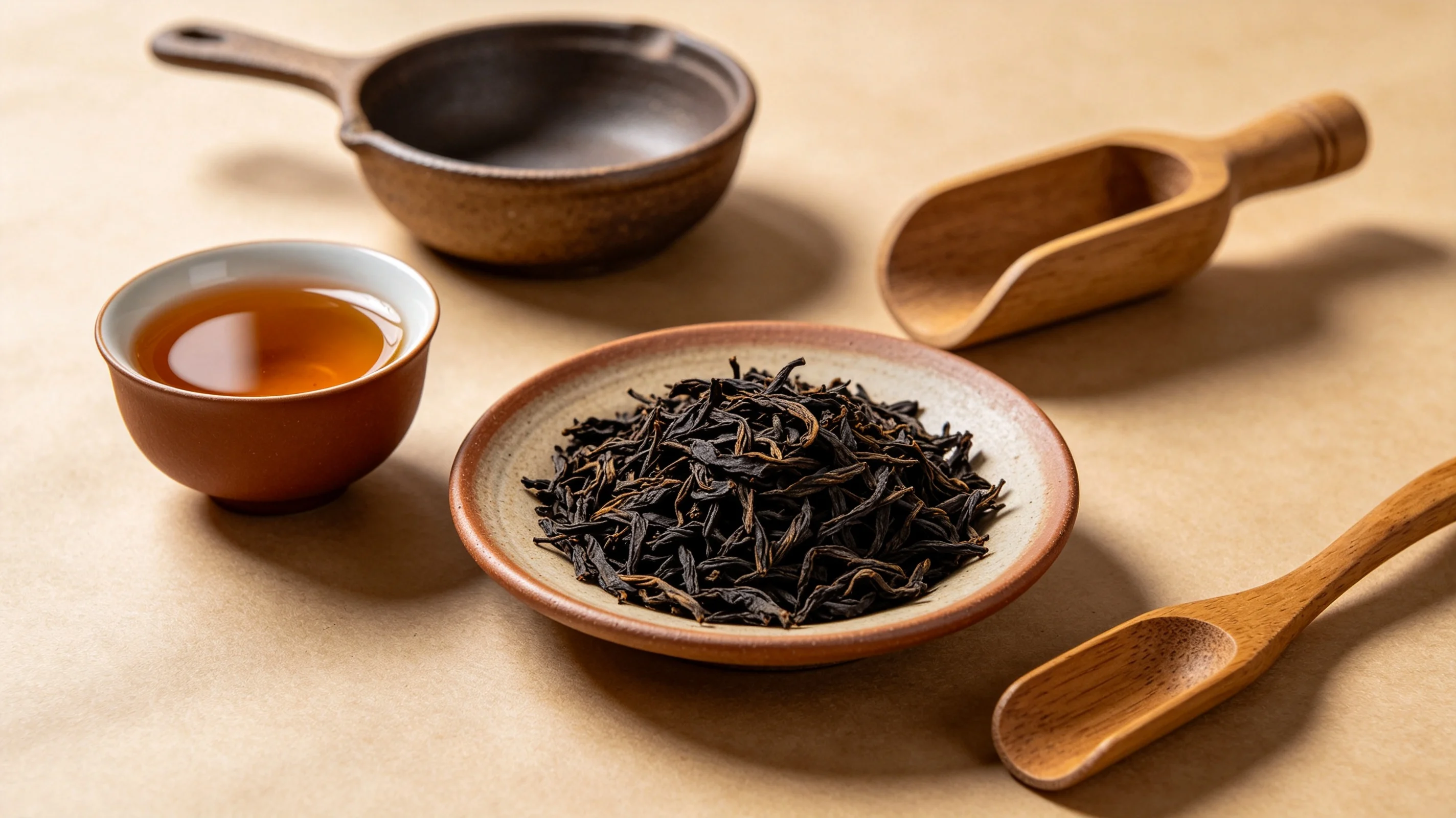
A roasted tea guide is most useful when it distinguishes roast aroma from the character of the tea underneath.
Roasting can give tea warmth, sweetness, toasted grain, nuts, caramel, wood, cocoa, or mineral depth. It can also soften greener edges and change how aroma develops over repeated infusions.
Roasted tea is not one category. Oolong, green tea, and other styles can be roasted to different degrees, and the result depends on leaf material, oxidation, heat, and resting time.
What Roasting Changes
- Reduces some fresh green aromas.
- Develops toasted and warm fragrance.
- Changes moisture and storage behavior.
- Can make body feel rounder.
- May hide flaws when used too heavily.
- Can settle and integrate after resting.
Light Roast vs Deep Roast
| Roast level | Typical direction | Brewing approach |
|---|---|---|
| Light | Floral, creamy, gently toasted | Moderate heat; protect aroma |
| Medium | Nutty, honeyed, balanced warmth | Hot water and controlled steeps |
| Deep | Cocoa, wood, caramel, pronounced roast | Hot water; short first infusion if intense |
Fresh Roast Can Taste Sharp
Tea tasted immediately after strong roasting may feel fiery, dry, or dominated by roast. Resting can allow the aroma to settle. This does not mean every roasted tea improves indefinitely; storage and leaf quality still matter.
A related practical guide is Tea Water Temperature Without Thermometer: Easy Methods.
How to Brew Roasted Tea
Use hot water and enough room for the leaf. Begin with a shorter infusion when the roast is strong, then let later steeps reveal sweetness and underlying tea character. If every cup tastes only of charcoal, the roast may be too dominant or the tea may need rest.
Food Pairings That Work
Roasted tea often suits toasted nuts, dark chocolate, baked grains, mushrooms, and less-sweet pastries. Pair by shared warmth rather than adding heavy sugar.
Buying Questions to Ask
- Is the roast light, medium, or deep?
- Was the tea recently roasted or rested?
- Does the description mention the underlying tea character?
- Is the roast intended for aroma, aging, or correction?
- Can the leaves be infused more than once?
Compare roasted and lighter styles in the oolong tea collection and use spacious teaware for leaves that open over several steeps.
Separate Roast Aroma From Burnt Flavor
Pleasant roast can suggest toast, nuts, caramel, cocoa, or warm wood. Burnt flavor feels ashy, acrid, or empty after the first impact. A deep roast can still be clean, but it should leave room for sweetness and the underlying leaf.
Taste the tea after it cools. Heat can make roast seem dramatic, while a warm cup reveals whether there is body and finish underneath. Later infusions are also useful because the surface roast may fade before the tea is exhausted.
- Check for sweetness after swallowing.
- Smell the wet leaf, not only the dry tea.
- Compare the first and third infusions.
Roast Should Add Dimension, Not Erase the Leaf
The best roasted tea lets you taste both transformation and origin. Warmth should lead somewhere—to sweetness, fruit, mineral depth, or a long finish—rather than becoming the only note.
A Better Way to Use Roasted Tea Guide
A balanced roast should reveal more than heat. Look for sweetness, fruit, mineral character, body, or a changing finish beneath toasted aroma. When every infusion tastes only charred, either the roast dominates or the brewing is too aggressive.
Resting after roasting can reduce sharpness, but storage conditions still matter. A tea left open does not become gracefully rested; it becomes exposed. Ask whether a product was recently roasted and how it was packed.
A Simple Experiment
Brew a medium-roasted oolong with a short first infusion, then lengthen gradually. The first cup may emphasize toast, while later cups reveal honey or fruit. One long steep can flatten those stages into dryness.
Use a Second Session to Confirm the First
Use roasted tea guide to make one prediction before brewing. Predict how quickly the leaves will open, how the aroma may develop, whether the tea might tolerate heat, or whether repeated infusions are likely. A technical term becomes useful only when it leads to something observable.
Check that prediction through the scenario described above and the first two review points: “Ask about roast level and date.” and “Use hot water with controlled time..” If the cup contradicts the expectation, consider cultivar, roast, leaf size, storage, and brewing before rejecting the entire explanation.
Avoid turning one processing feature, season, grade, or origin claim into a complete quality score. Tea reaches the cup through several linked stages. The most reliable interpretation keeps the term narrow and lets aroma, taste, texture, and finish provide the final evidence.
- Ask about roast level and date. Record what changed before moving to the next variable.
- Use hot water with controlled time. Record what changed before moving to the next variable.
- Taste several infusions. Record what changed before moving to the next variable.
- Look for leaf character beneath roast. Record what changed before moving to the next variable.
This verification step keeps roasted tea guide tied to a real result rather than a rule copied from another kitchen, product page, or tea table.
Avoid Turning a Useful Guide Into a Rigid Formula
Roasted Tea Guide provides a model, not a complete explanation of every tea. Cultivar, weather, processing skill, storage, water, and brewing can reinforce or contradict the expectation created by one term.
When the evidence is mixed, keep the label narrow. Use “Ask about roast level and date.” and “Use hot water with controlled time.” to gather more context instead of expanding the claim until it explains everything.
- Keep: the parts of roasted tea guide that produce a repeatable improvement.
- Recheck: results that appeared only once or under unusual conditions.
- Adapt: vessel size, water, timing, and serving to the actual situation.
- Stop: when safety, contamination, or damaged equipment becomes the concern.
A Focused Checklist
- Ask about roast level and date.
- Use hot water with controlled time.
- Taste several infusions.
- Look for leaf character beneath roast.
- Store away from moisture and strong odors.
Turn the definition into a prediction you can test
A technical term matters when it helps predict leaf behavior, flavor, storage, or brewing. Use the definition to form a hypothesis, then check it in the cup.
Avoid treating one feature as a complete quality score. Tea is the combined result of raw material, processing, storage, water, and preparation.
Common Questions
Is darker roasted tea stronger?
It may taste deeper or toastier, but strength also depends on leaf amount and brewing.
Does roasted tea need to rest?
Some recently roasted tea becomes more integrated after a controlled rest, but not every tea improves indefinitely.
Can roasted tea be re-steeped?
Many roasted oolongs respond well to multiple infusions when the first steep is not excessive.
Make the Next Cup More Informative
The real value of roasted tea guide is a cup or decision that can be repeated, explained, and adjusted without guesswork.