

How Tea Is Made: Withering, Rolling, Firing, and Drying
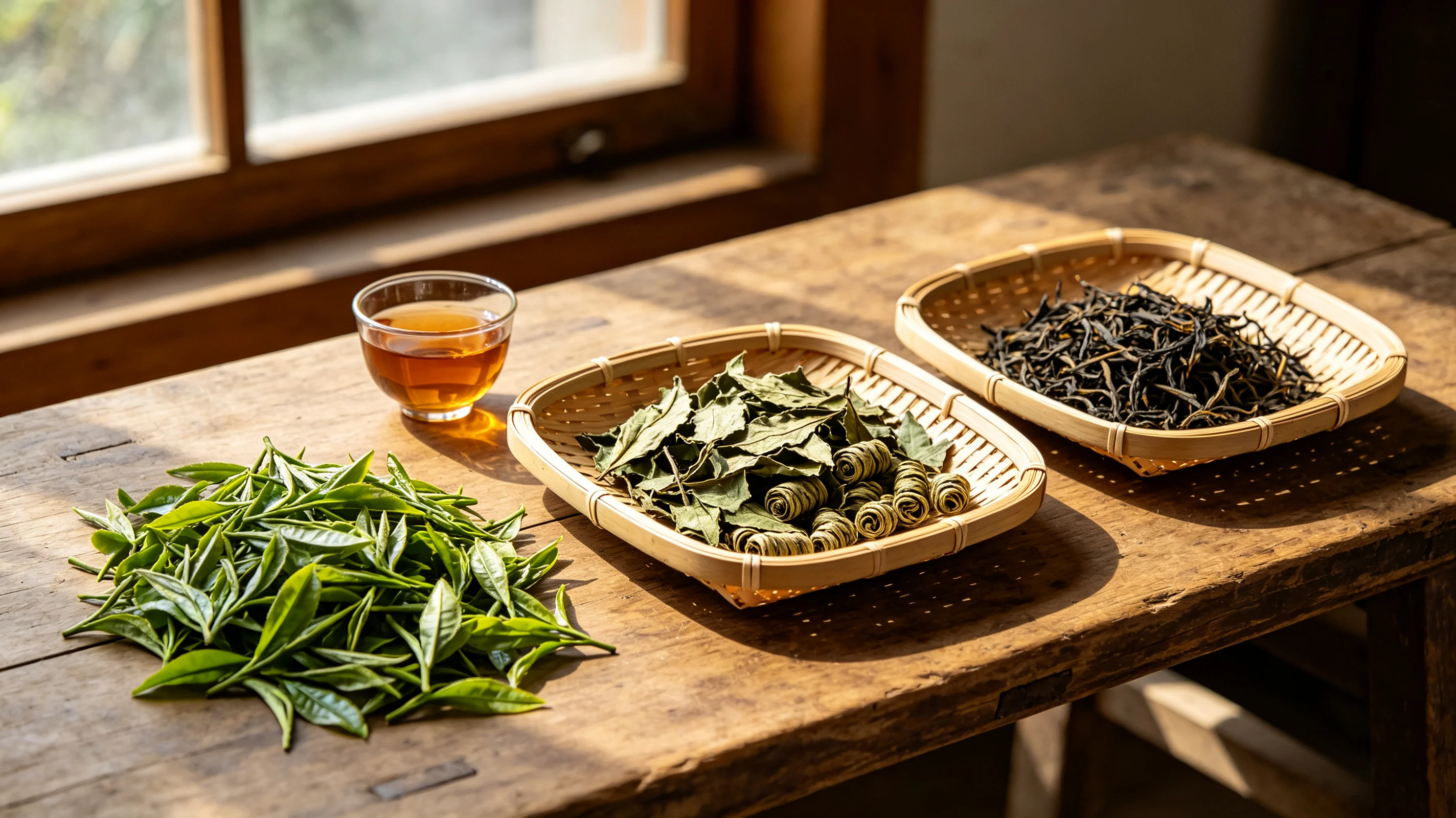
Understanding how tea is made turns processing terms into practical clues for brewing and buying.
Tea does not become green, oolong, black, or white tea simply because it grows on a different plant. Much of the difference is created after harvest through choices about withering, rolling, oxidation, heat, shaping, and drying.
The exact sequence varies by region and style, but understanding the main stages makes product descriptions and tasting notes easier to interpret.
Plucking and Leaf Standard
Producers choose buds, young leaves, mature leaves, or a mixture according to the intended tea. Tender material can create delicacy, while larger leaves may contribute body and suit certain oolong, white tea, or pu’er styles.
Withering
Freshly picked leaves contain substantial moisture. Withering allows them to soften and lose water, making them easier to shape. It also begins chemical and aromatic changes that influence the finished tea.
Rolling, Bruising, and Shaping
Rolling breaks or stresses leaf cells, encouraging oxidation and shaping the leaf. Some teas are twisted, rolled into balls, flattened, or compressed. Shape affects appearance, packing density, and how the leaf opens in water.
Oxidation
Controlled exposure to oxygen transforms leaf compounds and aroma. Green tea limits this stage early; oolong manages it selectively; black tea allows it to proceed further.
Firing or Fixing
Heat deactivates enzymes and stabilizes the desired oxidation level. Pan firing, steaming, baking, and other heating methods can also contribute distinctive aroma and texture.
Drying and Roasting
Drying makes tea stable enough for storage. Some teas receive additional roasting to develop warmth, sweetness, toasted aroma, or longevity. Roast can be light and floral or deep and pronounced.
Sorting, Blending, and Scenting
Finished tea may be sorted by leaf size, blended for consistency, combined with ingredients, or scented with flowers. These steps should support a clear product identity rather than disguise stale leaf.
You can explore how processing appears in the cup across the loose leaf tea collection.
Why Processing Descriptions Matter
- Steamed and pan-fired green teas can taste different.
- Rolled oolong may require room to expand.
- Broken black tea may brew faster than whole leaf.
- Roasted tea may tolerate hotter water.
- Flower-scented tea is not the same as tea mixed with petals.
Small Processing Choices Accumulate
Two producers can begin with similar leaves and create very different tea. A longer wither changes flexibility and aroma. Stronger rolling increases cell damage. A few degrees of heat or a different drying schedule can shift fragrance, color, and storage behavior.
This is why broad categories are useful but incomplete. Green tea is not one flavor, and oolong is not one middle point. Processing turns a category into a specific style that should be described in practical terms.
- Ask how the leaves were heated.
- Look for roast or scenting information.
- Match the brewing method to leaf shape and processing.
The Leaf Is Raw Material; Processing Creates the Style
Origin and cultivar matter, but skilled processing turns potential into a finished tea. When a product description names the processing method, use it as a practical clue for flavor and brewing—not as decorative jargon.
How to Apply How Tea Is Made
A tightly rolled tea needs room to expand. A broken tea releases flavor quickly. A steamed green tea may show different vegetal character from a pan-fired one. Processing information becomes valuable when it changes how you measure, heat, time, or re-steep the leaf.
Sorting and blending are not automatically signs of lower quality. They can create consistency and a specific cup profile. The question is whether the finished tea is transparent, fresh, and suited to its purpose.
Use This Before You Decide
- Observe the dry leaf shape.
- Ask how oxidation was stopped.
- Check whether roast or scenting is involved.
- Match the infuser to leaf expansion.
- Use processing details to predict, then verify by tasting.
What Strong Evidence Looks Like in Daily Tea
Use how tea is made to make one prediction before brewing. Predict how quickly the leaves will open, how the aroma may develop, whether the tea might tolerate heat, or whether repeated infusions are likely. A technical term becomes useful only when it leads to something observable.
Check that prediction through the scenario described above and the first two review points: “Observe the dry leaf shape.” and “Ask how oxidation was stopped..” If the cup contradicts the expectation, consider cultivar, roast, leaf size, storage, and brewing before rejecting the entire explanation.
Avoid turning one processing feature, season, grade, or origin claim into a complete quality score. Tea reaches the cup through several linked stages. The most reliable interpretation keeps the term narrow and lets aroma, taste, texture, and finish provide the final evidence.
| Check | Evidence to keep |
|---|---|
| Observe the dry leaf shape. | Observe the result and record the next adjustment. |
| Ask how oxidation was stopped. | Observe the result and record the next adjustment. |
| Check whether roast or scenting is involved. | Observe the result and record the next adjustment. |
This verification step keeps how tea is made tied to a real result rather than a rule copied from another kitchen, product page, or tea table.
Know When the Rule Needs to Bend
How Tea Is Made provides a model, not a complete explanation of every tea. Cultivar, weather, processing skill, storage, water, and brewing can reinforce or contradict the expectation created by one term.
When the evidence is mixed, keep the label narrow. Use “Observe the dry leaf shape.” and “Ask how oxidation was stopped.” to gather more context instead of expanding the claim until it explains everything.
- Keep: the parts of how tea is made that produce a repeatable improvement.
- Recheck: results that appeared only once or under unusual conditions.
- Adapt: vessel size, water, timing, and serving to the actual situation.
- Stop: when safety, contamination, or damaged equipment becomes the concern.
A Practical Scenario
Take two teas from the same broad category: a rolled oolong and a twisted oolong. Brew them in the same tiny tea ball and one may remain cramped. Move both to a roomy basket and the processing shape becomes visible in the cup.
Follow the process into the finished cup
Processing language should explain an observable result: leaf shape, extraction speed, roast, aroma, color, or ability to re-steep. When the description has no practical consequence, it may be decorative jargon.
Compare two products that differ in one processing step. Side-by-side brewing turns factory language into sensory evidence.
Continue with Tea Oxidation Explained: Why Green, Oolong, and Black Tea Differ.
Quick Answers
Do all tea types come from the same plant?
Green, white, oolong, black, and pu’er are generally made from Camellia sinensis, with differences created by plant material and processing.
What is firing in tea production?
It is heat treatment used to stop or control enzymatic activity and stabilize the intended style.
Why are some leaves rolled into balls?
Rolling shapes the leaf, affects packing density, and changes how it opens during brewing.
Turn Information Into a Better Routine
When how tea is made leads to better control and fewer assumptions, the topic has served its purpose.
Supporting guides: water for tea guide.