

Tea Oxidation Explained: Why Green, Oolong, and Black Tea Differ
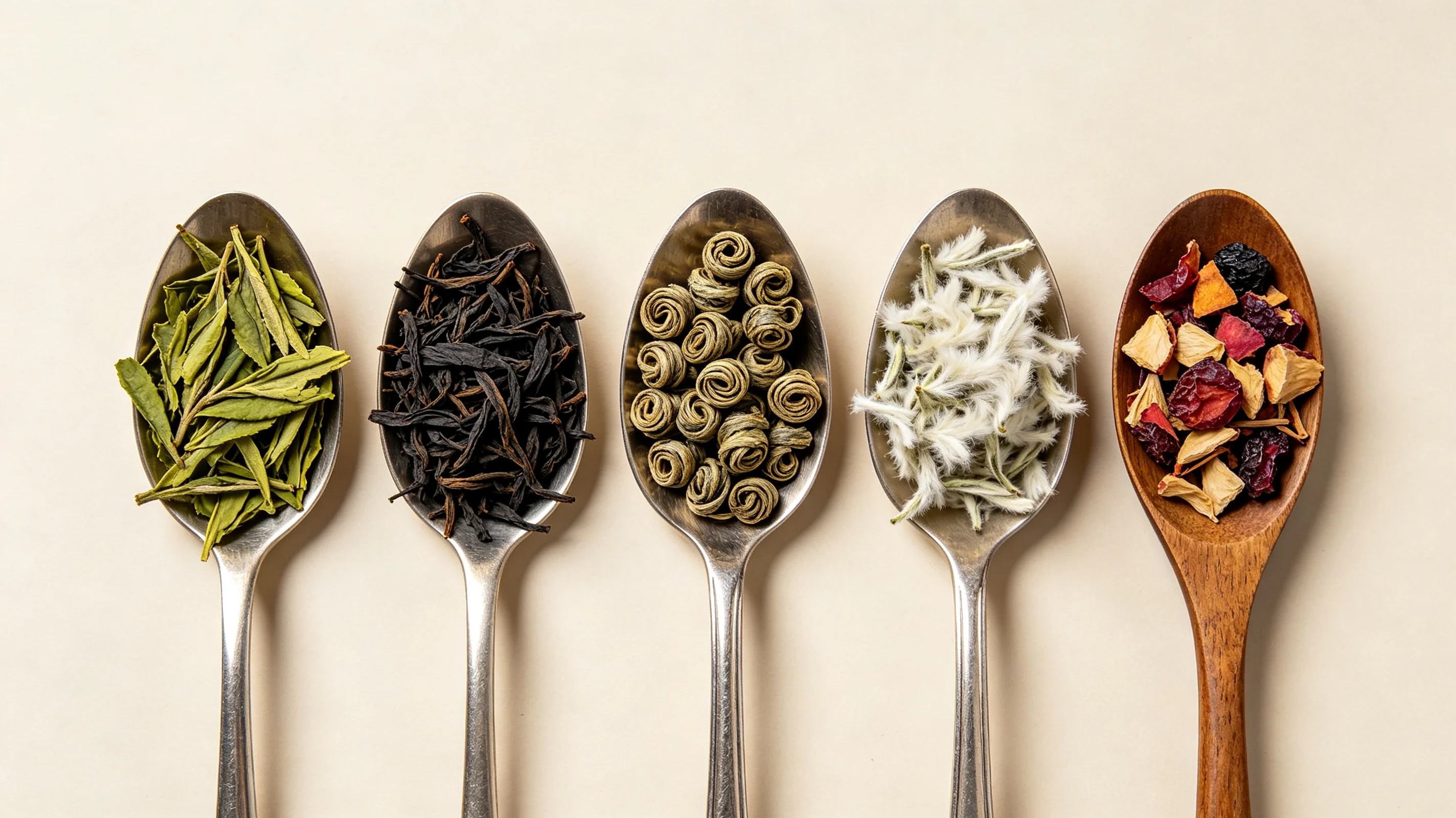
Tea oxidation explained well is a story about controlled leaf transformation, not a ladder from low quality to high quality.
Follow the process into the finished cup
Processing language should explain an observable result: leaf shape, extraction speed, roast, aroma, color, or ability to re-steep. When the description has no practical consequence, it may be decorative jargon.
Compare two products that differ in one processing step. Side-by-side brewing turns factory language into sensory evidence.
Tea oxidation is a natural enzymatic process that begins when leaf cells are damaged and exposed to oxygen. It changes aroma, color, and flavor. Producers control this process through withering, rolling, resting, heat, and timing.
Oxidation is one reason green, oolong, and black tea can taste so different even though they come from the same plant species.
Oxidation Is Not the Same as Fermentation
The terms are often used loosely, but oxidation and microbial fermentation are different processes. Green, oolong, and black tea are primarily distinguished by controlled oxidation. Pu’er and some dark teas may also involve microbial transformation.
Green Tea: Oxidation Is Limited Early
Green tea is heated relatively early to deactivate enzymes and preserve greener, fresher characteristics. Depending on cultivar and processing, the result may taste grassy, vegetal, nutty, marine, floral, or sweet.
Oolong: Oxidation Is Selective
Oolong occupies a broad range rather than one fixed point. Producers bruise and rest the leaves in controlled cycles, then stop oxidation with heat. Light oolong can feel floral and creamy; more oxidized or roasted styles may show fruit, honey, spice, and deeper structure.
Black Tea: Oxidation Proceeds Further
Black tea is allowed to oxidize more fully before drying. The leaves darken, and the flavor can become malty, fruity, brisk, honeyed, woody, or cocoa-like.
Oxidation Does Not Predict Quality
A highly oxidized tea is not more mature or better than a lightly oxidized one. Quality depends on leaf material, skill, freshness, storage, and whether the finished style is balanced.
How Oxidation Changes Brewing
- Lightly oxidized teas may need gentler temperature control.
- Whole-leaf oolong often rewards several infusions.
- Black tea generally tolerates hotter water but can still oversteep.
- Roasting and leaf size can matter as much as oxidation level.
Compare categories through the green tea, oolong tea, and black tea collections rather than relying on leaf color alone.
Leaf Color Is an Imperfect Shortcut
Dry black tea can contain golden tips, and heavily roasted oolong can look almost as dark as black tea. Green tea can become olive or brownish through firing and storage. Visual darkness therefore does not reveal an exact oxidation percentage.
Product descriptions that list a precise percentage may reflect a producer’s internal style language rather than a universal laboratory measurement. Use the number as orientation, then consider roast, cultivar, and brewing response.
- Dark roast is not the same as high oxidation.
- Red leaf edges can appear in partially oxidized tea.
- Liquor color alone cannot identify the process.
Use Oxidation as a Flavor Map
Oxidation is most useful as a clue. It can help predict whether a tea may feel fresh, floral, fruity, brisk, or deep, but the cup remains the final evidence.
Build a Baseline Before Making Fine Adjustments
Use tea oxidation explained to make one prediction before brewing. Predict how quickly the leaves will open, how the aroma may develop, whether the tea might tolerate heat, or whether repeated infusions are likely. A technical term becomes useful only when it leads to something observable.
Check that prediction through the scenario described above and the first two review points: “Do not treat oxidation as a quality score.” and “Check whether the tea is roasted..” If the cup contradicts the expectation, consider cultivar, roast, leaf size, storage, and brewing before rejecting the entire explanation.
Avoid turning one processing feature, season, grade, or origin claim into a complete quality score. Tea reaches the cup through several linked stages. The most reliable interpretation keeps the term narrow and lets aroma, taste, texture, and finish provide the final evidence.
- Review: Do not treat oxidation as a quality score.
- Review: Check whether the tea is roasted.
- Review: Consider leaf size and cultivar.
- Review: Use brewing temperature appropriate to the finished style.
This verification step keeps tea oxidation explained tied to a real result rather than a rule copied from another kitchen, product page, or tea table.
Allow for Tea, Water, and Personal Variation
Tea Oxidation Explained provides a model, not a complete explanation of every tea. Cultivar, weather, processing skill, storage, water, and brewing can reinforce or contradict the expectation created by one term.
When the evidence is mixed, keep the label narrow. Use “Do not treat oxidation as a quality score.” and “Check whether the tea is roasted.” to gather more context instead of expanding the claim until it explains everything.
- Keep: the parts of tea oxidation explained that produce a repeatable improvement.
- Recheck: results that appeared only once or under unusual conditions.
- Adapt: vessel size, water, timing, and serving to the actual situation.
- Stop: when safety, contamination, or damaged equipment becomes the concern.
A Practical Review List
- Do not treat oxidation as a quality score.
- Check whether the tea is roasted.
- Consider leaf size and cultivar.
- Use brewing temperature appropriate to the finished style.
- Taste more than one example before generalizing.
Tea Oxidation Explained: What to Notice First
Oxidation percentage is often presented as if it predicts flavor precisely. It does not. A lightly oxidized oolong can be roasted, a black tea can be delicate, and two teas at a similar oxidation level can differ because of cultivar, withering, rolling, and drying.
Leaf edges may oxidize differently from the center in some oolong processing. This selective transformation helps explain why the finished tea can combine floral freshness with ripe fruit or warm depth.
What This Looks Like at Home
Compare a light floral oolong, a roasted oolong, and a black tea. The progression will show oxidation, but roast and processing may create stronger sensory differences than the simple light-to-dark sequence suggests.
Keep the Method Practical
Keep tea oxidation explained connected to observable evidence, normal household conditions, and the way tea is actually used.
For a different angle, read Why Tea Tastes Astringent and How to Adjust the Cup.