

Should You Refrigerate Tea? When Cold Storage Helps or Hurts
Should you refrigerate tea is a storage question about moisture control and handling frequency, not simply about keeping leaves cold.
Most opened loose leaf tea does not need routine refrigerator storage. A cool, dry, dark cabinet is simpler and avoids condensation and food odors. Refrigeration can help certain sealed, delicate teas, but only when packaging and handling are controlled.
The main danger is not cold itself. It is moisture entering the tea when a cold package is opened.
Why Condensation Matters
Cold air holds less moisture. When a chilled container meets warm humid air, water can condense on the package or leaves. Tea readily absorbs that moisture, which can damage aroma and storage stability.
When Refrigeration May Be Used
- Factory-sealed delicate green tea intended for cold storage.
- Unopened matcha in moisture-resistant packaging.
- Longer storage of small sealed portions.
- Hot, humid homes without a reliably cool cupboard.
When to Avoid It
- Open pouches used every day.
- Tea stored beside strong-smelling food.
- Containers that are not airtight.
- Pu’er intended to breathe and transform.
- Roasted or everyday tea that is already stable in a cabinet.
How to Open Refrigerated Tea Safely
- Remove the sealed package from the refrigerator.
- Leave it closed until it reaches room temperature.
- Dry any moisture on the outside.
- Open only after the package is no longer cold.
- Remove the portion needed and reseal quickly.
Freezing Tea
Freezing can preserve sealed portions in some professional or long-term situations, but repeated thawing is risky. Divide tea into small airtight packages so each portion is thawed once.
For everyday storage, follow the loose leaf tea storage guide and organize only the quantities you can finish.
A Cabinet Is Usually Enough
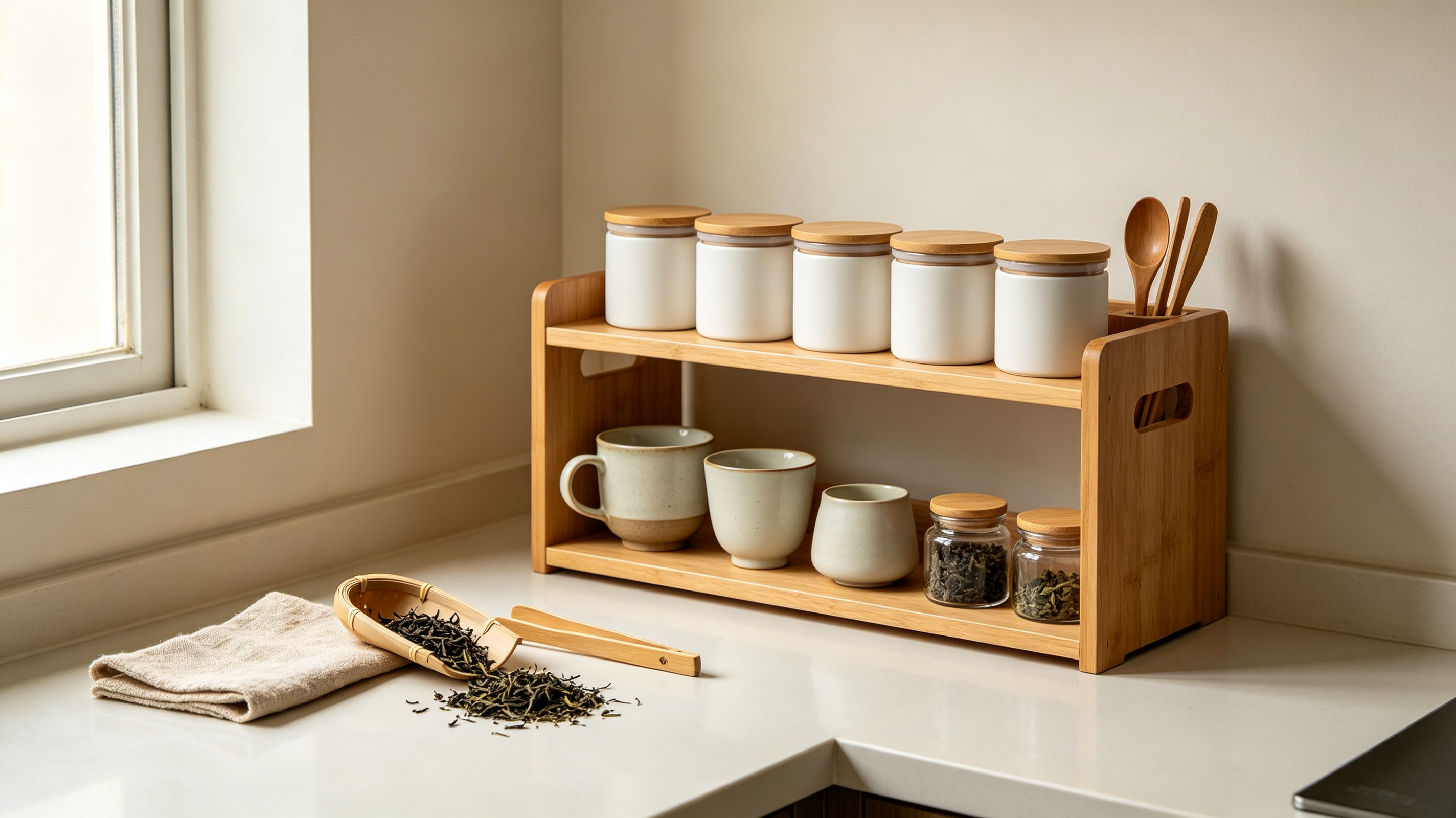
Choose an interior cupboard away from the stove, sink, sunlight, spices, and coffee. Airtight packaging and stable conditions matter more than chasing the lowest temperature.
Daily Temperature Stability Is More Important Than Occasional Coolness
A package moved repeatedly between a refrigerator and a humid kitchen experiences more risk than one stored at a stable moderate temperature. Frequent access is the reason everyday tea is usually easier to manage in a cabinet.
If cold storage is necessary, divide the tea into small sealed portions. Keep the active portion outside the refrigerator and open each reserve portion only after it has warmed completely.
- Avoid repeated chilling and warming.
- Keep one portion for daily use.
- Never return a warm opened pouch to cold storage.
Cold Storage Should Solve a Real Problem
Refrigerate tea only when the product benefits and you can prevent moisture. For most daily loose leaf tea, simple dry storage is safer, faster, and easier to maintain.
A Better Way to Use Should You Refrigerate Tea
Cold storage can slow aroma loss in certain sealed delicate teas, but daily refrigerator use adds temperature swings, condensation, and food odors. The package must be moisture resistant and remain closed until it reaches room temperature.
A stable interior cabinet is better for most open everyday tea. It avoids repeated warming and cooling and makes proper resealing easier.
Use This Before You Decide
- Refrigerate only sealed portions.
- Warm the package before opening.
- Keep tea away from food odors.
- Do not return a warm opened pouch to cold storage.
- Use a stable cabinet for daily tea.
Use a Second Session to Confirm the First
Create a baseline recipe before attempting to fix should you refrigerate tea. Write the leaf amount, water volume, temperature, time, vessel, and water source. Without that baseline, each correction becomes another guess and a good result is difficult to reproduce.
Begin with the least disruptive action—often timing or dilution—then work through the list one item at a time. The first useful checks here are “Refrigerate only sealed portions.” and “Warm the package before opening..” Keep everything else unchanged for the comparison.
Stop troubleshooting when the cup becomes balanced. Endless adjustment can make a tea weaker without making it better. If the problem involves unusual odor, mold, damaged equipment, or unsafe storage, discard the product or stop using the equipment rather than treating it as an ordinary flavor issue.
| Check | Evidence to keep |
|---|---|
| Refrigerate only sealed portions. | Observe the result and record the next adjustment. |
| Warm the package before opening. | Observe the result and record the next adjustment. |
| Keep tea away from food odors. | Observe the result and record the next adjustment. |
This verification step keeps should you refrigerate tea tied to a real result rather than a rule copied from another kitchen, product page, or tea table.
Avoid Turning a Useful Guide Into a Rigid Formula
A normal household adjustment can improve should you refrigerate tea, but it cannot correct contamination, damaged electrical parts, unsafe materials, mold, or a product that is fundamentally unsuitable. Know when the problem has moved beyond brewing or routine cleaning.
If “Refrigerate only sealed portions.” and “Warm the package before opening.” do not change the result, pause and inspect the leaf, water, vessel, packaging, or equipment. Repeating a stronger version of the same correction can create damage without producing better evidence.
- Keep: the parts of should you refrigerate tea that produce a repeatable improvement.
- Recheck: results that appeared only once or under unusual conditions.
- Adapt: vessel size, water, timing, and serving to the actual situation.
- Stop: when safety, contamination, or damaged equipment becomes the concern.
A Real-World Test
Divide a delicate green tea into four small sealed pouches. Keep one in the cupboard for daily use and the others cold. Warm each reserve pouch fully before opening. This avoids exposing the entire supply every morning.
Use a one-variable diagnostic sequence
Start with the easiest reversible change, then brew again. Timing, temperature, leaf amount, water, and vessel space should be tested separately so the result teaches you something.
Write the successful change on the package or in a journal. Troubleshooting is complete only when the better cup can be repeated.
Continue with Does Loose Leaf Tea Expire? Shelf Life by Tea Type.
Questions Readers Often Ask
Should you refrigerate tea after opening?
Usually not for daily use, unless the product specifically benefits and moisture can be controlled.
Can tea be frozen?
Sealed portions can be frozen in some situations, but repeated thawing and condensation are risks.
Why must cold tea warm before opening?
Opening a cold package in warm humid air can cause condensation on the tea or inside the package.
Turn Information Into a Better Routine
When should you refrigerate tea leads to better control and fewer assumptions, the topic has served its purpose.
Supporting guides: loose leaf tea collection.