

Caffeine-Free vs Decaf Tea: What the Labels Mean
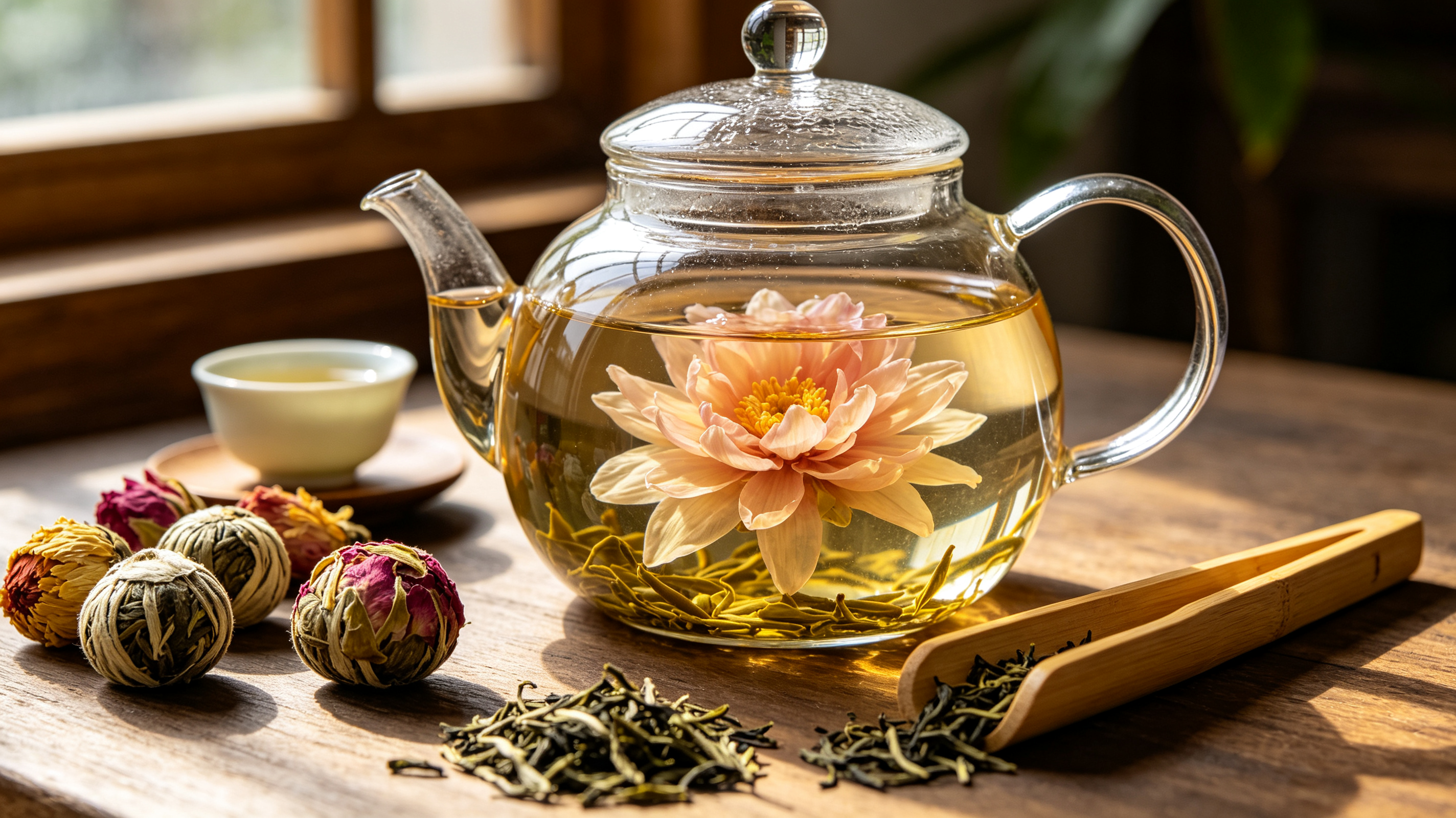
Caffeine-free vs decaf tea is a distinction between ingredients that naturally lack caffeine and true tea processed to remove most of it.
Caffeine-free vs Decaf Tea: From Definition to Practice
A bedtime name, pale package, or herbal illustration does not prove caffeine-free status. The blend may contain green tea, black tea, mate, guayusa, cocoa, or another caffeinated ingredient.
Decaffeination removes most caffeine from true tea but may leave a residual amount. Labeling thresholds and terminology vary, so highly sensitive drinkers should not treat decaf and caffeine-free as interchangeable.
Caffeine-free and decaf tea are not the same. Caffeine-free drinks usually contain ingredients that do not naturally have caffeine, such as many flowers, fruits, herbs, and roasted leaves. Decaf tea begins as true tea and has most caffeine removed through processing.
What Counts as True Tea
Green, black, white, oolong, and pu’er come from Camellia sinensis and naturally contain caffeine. The amount in a cup varies by leaf, serving, temperature, time, and brewing style.
Caffeine-Free Infusions
Mint, many flowers, fruit blends, rooibos, and numerous herbal ingredients are naturally caffeine-free. Always read the label because a blend may include green tea, black tea, mate, guayusa, cocoa, or another caffeinated ingredient.
Decaffeinated Tea
Decaf tea has undergone a process to remove most caffeine. It is not necessarily completely caffeine-free. Regulations and labeling thresholds differ by country.
Flavor Differences
Decaffeination can change aroma and body, depending on the tea and method. A caffeine-free herbal infusion is not intended to imitate true tea; it offers a different set of flavors.
How to Choose
| Need | Better starting point |
|---|---|
| Avoid true tea entirely | Clearly labeled caffeine-free infusion |
| Want black or green tea character | Decaffeinated tea |
| Evening fruit or mint drink | Caffeine-free blend |
| Highly sensitive to caffeine | Check labels and professional advice if needed |
Common Label Mistakes
- Assuming herbal always means caffeine-free.
- Assuming decaf means zero caffeine.
- Ignoring mate, guayusa, or cocoa ingredients.
- Using wellness language instead of reading the ingredient list.
- Confusing a light taste with low caffeine.
Explore clearly listed options in the wellness tea collection and fruit tea collection.
Blends Can Change the Answer
A product may combine decaffeinated black tea with naturally caffeine-free herbs, or a mostly herbal blend may contain a small amount of green tea. The front name alone does not show the final caffeine status.
People with strong sensitivity should check the complete ingredients and contact the manufacturer when the label is unclear. “Relaxing,” “night,” or “calm” are marketing descriptions, not analytical caffeine statements.
- Look for true tea ingredients.
- Check whether decaf is explicitly stated.
- Do not infer caffeine status from flavor or color.
Choose Based on Ingredients, Not Package Color
A calm design or bedtime name does not prove caffeine-free status. Read the ingredients and use the product information that actually answers the question.
Record Enough Detail to Avoid Starting Over
A useful decision about caffeine-free vs decaf tea begins with a named situation. Decide whether the priority is speed, flavor development, portability, serving several people, repeated infusions, cost, or easy cleanup. A universal winner rarely exists because the priorities conflict.
Run the comparison with the same tea and water whenever possible. Apply “Identify every ingredient.” and “Distinguish decaf from naturally caffeine-free.,” then write which option made the desired result easier. Include the time spent setting up and cleaning, not only the first sip.
The result can legitimately change by occasion. A method chosen for a quiet weekend may be inappropriate at work, and a portable option may sacrifice some control. A fair comparison allows one person to keep both choices for different jobs.
- Review: Identify every ingredient.
- Review: Distinguish decaf from naturally caffeine-free.
- Review: Check serving size.
- Review: Consider personal sensitivity.
This verification step keeps caffeine-free vs decaf tea tied to a real result rather than a rule copied from another kitchen, product page, or tea table.
Use Judgment After the Checklist Ends
No guide can declare one product or method universally best for caffeine-free vs decaf tea. Budget, shipping, hand size, storage space, cleanup, serving size, and taste can legitimately change the decision. A transparent tradeoff is better than a false winner.
Use the question “Is decaf tea completely caffeine-free?” to define the choice more narrowly. If the answer depends on a specific tea or household routine, test a small quantity or borrowed tool before making a larger commitment.
- Keep: the parts of caffeine-free vs decaf tea that produce a repeatable improvement.
- Recheck: results that appeared only once or under unusual conditions.
- Adapt: vessel size, water, timing, and serving to the actual situation.
- Stop: when safety, contamination, or damaged equipment becomes the concern.
Choose by situation, not by a universal winner
A comparison becomes useful when it names the job: workday speed, focused tasting, serving guests, milk tea, travel, or repeated infusions. The same person may choose differently in two settings.
Compare total effort and cleanup as well as flavor. A method or product that remains unused cannot provide practical value.
How the Decision Plays Out
Compare a decaf black tea with a rooibos or mint infusion. The first aims to preserve some true-tea character after processing; the second offers a different flavor family without starting from caffeinated tea leaf.
Quick Answers
Is decaf tea completely caffeine-free?
Not necessarily. It generally contains much less caffeine, but residual amounts can remain.
Is herbal tea always caffeine-free?
No. Some herbal-style blends include mate, guayusa, cocoa, or true tea.
Which option tastes more like black tea?
Decaffeinated black tea usually retains more black-tea character than an herbal infusion.
Before the Next Cup
- Identify every ingredient.
- Distinguish decaf from naturally caffeine-free.
- Check serving size.
- Consider personal sensitivity.
- Avoid medical assumptions from package wording.
Use the Idea Without Overcomplicating Tea
Used carefully, caffeine-free vs decaf tea becomes practical knowledge rather than another label to memorize.
For a different angle, read Tea and Chocolate Pairing: A Practical Flavor Guide.
A Final Household Test
Before treating caffeine-free vs decaf tea as settled, repeat the method with the same tea and change only one condition that matters to the article. Use “Identify every ingredient.” as the baseline and “Check serving size.” as the deliberate change. Write down whether aroma, taste, texture, convenience, or cleanup improved.
This final repeat protects against conclusions caused by a rushed session, unfamiliar water, an unusual cup, or a product that does not represent the wider category. When the result remains useful twice, keep the method. When it does not, preserve both records and narrow the claim rather than forcing a universal rule.