

How to Make Loose Leaf Tea Without a Strainer — 6 Easy Methods
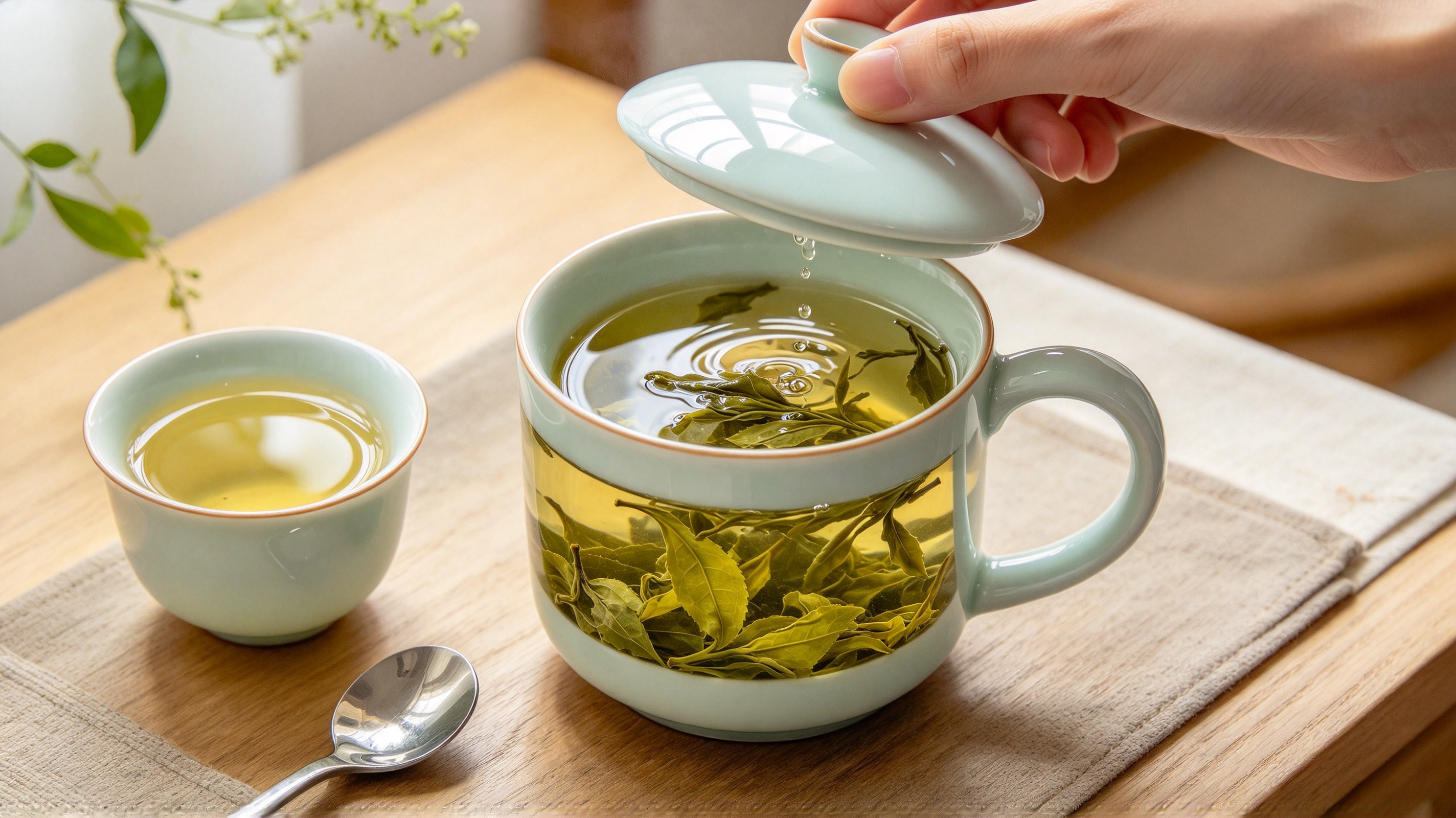
How to make loose leaf tea without a strainer is easier than it sounds. You do not need a special tea ball, basket infuser or dedicated strainer to make a good cup. A mug, a second cup, a spoon, a lid, a coffee filter or even a French press can work, depending on the tea you are brewing.
The key is not the tool itself. You need to give the leaves enough room to steep, then separate them from the finished tea—or simply let them settle so you can drink without swallowing too many leaves.
Below are six practical methods, plus guidance on which teas work best with each one and how to avoid common problems such as oversteeping, bitterness and leaf fragments in the cup.
How to Make Loose Leaf Tea Without a Strainer — 6 Practical Methods
| Method | What You Need | Best For | Main Limitation |
|---|---|---|---|
| Use the cup lid | Mug or cup with lid | Large whole leaves | Small particles may escape |
| Two-cup pour | Two mugs or cups | Most whole-leaf teas | Requires a careful pour |
| Hold leaves back with a spoon | Mug and spoon | Quick single-cup brewing | Less effective with fine leaves |
| Use a coffee filter | Food-safe paper coffee filter | Small or broken leaves | Can slow the pour |
| Use a French press | Clean French press | Large servings, whole leaves | Coffee oils must be cleaned out |
| Let leaves settle | Just a cup or glass | Large green, white and some black teas | You need to drink carefully |
Method 1: Use a Cup Lid to Hold Back the Leaves
This is one of the simplest ways to brew loose leaf tea when you do not have a strainer.
- Add the tea leaves directly to a mug or heat-safe cup.
- Pour in water at the appropriate temperature.
- Steep for the recommended time.
- Place a lid, saucer or small plate slightly over the rim.
- Leave a narrow gap and pour the tea slowly into another cup.
The lid holds back most large leaves while the brewed tea passes through the gap.
This works especially well with whole-leaf green tea, oolong, white tea and larger black tea leaves. It is less effective with very fine broken tea because small particles can slip through.
If you are unsure how long the leaves should stay in the water, use our loose leaf tea steeping guide as a starting point.
Method 2: Brew in One Cup and Pour into Another
The two-cup method is useful because it separates brewing from drinking.
Add the leaves directly to the first cup, allow them to steep freely, then pour the tea slowly into a second cup. If the leaves are large enough, many will remain at the bottom of the first vessel.
You can improve the method by holding a spoon across the rim while pouring. The spoon blocks larger leaves without restricting their movement while they brew.
This technique gives the tea plenty of room to open. It also makes it easy to stop extraction because you can pour almost all of the finished tea away from the wet leaves at once.
Try not to leave a small pool of tea sitting with the leaves. That liquid continues to extract and can become much stronger than the rest of the cup.
Method 3: Use a Spoon as a Simple Leaf Barrier
A regular spoon can work surprisingly well with large loose leaves.
Brew the tea directly in your mug. When it is ready, hold the spoon against the inside edge of the cup while you drink or pour. The spoon acts as a simple barrier that keeps many leaves away from the rim.
This is not a true filter, so it will not catch fine particles. It works best with large twisted black tea, whole green tea, white tea and broad-leaf herbal ingredients.
If the tea contains many small fragments, choose the coffee-filter method instead.
Method 4: Use a Food-Safe Coffee Filter
A plain paper coffee filter can substitute for a tea strainer when the tea leaves are small or broken.
You can place the filter over a second cup and pour the brewed tea through it. Another option is to place a small amount of tea inside the filter, fold the top loosely and use it like a temporary tea bag.
Do not pack the tea tightly. Leaves still need contact with water, and some teas expand substantially during steeping.
Use only clean, food-safe filters designed for brewing beverages. Avoid paper towels, facial tissues, printed paper or unknown fabrics because they may contain fragrances, dyes, adhesives or other materials not intended for hot-water food use.
Paper filters can also absorb some oils and very fine particles, so the resulting cup may taste slightly different from tea brewed freely.
Method 5: Make Tea in a French Press
A French press is technically a filtering brewer rather than a tea strainer, but it is an excellent emergency tool for loose leaf tea.
- Make sure the press is thoroughly cleaned and free of coffee oils.
- Add the appropriate amount of tea.
- Pour in water at the correct temperature.
- Allow the leaves to steep freely.
- Lower the plunger slowly when the tea is ready.
- Pour all of the tea into cups or a serving pitcher.
Do not press the leaves aggressively against the bottom. The goal is to separate the liquor from the leaves, not squeeze them.
A French press works especially well for larger servings and teas that need space to open. If the press smells strongly of coffee, however, that aroma can easily affect delicate tea.
Method 6: Let the Tea Leaves Settle and Drink Around Them
You can also make loose leaf tea without filtering it at all.
Place the leaves directly into a tall cup or glass, add water and allow the tea to steep. Many larger leaves will eventually sink or remain below the surface. Drink slowly from the top and stop before you reach the layer of leaves near the bottom.
This simple style of brewing is common in everyday tea drinking in parts of China and is sometimes informally called “grandpa style.”
It works best with teas that are pleasant during extended contact with water and leaves large enough not to fill every sip with particles.
It is less suitable for fine broken black tea, powdered tea, very small herbal ingredients or teas that become bitter quickly if left in hot water.
Which Method Is Best for Different Tea Types?
Green Tea
For large or medium-size green tea leaves, the cup-lid method, two-cup method or leaf-settling method can all work.
Green tea can become bitter when the water is too hot or the leaves remain in the cup too long. If you plan to leave the leaves in the cup, start with cooler water and a modest amount of tea.
For more detail, see our guide to brewing green tea without bitterness.
Black Tea
Whole-leaf black tea works well with the two-cup or spoon method. Fine broken black tea is easier to handle with a coffee filter because smaller particles can pass around a lid or spoon.
Oolong Tea
Rolled oolong is well suited to strainer-free brewing because the leaves are usually large after they open. A cup lid, second cup or French press all work well.
Give rolled leaves enough room. A small improvised paper pouch can restrict expansion and produce uneven extraction.
White Tea
White tea often has large, light leaves, making it one of the easiest teas to brew without a strainer. A mug, lid and second cup may be all you need.
Because the leaves can be bulky, measuring by weight is more reliable than measuring by spoon. See our guide to how much loose leaf tea per cup for practical ratios.
Pu-erh Tea
Large separated pu-erh leaves can be poured away from the liquor using a lid or second cup. Very small fragments from a compressed cake may require a finer filter.
Herbal and Fruit Infusions
Large flowers and fruit pieces are easy to hold back with a lid or spoon. Fine herbs, seeds and small petals are much easier to manage with a food-safe coffee filter or French press.
How Much Loose Leaf Tea Should You Use Without a Strainer?
Using more tea does not make up for the lack of a strainer. In fact, too much tea can make improvised brewing harder because the leaves crowd the cup and are more likely to reach your mouth.
For many true teas, start around 2 to 3 grams per 8 ounces or 240 milliliters of water. Large white tea and some herbal blends may require more volume even when the weight is similar.
If you are using the leaf-settling method, start slightly lighter than usual. You can always add more tea next time, while a cup packed with leaves is difficult to correct.
How Do You Stop the Tea from Oversteeping?
This is the biggest practical issue when brewing without a dedicated infuser.
A removable basket infuser lets you lift the leaves out of the water instantly. Without one, you need another way to separate the finished tea from the leaves.
- Pour all of the tea into a second cup.
- Use a lid or spoon to hold the leaves back while pouring.
- Press a French press gently and serve the entire batch.
- Use a coffee filter to transfer the finished tea.
If you choose the leaf-settling method, accept that the tea will continue changing while you drink. Use a tea that tolerates longer contact with water and begin with a lighter ratio.
Can You Use a Fork Instead of a Strainer?
A fork can hold back very large leaves while you pour, but the gaps are too wide for most smaller tea particles. A spoon usually works better because its solid surface blocks more of the opening.
If a fork is the only tool available, pour slowly and expect some leaves to reach the second cup.
Can You Use a Paper Towel or Tissue?
It is better not to.
Paper towels and tissues are not designed as beverage filters. Some contain fragrances, printing, strengthening agents or other materials that you do not want soaking in very hot water.
If you need a disposable paper option, use a plain food-safe coffee filter or an empty tea filter bag made for brewing.
Do You Really Need a Tea Strainer?
No. A strainer makes brewing cleaner and more convenient, but it is not necessary for making good tea.
Tea leaves need suitable water, enough room to open, an appropriate steeping time and a way to prevent the finished cup from continuing to extract indefinitely. A dedicated strainer is only one way to achieve that.
If you eventually want a purpose-built tool, our tea infuser vs tea strainer guide explains which option fits different brewing habits.
Frequently Asked Questions
How to make loose leaf tea without a strainer if I only have one mug?
Use a spoon to hold larger leaves away from the rim while drinking, or allow large leaves to settle at the bottom and sip carefully from the top. If the tea contains fine particles, a food-safe coffee filter is more practical.
Can I brew loose leaf tea directly in a cup?
Yes. Add the leaves directly to the cup and either remove the finished tea by pouring, hold the leaves back with a lid or spoon, or allow them to settle. The main challenge is controlling continued extraction.
What can I use instead of a tea strainer?
A cup lid, second mug, spoon, food-safe coffee filter or clean French press can all substitute for a dedicated tea strainer.
Is it okay to swallow loose tea leaves?
A few small pieces in the cup are generally part of normal loose-leaf brewing, but most tea is intended to be infused rather than eaten. If you dislike leaf particles, choose a finer filtering method.
Can I reuse the leaves after brewing without a strainer?
Yes. Pour off as much liquid as possible, keep the wet leaves clean, and resteep them soon afterward. Many oolong, white, green, pu-erh and whole-leaf black teas can produce multiple infusions.
No Strainer Is Not a Problem
The answer to how to make loose leaf tea without a strainer is ultimately simple: brew the leaves freely, then use whatever clean food-safe method you have to keep most of them out of the finished drink.
For large leaves, a lid, spoon or second cup is often enough. For finer tea, a coffee filter works better. A clean French press is useful for larger batches, while some teas can simply be left to settle in the cup.
You do not need specialized equipment to enjoy loose leaf tea. Start with the tools already in your kitchen, control the leaf amount and steeping time, and choose the method that makes the tea easiest for you to drink.