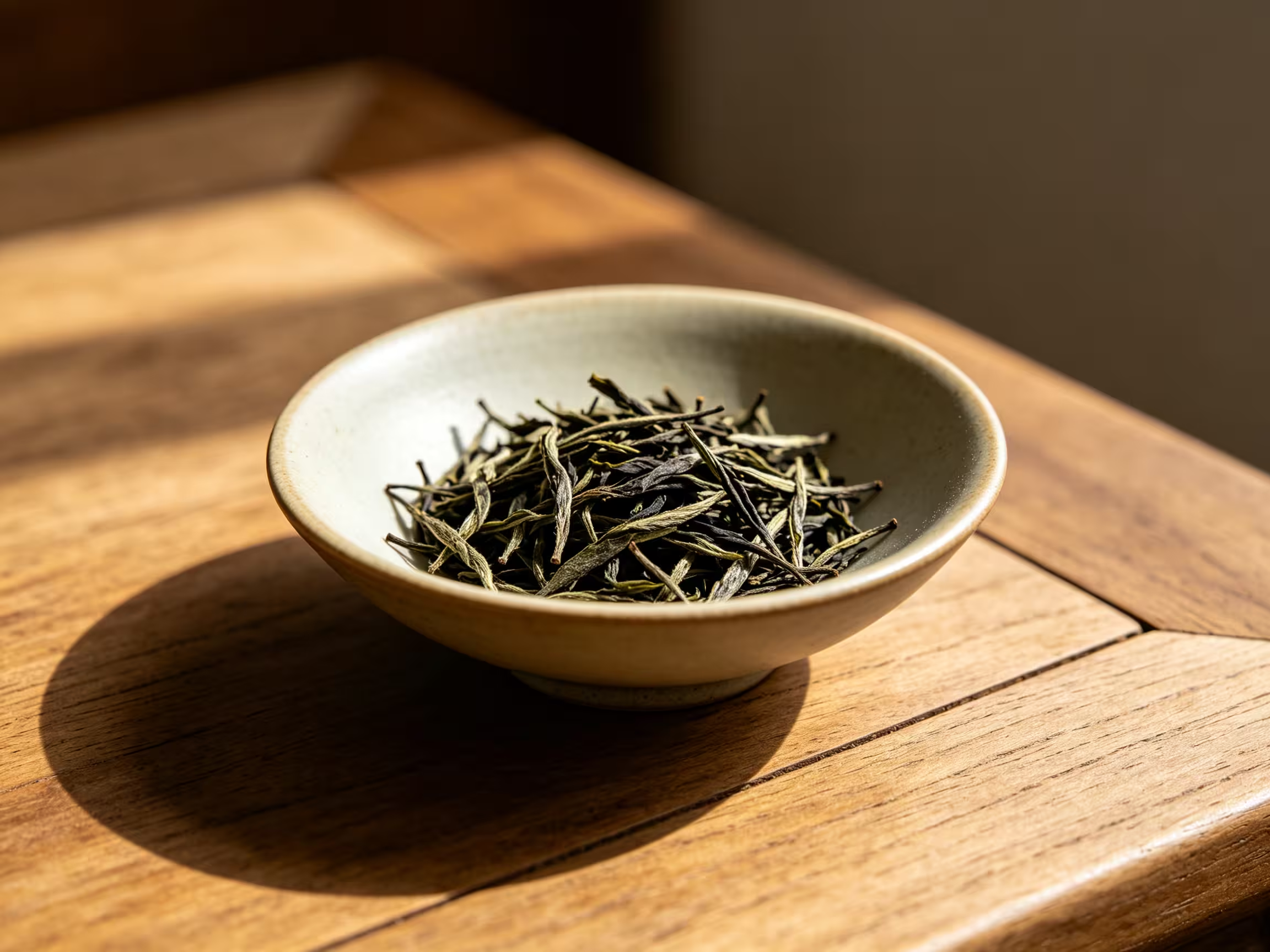

How to Brew Green Tea Without Bitterness
Learning how to brew green tea without bitterness can completely change the way you feel about this tea. Many people try green tea once, taste something sharp, grassy, or harsh, and assume they simply do not like it. In many cases, the problem is not the tea itself. The problem is the way it was brewed.
Green tea is more delicate than black tea. It usually needs cooler water, a shorter steep, and a little more attention to leaf quality. When you use boiling water, leave the leaves in too long, or add too much tea, the cup can become bitter quickly. When you brew it gently, green tea can taste fresh, smooth, lightly sweet, floral, nutty, or clean depending on the style.
Why Does Green Tea Taste Bitter?
Green tea becomes bitter when too much harsh flavor is extracted from the leaves. The most common causes are water that is too hot, steeping time that is too long, too many leaves, low-quality tea, or tea that has been stored poorly.
Bitterness is not always the same as strength. A strong green tea can still taste smooth if it is brewed well. A weak green tea can still taste bitter if the water is too hot or the leaves are old. That is why fixing bitter green tea is not just about using less tea. It is about controlling extraction.
Green tea leaves are usually processed to preserve fresh flavor. That freshness can be beautiful, but it also means the leaves are sensitive. Treating green tea like a robust breakfast black tea is one of the fastest ways to ruin the cup.
The Best Way to Brew Green Tea Without Bitterness
The best way to brew green tea without bitterness is to use cooler water, a shorter steep, and a reasonable amount of tea. Start gently, taste the tea, and adjust from there.
- Use fresh water and a clean cup, teapot, or infuser.
- Add about one teaspoon of loose leaf green tea per cup.
- Let boiling water cool before pouring, or use water below boiling.
- Steep for 1 to 3 minutes for the first cup.
- Remove the leaves instead of letting them sit in the water.
- Taste the tea plain before adding lemon, honey, or sweetener.
This method gives you a reliable starting point. If the tea tastes too light, use slightly more leaves next time. If it tastes bitter, lower the temperature or shorten the steep before changing everything else.
Green Tea Water Temperature: Why Cooler Water Matters
Water temperature is one of the biggest reasons green tea turns bitter. Boiling water can extract harsh flavors too quickly, especially from delicate leaves. Cooler water gives the tea more time to release aroma and sweetness without becoming sharp.
You do not always need a temperature-control kettle. If your water has just boiled, let it sit for a short time before pouring. You can also pour the hot water into an empty cup first, then into the teapot, which cools it slightly.
Different green teas may prefer different temperatures. A delicate green tea may need gentler water, while a roasted or fuller green tea may tolerate slightly more heat. The safest beginner rule is simple: do not pour aggressively boiling water directly onto green tea leaves.
Green Tea Steeping Time: Shorter Is Often Better
Green tea steeping time should usually be shorter than black tea steeping time. A first steep of 1 to 3 minutes is a practical starting range for many loose leaf green teas.
Longer steeping does not always create better flavor. It may create more bitterness, more astringency, and a duller finish. If you want a stronger cup, increasing the amount of tea slightly is often better than leaving the same leaves in hot water for too long.
Use a timer when you are learning. Guessing can work after you know a tea well, but beginners often underestimate how quickly green tea changes. Even one extra minute can make a noticeable difference.
How Much Loose Leaf Green Tea Should You Use?
A good starting point is one teaspoon of loose leaf green tea per cup, but this is not a strict rule. Leaf size matters. Some green teas are small and dense, while others are long, twisted, fluffy, or mixed with flowers.
If your tea tastes watery, do not automatically steep it longer. Try using a little more leaf next time while keeping the steep short. If your tea tastes too strong or sharp, use slightly less leaf or more water.
The goal is balance. Green tea should not feel like weak hot water, but it also should not feel like a punishment. A good cup should have enough flavor to be interesting and enough softness to make you want another sip.
Loose Leaf Green Tea vs Tea Bags
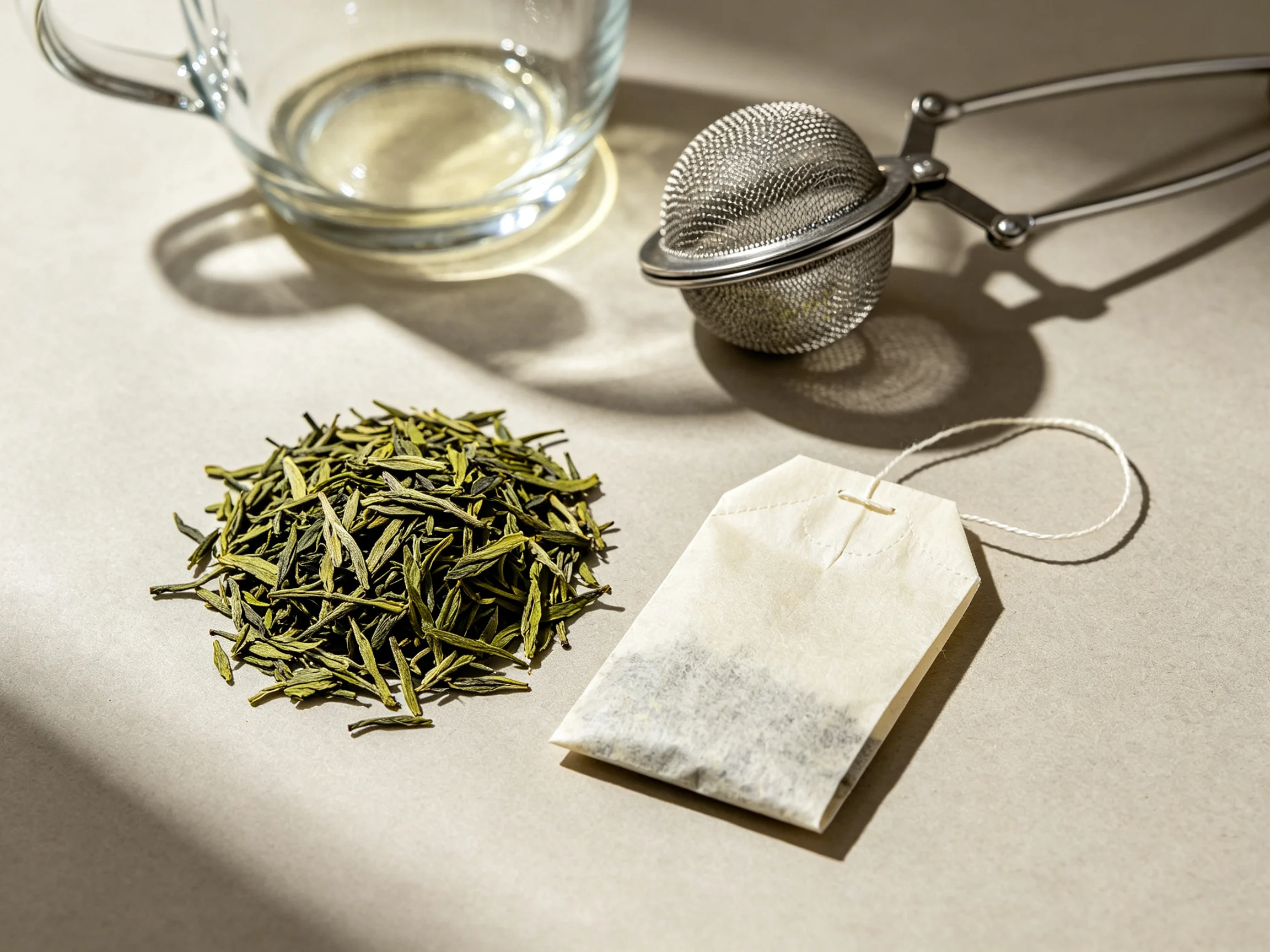
Loose leaf green tea can be easier to brew smoothly because the leaves usually have more room to open and may be less broken than many tea bag fillings. Broken leaves release flavor quickly, which can make the tea stronger but also more likely to become bitter.
This does not mean every loose leaf tea is automatically excellent or every tea bag is bad. It means loose leaf tea gives you more control over leaf amount, steeping time, and multiple infusions.
If you want to explore smoother green tea options, browsing a focused green tea collection can help you compare tea styles, flavor notes, and daily drinking options before choosing one to brew regularly.
Can You Fix Bitter Green Tea?
Bitter green tea can often be improved, but it is easier to prevent bitterness than to repair it after brewing. If the tea is only slightly bitter, you can dilute it with warm water, pour it over ice, or add a small amount of honey. If it is extremely bitter, it may be better to brew a fresh cup.
For the next attempt, change only one or two things. Lower the water temperature. Shorten the steep. Use fewer leaves. Remove the leaves completely after brewing. These small adjustments usually solve the problem.
Do not cover bitterness with too much sugar. That can make the tea drinkable, but it does not teach you how the tea should taste. A well-brewed green tea should not need heavy sweetening.
How to Make Green Tea Taste Better Naturally
Green tea can taste better naturally when you support its flavor instead of hiding it. Once the base cup is smooth, small additions can make it more enjoyable.
- Lemon: Adds brightness, especially to mild green tea.
- Mint: Makes the cup feel cooler and fresher.
- Jasmine: Adds floral aroma and softens the drinking experience.
- Peach: Works well with iced green tea.
- Honey: Can soften the finish when used lightly.
- Cold brewing: Creates a smoother cup with less bitterness.
The most important habit is to taste the tea plain first. If the plain tea is already unpleasant, fix the brewing method before adding ingredients. Extras should enhance the cup, not rescue it.
Can Green Tea Be Brewed More Than Once?
Many loose leaf green teas can be brewed more than once. The second infusion may taste softer, lighter, or slightly sweeter than the first. This is one reason it is useful not to overextract everything in the first steep.
To make a second infusion, use the same leaves, add fresh water at a similar or slightly warmer temperature, and steep briefly. Taste before extending the time too much.
If the second cup tastes flat, the tea may not have much left to give, or the first steep may have been too long. If it tastes pleasant, you have found a more efficient and enjoyable way to drink the same leaves.
Common Green Tea Brewing Mistakes
Most green tea brewing mistakes are easy to fix once you know what caused them. The goal is not to follow rigid rules forever, but to understand what changes the taste.
- Using boiling water: This is the most common cause of bitterness.
- Steeping too long: More time can bring out harshness instead of better flavor.
- Using too much tea: A heavy leaf amount can make the cup sharp.
- Leaving leaves in the cup: The tea keeps extracting even after it tastes ready.
- Using stale tea: Old or poorly stored green tea can taste flat, dusty, or harsh.
- Expecting every green tea to taste the same: Some are grassy, some floral, some nutty, and some more savory.
How to Store Green Tea So It Stays Smooth
Green tea should be stored away from heat, light, moisture, air, and strong odors. Poor storage can make green tea taste stale, dull, or unpleasant even if it was good when purchased.
Use an airtight pouch, tin, or jar with a tight lid. Keep it in a cool, dry cabinet away from coffee, spices, the stove, and sunny windows. Do not leave the package open while making tea.
Buy an amount you can finish while the tea still smells fresh. A smaller fresh supply is usually better than a large bag that loses aroma before you finish it.
FAQ
Why does green tea taste bitter?
Green tea usually tastes bitter when the water is too hot, the steeping time is too long, too many leaves are used, or the tea has been stored poorly. Cooler water and a shorter steep usually help.
Can you use boiling water for green tea?
It is usually better not to use boiling water for delicate green tea. Let the water cool before pouring, or use a lower temperature to protect the fresh flavor.
How long should green tea steep?
Many green teas work well with a first steep of 1 to 3 minutes. The best time depends on the tea, water temperature, leaf amount, and your taste.
How do you make green tea less bitter?
Use cooler water, shorten the steeping time, use a reasonable amount of tea, and remove the leaves when the flavor is ready. If the tea is already brewed, dilute it or pour it over ice.
Is loose leaf green tea less bitter than tea bags?
Loose leaf green tea often gives you more control and may taste smoother because the leaves have more room to open. However, quality and brewing method still matter.
Start With a Gentler Cup
Green tea does not have to taste bitter. In many cases, a smoother cup starts with one simple change: stop treating green tea like black tea. Use cooler water, shorter steeping, and enough space for the leaves to open.
Once the bitterness is under control, green tea becomes much easier to enjoy. You can notice its freshness, aroma, sweetness, and quiet complexity. Start gently, adjust slowly, and let the tea show you what it can taste like when it is brewed with care.