

Understanding Chinese Tea and the Major Types Worth Trying
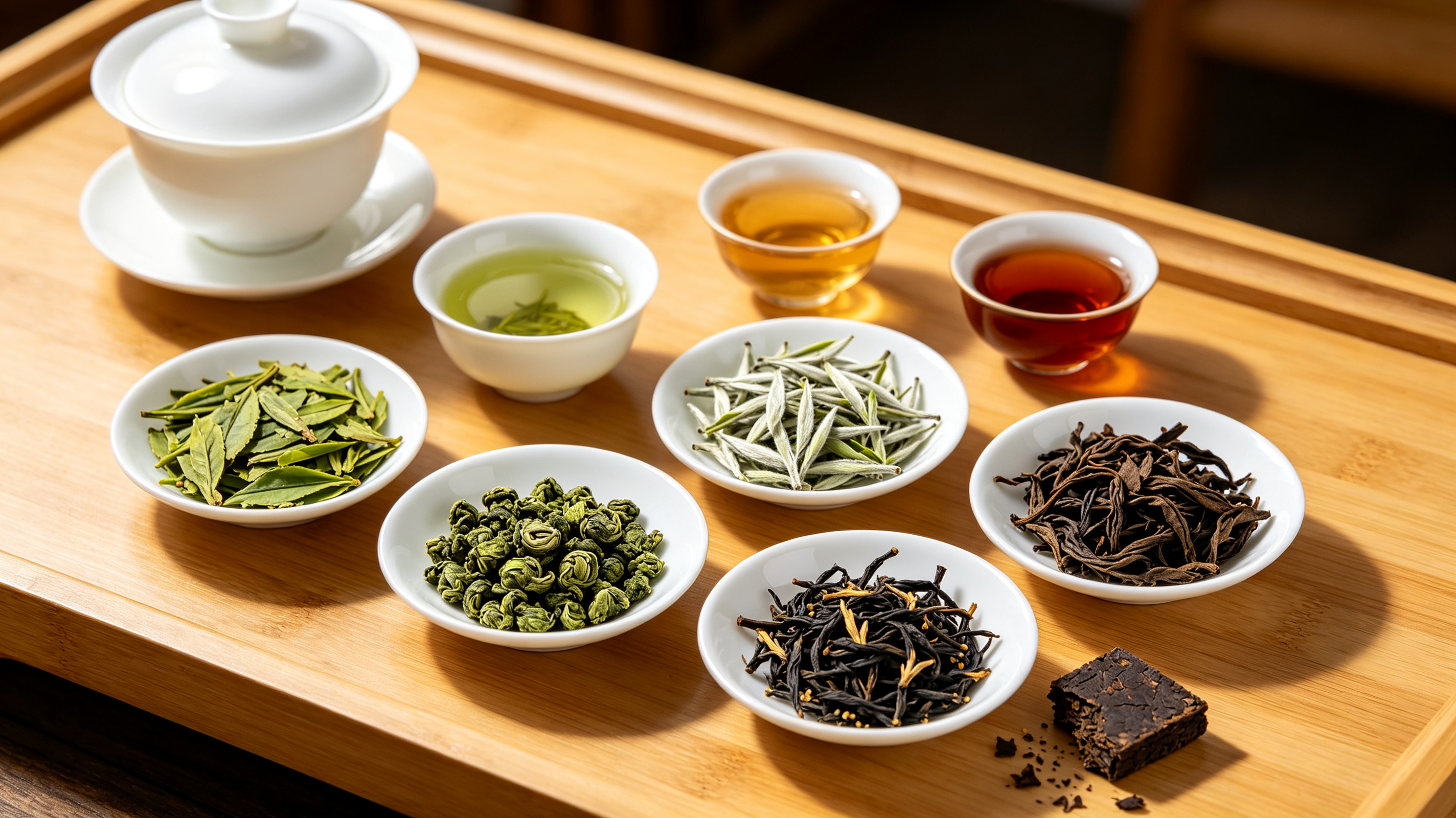
Chinese Tea Is a Family of Traditions, Not One Flavor
Chinese tea can mean green tea, white tea, oolong, black tea, dark tea such as pu-erh, scented tea, or countless regional styles. The useful way to begin is not to memorize famous names. Start with processing style and flavor, then move into origin and cultivar once you know what you enjoy.
The Major Chinese Tea Styles
| Style | Common flavor direction | Examples |
|---|---|---|
| Green tea | Fresh, vegetal, nutty, sweet | Longjing, Bi Luo Chun and regional greens |
| White tea | Light, soft, hay-like, floral, sweet | Silver Needle, White Peony, Shou Mei |
| Oolong tea | Floral to roasted, creamy to mineral | Tieguanyin, Wuyi rock tea, Dancong |
| Black tea | Malty, honeyed, fruity, cocoa-like | Dian Hong, Keemun and regional black teas |
| Dark / post-fermented tea | Earthy, woody, deep, aged | Raw and ripe pu-erh |
| Scented tea | Tea base plus flower aroma | Jasmine-scented green tea |
Start With Flavor Instead of Prestige
Someone who likes fresh herbs and light sweetness may enjoy green tea. A coffee drinker may respond better to roasted oolong, malty black tea, or ripe pu-erh. Floral drinkers often begin with jasmine tea or aromatic oolong. Buying by flavor reduces the risk of paying for a famous name that does not match your palate.
For a flavor-first approach, see How to Choose Tea by Flavor.
Loose Leaf vs Tea Bags
Loose leaf tea gives you more visibility into leaf shape, aroma, and brewing behavior, while tea bags prioritize convenience. Neither format guarantees quality by itself. For specialty Chinese tea, loose leaf is useful because you can inspect the leaves and adjust quantity, water temperature, and steep time more precisely.
What to Look for When Buying Chinese Tea
- A clear tea type rather than a vague ‘premium Chinese tea’ label.
- Origin information appropriate to the product.
- Harvest or production details when freshness matters.
- Ingredient disclosure for scented or blended teas.
- Storage guidance.
- Brewing instructions that fit the tea style.
- A seller that distinguishes retail tea, bulk supply, and customized products clearly.
Tea Zen Way’s Position
Tea Zen Way describes itself as a global loose-leaf tea supplier working with tea gardens, production, bulk supply, and OEM or customized packaging. That means the site can serve both individual tea drinkers and business buyers looking beyond a single retail box.
Learn about sourcing and production at Teazenway’s About Us page.
How to Brew a First Cup
Do not use one boiling-water recipe for every tea. Delicate green tea usually benefits from cooler water and shorter contact. Black tea and many roasted teas can tolerate hotter water. Oolong and pu-erh are often enjoyable across multiple shorter infusions. The seller’s brewing guidance should be your first reference, then adjust one variable at a time.
A Beginner’s Tasting Path
- Try one fresh Chinese green tea.
- Try one floral or lightly oxidized oolong.
- Try one roasted oolong or black tea.
- Try one white tea.
- Try ripe or raw pu-erh after you have a reference for lighter styles.
Chinese Tea Becomes Easier When You Compare
The category looks complicated because thousands of named teas sit inside it. The solution is comparison, not memorization. Taste a few styles side by side, note aroma, body, bitterness, sweetness, roast, and finish, then buy deeper into the category you actually enjoy.
Browse Teazenway’s current tea selection at the Teazenway shop.