

Does Green Tea Have Caffeine? How Much Is Really in Your Cup?
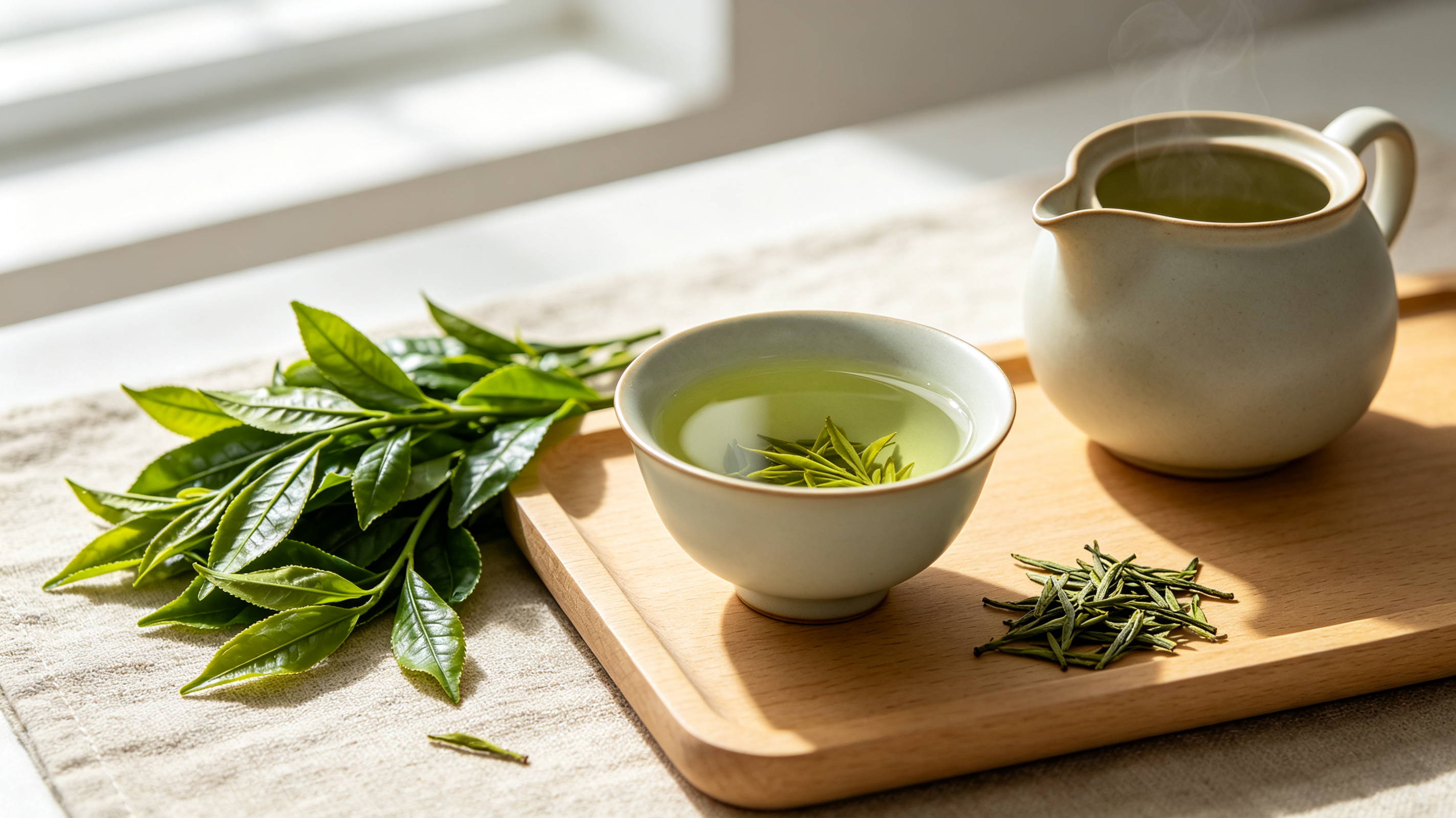
Does green tea have caffeine? Yes. Green tea naturally contains caffeine because it is made from the leaves of Camellia sinensis, the same tea plant used to produce black tea, oolong tea and white tea.
What often causes confusion is the amount. Green tea usually contains considerably less caffeine than a typical cup of brewed coffee, but the exact number is not fixed. The tea variety, amount of leaf, water temperature, steeping time and even the way the leaves were grown can all change how much caffeine ends up in your cup.
If you are trying to reduce caffeine without giving up tea entirely, green tea can therefore be a useful option—but it should not be treated as a caffeine-free drink.
Does Green Tea Have Caffeine Naturally?
Yes. Caffeine is naturally present in the tea plant. It is not something that is normally added during processing.
Green tea, black tea, white tea and oolong all come from Camellia sinensis. Their differences are largely created through harvesting and processing rather than by using completely different plants.
This also explains why switching from black tea to green tea does not automatically eliminate caffeine. The amount may be lower in many cups of green tea, but caffeine is still naturally present in the leaves.
Herbal infusions are different. Drinks made entirely from ingredients such as peppermint, chamomile or rooibos do not come from Camellia sinensis and are naturally caffeine-free unless another caffeinated ingredient has been added.
How Much Caffeine Is in Green Tea?
There is no single number that applies to every cup.
As a useful reference point, commonly cited measurements place brewed green tea at roughly 25–40 mg of caffeine per ordinary cup, although individual teas and brewing methods can produce results outside that range.
For comparison, a typical serving of brewed coffee often contains substantially more caffeine. This is why many people experience green tea as a gentler caffeinated drink even though it is not caffeine-free.
| Drink | Approximate Caffeine | Typical Serving |
|---|---|---|
| Green tea | About 25–40 mg | 8 oz / 237 mL |
| Black tea | Often around 40–50 mg | 8 oz / 237 mL |
| Brewed coffee | Often around 90–100 mg | 8 oz / 237 mL |
These figures are guides rather than laboratory specifications for every drink. Two cups labelled “green tea” can contain noticeably different amounts of caffeine.
Why Does the Caffeine Level Change from One Green Tea to Another?
The amount of caffeine in green tea begins with the leaf itself.
Young shoots and buds can differ chemically from older leaves. Cultivar, growing conditions, harvest season and agricultural practices can also influence the composition of the finished tea.
Then brewing adds another layer of variation.
More Tea Leaves Usually Means More Caffeine
If you use 5 grams of tea instead of 2 grams in the same amount of water, you are giving the water access to more caffeine-containing leaf material.
This is one reason a small, concentrated gongfu-style infusion should not be compared directly with a large mug simply by looking at the volume of water.
Longer Steeping Can Extract More
Caffeine is soluble in hot water. A longer infusion generally gives the water more opportunity to extract compounds from the tea leaves, including caffeine.
That does not mean every additional minute produces exactly the same increase. Extraction is more complicated than that, but steeping time clearly matters.
Hotter Water Can Increase Extraction
Hot water extracts tea compounds more aggressively than cooler water.
For many green teas, extremely hot water is unnecessary anyway. It can emphasize bitterness and astringency while making delicate teas less pleasant.
If you struggle with harsh green tea, see our guide on how to brew green tea without bitterness.
Green Tea vs Coffee: Which Has More Caffeine?
Coffee normally contains substantially more caffeine per cup than green tea.
A common 8-ounce serving of brewed green tea may contain roughly 25–40 mg, while a comparable cup of brewed coffee often contains around 90 mg or more.
That difference is large enough to matter for someone who wants to reduce caffeine without eliminating it.
But serving size matters. A very large green tea, several successive cups or a concentrated matcha drink can narrow the difference considerably.
So the better question is not simply “tea or coffee?” but “how much am I actually drinking?”
Does Matcha Have Caffeine?
Yes. Matcha contains caffeine too.
It deserves separate consideration because matcha is consumed differently from ordinary infused green tea. With conventional loose leaf tea, the leaves are steeped and then removed. With matcha, finely powdered tea is whisked into water and consumed as part of the drink.
That means you are consuming the tea material itself rather than only compounds extracted into an infusion.
The amount of caffeine therefore depends heavily on how much matcha powder is used. Someone choosing matcha specifically because they believe it is caffeine-free would be making the wrong assumption.
Can You Make Green Tea with Less Caffeine?
You cannot turn ordinary green tea into a genuinely caffeine-free drink simply by changing your brewing method, but you can influence the amount extracted into a particular cup.
Using a little less leaf, avoiding unnecessarily long steeps and brewing at an appropriate temperature can help keep the cup from becoming excessively concentrated.
For delicate green teas, this also often improves flavour.
A practical starting point is to use an appropriate tea-to-water ratio rather than filling the infuser with leaves and compensating with a very short brewing time. Our loose leaf tea measuring guide explains how to adjust leaf quantity more consistently.
Does Rinsing Green Tea Remove the Caffeine?
This is one of the most persistent tea myths.
You may hear that pouring hot water over tea for 20 or 30 seconds and discarding the first infusion will remove nearly all of the caffeine. That is not a reliable way to decaffeinate tea.
Caffeine extraction continues across the brewing process. A quick rinse may remove some caffeine, but it also removes aroma and flavour compounds, while leaving caffeine behind in the leaf.
If caffeine intake is important enough that you need a reliably low amount, buying tea that has been commercially decaffeinated is more sensible than trying to “decaffeinate” regular tea in the kitchen.
Is Decaf Green Tea Completely Caffeine-Free?
Usually not.
“Decaffeinated” and “caffeine-free” do not mean exactly the same thing.
Decaffeinated tea begins as tea that naturally contains caffeine and then undergoes processing to remove most of it. Small amounts can remain.
A genuinely caffeine-free herbal infusion, by contrast, may never have contained caffeine in the first place.
This distinction matters particularly for people who are very sensitive to caffeine or who have been advised by a healthcare professional to restrict it.
What About Jasmine Green Tea?
If jasmine tea uses green tea as its base, it normally contains caffeine.
The jasmine flowers provide fragrance, but they do not make the underlying tea caffeine-free.
How much caffeine is present will depend largely on the tea base, the amount used and the way it is brewed.
You can explore our green tea collection if you want to compare different styles of loose leaf green tea, including teas intended for lighter, more aromatic cups.
Does Cold-Brew Green Tea Still Contain Caffeine?
Yes. Cold brewing does not make green tea caffeine-free.
Cold water extracts tea compounds more slowly than hot water, which changes the flavour profile and extraction pattern. Cold-brewed green tea is often smoother and less aggressively bitter, but caffeine is still extracted during the long contact time between water and leaf.
So “cold brewed” and “low caffeine” should not automatically be treated as the same thing.
Should You Avoid Green Tea at Night?
That depends largely on your sensitivity to caffeine.
Some people can drink green tea in the evening without noticing any effect on sleep. Others are sensitive enough that even a relatively modest amount of caffeine late in the day makes falling asleep more difficult.
If you know caffeine affects your sleep, moving green tea earlier in the day is more predictable than trying to find a supposedly “caffeine-free” way to brew an ordinary caffeinated tea.
The same principle applies to portion size. Several cups of relatively low-caffeine tea can still add up over an afternoon or evening.
Choose Green Tea for the Tea, Not Just the Caffeine Number
So, does green tea have caffeine? Yes—but usually considerably less per cup than brewed coffee, and the amount can vary substantially according to the tea and the way it is prepared.
If caffeine is your only concern, pay attention to serving size, leaf quantity and how many cups you drink throughout the day. If flavour matters too, concentrate on brewing the tea properly rather than trying to strip everything out of the leaves.
Good green tea should still taste like tea: fresh, balanced and expressive rather than simply functioning as a weaker substitute for coffee.
If you are exploring loose leaf tea for the first time, our loose leaf tea selection and guide to choosing water for tea are useful places to continue.