

Tea Journal Guide: What to Record and What to Skip
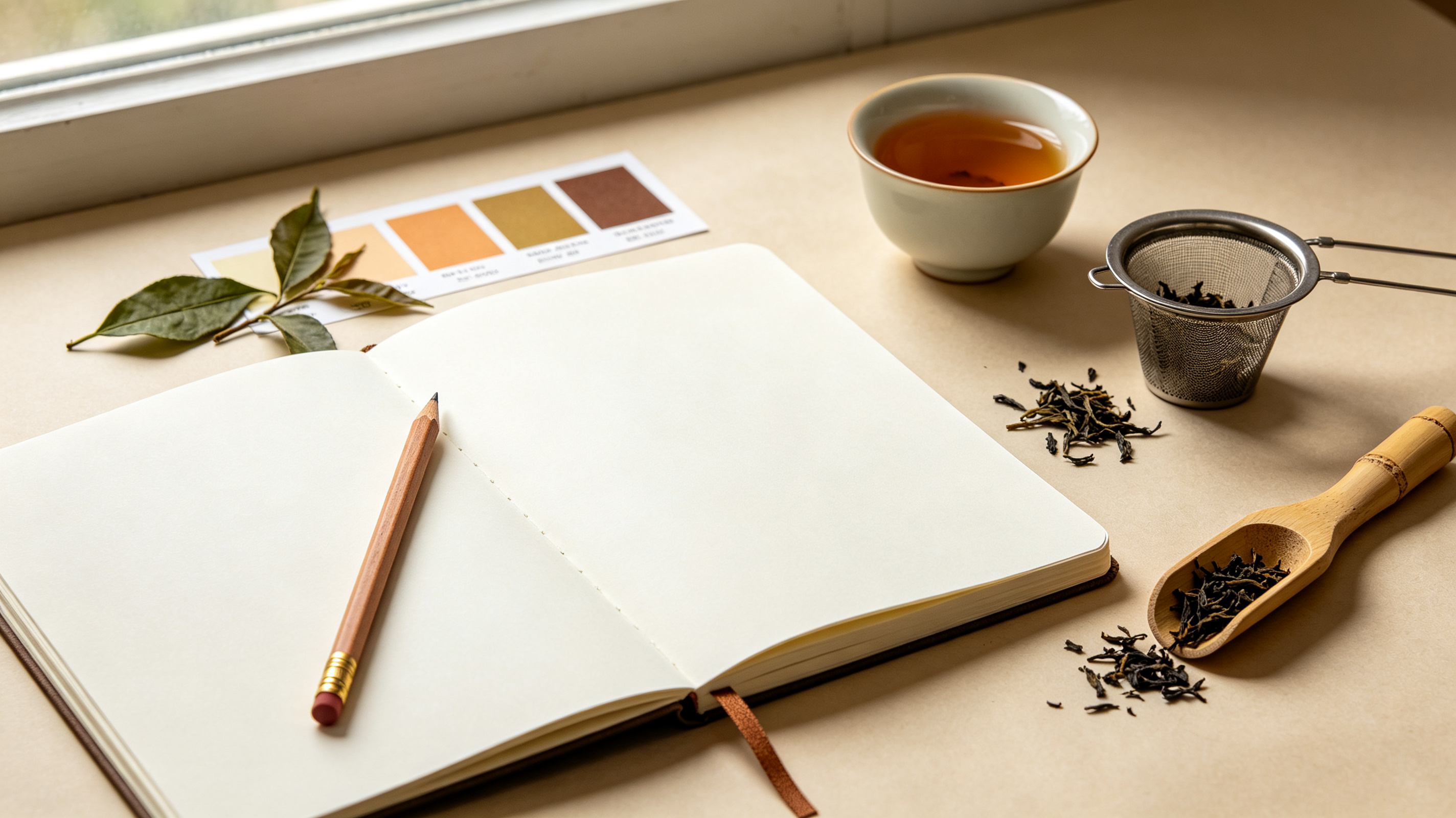
A tea journal guide is successful when the record changes a future brew, purchase, or storage decision.
A tea journal is useful when it helps you repeat a good cup, avoid buying the same disappointing tea, and notice how your taste changes. It becomes unhelpful when every entry feels like a report.
The Five Essential Fields
- Tea name and seller.
- Leaf amount and water volume.
- Water temperature and steeping time.
- Three sensory words.
- One change for next time.
Optional Information
Add harvest, origin, cultivar, price, opening date, infusions, and food pairing only when they help a real decision. Do not copy an entire product page into the journal.
A Short Daily Format
| Field | Example |
|---|---|
| Method | 3 g / 250 ml / 85°C / 2 min |
| Aroma | flowers, warm grain |
| Texture | light, slightly drying |
| Best moment | warm rather than hot |
| Next change | shorter second steep |
A Comparison Format
For side-by-side tasting, record one variable that changed: water, temperature, cup, or steeping time. If several things change, the result is difficult to interpret.
Photographs
A quick photo of dry leaf, wet leaf, or liquor color can be useful, especially when comparing storage over time. Use consistent lighting and do not let photography replace tasting.
What to Skip
- Scores you cannot explain.
- Flavor words copied from the package.
- Long historical notes unrelated to the cup.
- Every minor thought during a casual mug.
- Claims about health effects from one drinking experience.
Use the measurement guide and water guide to keep key variables clear.
Review the Journal Monthly
Look for patterns: teas you finish quickly, water temperatures that work, flavor families you avoid, and unopened bags you should not buy again.
Record Failed Brews Without Blaming the Tea
A bitter or weak cup is useful data when the conditions are written down. Note what happened and identify the most likely variable. This prevents the same mistake and keeps one poor attempt from becoming an unfair product review.
Use neutral language such as “too drying at four minutes” rather than “bad tea.” After adjusting, add the result beneath the first note so the journal shows learning rather than isolated judgments.
- Write the failed method.
- Change one variable.
- Keep both results together.
The Journal Should Make Tea Easier
Write less, but write information that changes the next brew or purchase. A useful tea journal is a working memory, not a performance.
How the Decision Plays Out
Record three grams, 240 milliliters, 90°C, and four minutes for a harsh black tea. Repeat at three minutes and note whether aroma remains while dryness falls. The journal now contains a decision.
Working With Tea Journal Guide in Real Life
A bitter or weak cup is valuable when the method is recorded. Write what happened, identify the most likely variable, and repeat with one change. The paired entries reveal more than a perfect cup described without a recipe.
Use neutral language. “Too drying at four minutes” is more actionable than “bad tea.” This also prevents one brewing error from becoming an unfair judgment of the product.
Where Personal Preference Enters the Decision
Use tea journal guide to preserve decisions rather than every passing thought. The most valuable entry records a recipe, a sensory result, and one next action. This allows a later session to continue the experiment instead of starting from memory.
Apply “Record tea, ratio, water, temperature, and time.” and “Use three sensory words..” When a cup fails, keep the failed method beside the corrected one. The pair explains the tea more clearly than an isolated successful note.
Review the record monthly. Look for temperatures that repeatedly work, tea families that remain unfinished, and purchases that disappear quickly. Patterns reveal preference and waste more reliably than a single high score.
- Review: Record tea, ratio, water, temperature, and time.
- Review: Use three sensory words.
- Review: Write one next change.
- Review: Keep failed and corrected brews together.
This verification step keeps tea journal guide tied to a real result rather than a rule copied from another kitchen, product page, or tea table.
Keep Context Beside the Recommendation
Tea Journal Guide cannot remove individual sensory memory, attention, or preference. Two careful drinkers may notice different aromas while agreeing on body, dryness, and finish. The guide is successful when each person can explain the observation and repeat the conditions.
Use the first FAQ question—“Should a tea journal include scores?”—as a reminder that the practical answer has boundaries. Revisit the tea on another day before making a purchase or quality judgment from a subtle one-time impression.
- Keep: the parts of tea journal guide that produce a repeatable improvement.
- Recheck: results that appeared only once or under unusual conditions.
- Adapt: vessel size, water, timing, and serving to the actual situation.
- Stop: when safety, contamination, or damaged equipment becomes the concern.
Review patterns instead of collecting isolated entries
Once a month, scan the journal for temperatures that work, teas repeatedly avoided, and purchases finished quickly. The pattern is more valuable than any single score.
Remove fields you never use. A short journal maintained for a year contains more value than a perfect template abandoned after three days.
Five Checks That Prevent Guessing
- Record tea, ratio, water, temperature, and time.
- Use three sensory words.
- Write one next change.
- Keep failed and corrected brews together.
- Review patterns monthly.
Let the Cup Confirm the Rule
The best approach to tea journal guide is the one that remains clear after the marketing language is removed.
For a different angle, read How to Serve Tea to Guests Without Overcomplicating It.
Before You Treat the Method as Settled
Before treating tea journal guide as settled, repeat the method with the same tea and change only one condition that matters to the article. Use “Record tea, ratio, water, temperature, and time.” as the baseline and “Write one next change.” as the deliberate change. Write down whether aroma, taste, texture, convenience, or cleanup improved.
This final repeat protects against conclusions caused by a rushed session, unfamiliar water, an unusual cup, or a product that does not represent the wider category. When the result remains useful twice, keep the method. When it does not, preserve both records and narrow the claim rather than forcing a universal rule.