

How Long to Steep Loose Leaf Tea? Timing by Tea Type
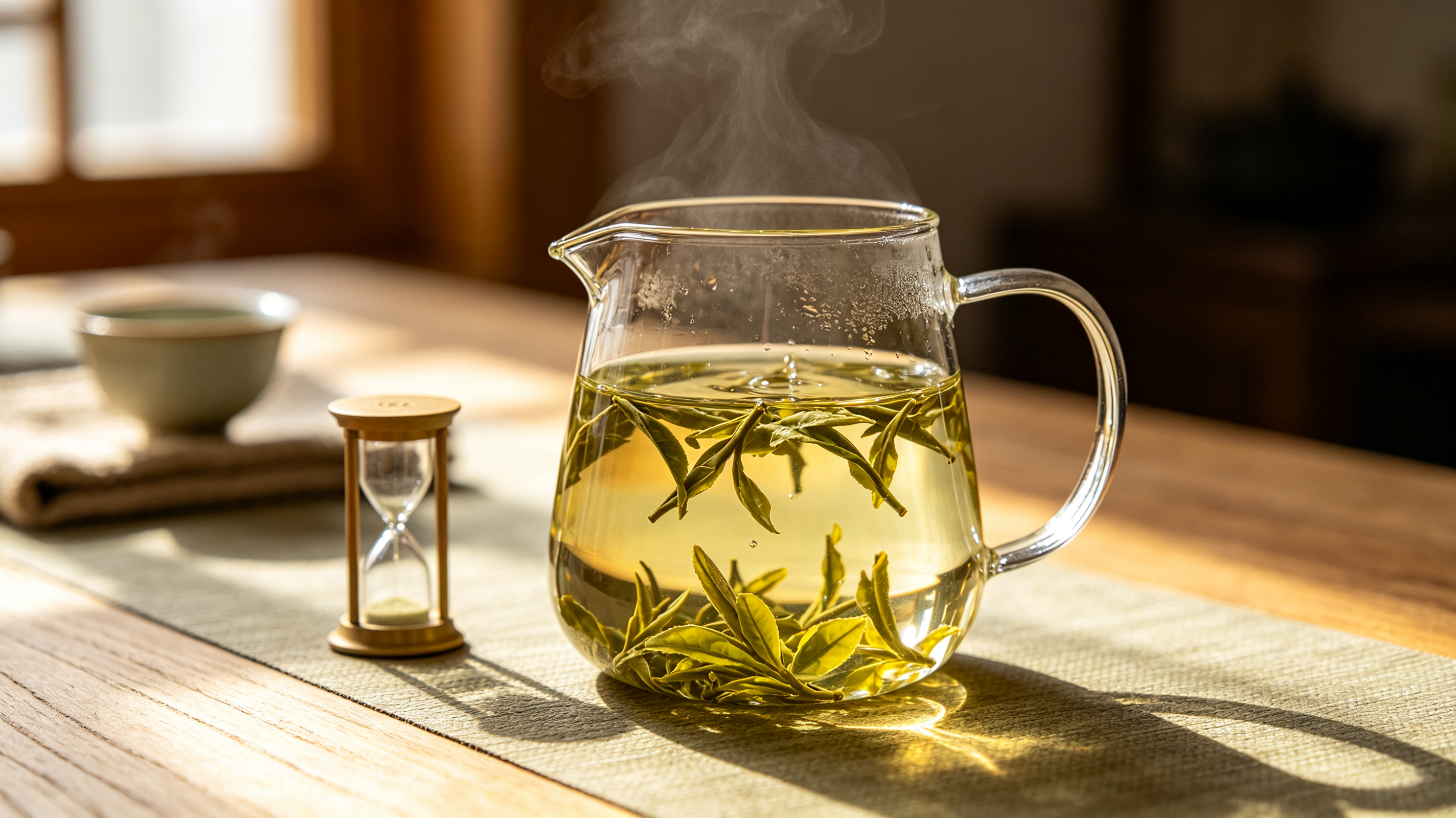
How long to steep loose leaf tea depends mainly on the type of tea, the amount of leaf you use, the water temperature, and the brewing method. As a practical starting point, most loose leaf teas need anywhere from about 1 to 5 minutes when brewed Western-style.
Green tea often needs only 1 to 3 minutes, while black tea usually performs well around 3 to 5 minutes. White tea may need a little longer, and oolong can vary dramatically depending on whether you are using a large mug or a small gongfu teapot.
The important thing is not to treat steeping time as an absolute rule. A better cup usually comes from understanding the tea and making small adjustments from one infusion to the next.
How Long to Steep Loose Leaf Tea at a Glance
| Tea Type | Typical Steeping Time | Typical Water Temperature |
|---|---|---|
| Green tea | 1–3 minutes | 70–85°C / 158–185°F |
| White tea | 3–5 minutes | 75–90°C / 167–194°F |
| Oolong tea | 2–4 minutes | 85–95°C / 185–203°F |
| Black tea | 3–5 minutes | 90–100°C / 194–212°F |
| Pu-erh tea | 2–4 minutes | 90–100°C / 194–212°F |
These times are starting points, not strict limits. Leaf size, roast level, compression, age, cultivar, and personal preference can all change the ideal steep.
If you are unsure how much leaf to use before thinking about time, see our guide to how much loose leaf tea per cup.
Why Steeping Time Matters
When loose leaf tea sits in hot water, soluble compounds gradually move from the leaves into the water. Aroma, sweetness, bitterness, astringency, body and caffeine are all affected by extraction.
If the infusion is too short, the tea may taste thin, weak or unfinished. If it is too long, the cup may become overly bitter, drying or heavy.
That does not mean a longer steep is always bad. Some white teas, aged teas and larger-leaf teas can respond well to extended brewing. The key is matching time to the tea rather than assuming every tea should be treated the same way.
Green Tea Steeping Time
Most green teas are best started around 1 to 3 minutes.
Green tea is often more sensitive to high temperatures and long steeping than darker teas. If a green tea tastes harsh or aggressively bitter, reducing the water temperature or shortening the steep is usually more useful than adding milk or sugar.
A delicate green tea may taste balanced after only 60 to 90 seconds, while a more robust leaf may need 2 or 3 minutes.
The best approach is to begin conservatively and add time if the tea tastes too light.
If bitterness is a recurring problem, our guide to brewing green tea without bitterness explains the interaction between temperature, time and leaf quantity in more detail.
How Long Should Black Tea Steep?
Black tea generally handles longer steeping better than green tea. A useful starting range is about 3 to 5 minutes.
Three minutes often produces a lighter cup with more aroma and less astringency. Four or five minutes usually gives the liquor more body and strength.
For broken-leaf black tea, shorter brewing may be enough because the smaller leaf particles expose more surface area to the water. Large whole leaves may need a little more time to open and release their flavour.
Our black tea brewing guide covers this in greater detail.
White Tea Usually Benefits from Patience
White tea can often be steeped for around 3 to 5 minutes, although some styles can tolerate longer.
Large, loosely rolled or fluffy white tea leaves take up considerable space and may extract more gradually than small broken leaves.
This is one reason a white tea that seems weak after two minutes may become much more expressive after another minute or two.
Do not assume that the pale color of the liquor means the tea is under-brewed. Many white teas remain visually light even when the flavour is fully developed.
Oolong Tea Has the Widest Range
Oolong is difficult to summarize with a single number because the category includes lightly oxidized floral teas, heavily roasted teas and tightly rolled or long twisted leaves.
For Western-style brewing, 2 to 4 minutes is a reasonable starting point.
A lightly oxidized rolled oolong may need enough time for the leaves to begin opening, while a roasted oolong can often produce a rich cup relatively quickly.
If the tea tastes too intense, shorten the next infusion rather than assuming the tea itself is too strong.
Pu-erh Tea Steeping Time
For Western-style brewing, pu-erh can often begin around 2 to 4 minutes.
Compressed pu-erh may need a little time for the leaves to separate, particularly if a tightly compressed piece has been placed directly into a large mug.
With aged or fermented teas, strength can build quickly once the leaves begin opening, so the first infusion is useful for learning how quickly a particular tea extracts.
Gongfu Brewing Uses Much Shorter Steeps
If you use a gaiwan or small teapot with a relatively large amount of tea, steeping time changes completely.
Early gongfu infusions may last only 10 to 30 seconds.
This works because the leaf-to-water ratio is much higher than in Western-style brewing. You are using more tea with less water, so extraction happens quickly.
Later infusions are usually extended gradually as the leaves release flavour more slowly.
This is why advice such as “steep oolong for three minutes” can be misleading without knowing the brewing method.
Does More Loose Leaf Tea Need a Longer Steep?
Usually not.
Using more tea often means you can use a shorter steep, because there is more leaf material available to extract into the same amount of water.
This is the principle behind gongfu brewing.
Using a large quantity of leaf and then leaving it in the water for a very long time can produce an unnecessarily strong or astringent cup.
If you want a stronger tea, increasing leaf quantity slightly may produce a better result than simply doubling the steeping time.
Should You Steep Tea Longer with Cooler Water?
Often, yes.
Lower-temperature water generally extracts compounds more slowly than near-boiling water. This means cooler brewing can sometimes benefit from a somewhat longer infusion.
For example, a delicate green tea brewed at 75°C may tolerate a longer steep than the same tea brewed close to boiling.
This is one reason steeping time and water temperature should never be considered separately.
You can learn more about how water affects extraction in our guide to the best water for tea.
What Happens If You Steep Loose Leaf Tea Too Long?
The most common result is excessive bitterness or astringency.
Bitterness is a taste. Astringency is the drying, puckering sensation you may feel on your tongue and gums. They often appear together in over-extracted tea, but they are not exactly the same thing.
If your tea tastes too strong, do not immediately blame the tea itself. Try changing one variable at a time:
- Shorten the steep by 30 to 60 seconds.
- Reduce the water temperature slightly.
- Use a little less leaf.
- Increase the amount of water.
Changing only one factor makes it much easier to understand what improved the cup.
Can You Steep Loose Leaf Tea More Than Once?
Yes. Many loose leaf teas can be infused several times.
Whole-leaf oolong, white tea, green tea and pu-erh can often produce multiple enjoyable infusions.
The second steep does not always need to be dramatically longer than the first. In some tightly rolled teas, the second infusion may actually extract faster because the leaves have already opened.
Later steeps can then be extended gradually as the tea weakens.
Rather than following a rigid schedule, taste each infusion and adjust the next one.
How Do You Know When the Tea Is Ready?
A timer is useful, but your senses are more useful.
Look at the liquor, smell the aroma and taste a small sip before automatically adding more time.
If the tea tastes thin but clean, give the next steep a little longer.
If it tastes full and balanced, keep the same method.
If the finish is aggressively bitter or drying, shorten the next infusion.
The ideal steeping time is ultimately the point where the tea tastes most balanced to you.
Loose Leaf Tea Steeping Time Is a Starting Point, Not a Rule
People often search for how long to steep loose leaf tea expecting one universal answer, but tea does not work that way.
A practical approach is to begin with a reliable range and adjust from there:
- Green tea: 1–3 minutes
- White tea: 3–5 minutes
- Oolong tea: 2–4 minutes
- Black tea: 3–5 minutes
- Pu-erh tea: 2–4 minutes
Then pay attention to water temperature, leaf quantity and the size of your brewing vessel.
If you brew loose leaf tea regularly, a good infuser also makes timing easier because you can remove the leaves cleanly when the infusion is ready. Our guide to tea infusers and tea strainers explains the difference.
Frequently Asked Questions About Steeping Loose Leaf Tea
How long to steep loose leaf tea for the first time?
For most beginners, start with 1 to 3 minutes for green tea and around 3 to 5 minutes for black, white and many other loose leaf teas. Taste the result and adjust the next cup rather than assuming the first timing must be perfect.
Can loose leaf tea steep for 10 minutes?
Some teas can tolerate a 10-minute infusion, particularly certain white teas or herbal infusions, but most conventional green and black teas may become excessively strong or astringent when steeped that long.
Is 5 minutes too long for loose leaf tea?
Not necessarily. Five minutes can work well for black tea, white tea and some darker teas. It is more likely to be excessive for delicate green tea, especially when very hot water is used.
Should I remove loose tea leaves after steeping?
Yes, if you want to control extraction. Leaving the leaves continuously submerged means the tea continues to brew, which can make the cup stronger and more bitter over time.
Do second steeps need more time?
Often they do, but not always. Rolled oolong and compressed teas may extract faster during the second infusion because the leaves have already begun to open. Later infusions usually benefit from gradually increasing the time.
Find the Timing That Makes the Tea Taste Right
The simplest answer to how long to steep loose leaf tea is to start with the standard range for your tea type and then let taste guide the next adjustment.
Good brewing is not about following a stopwatch perfectly. It is about understanding how leaf quantity, water temperature and time work together.
Once you begin changing one variable at a time, it becomes much easier to find a repeatable method that brings out sweetness, aroma and body without unnecessary bitterness.
